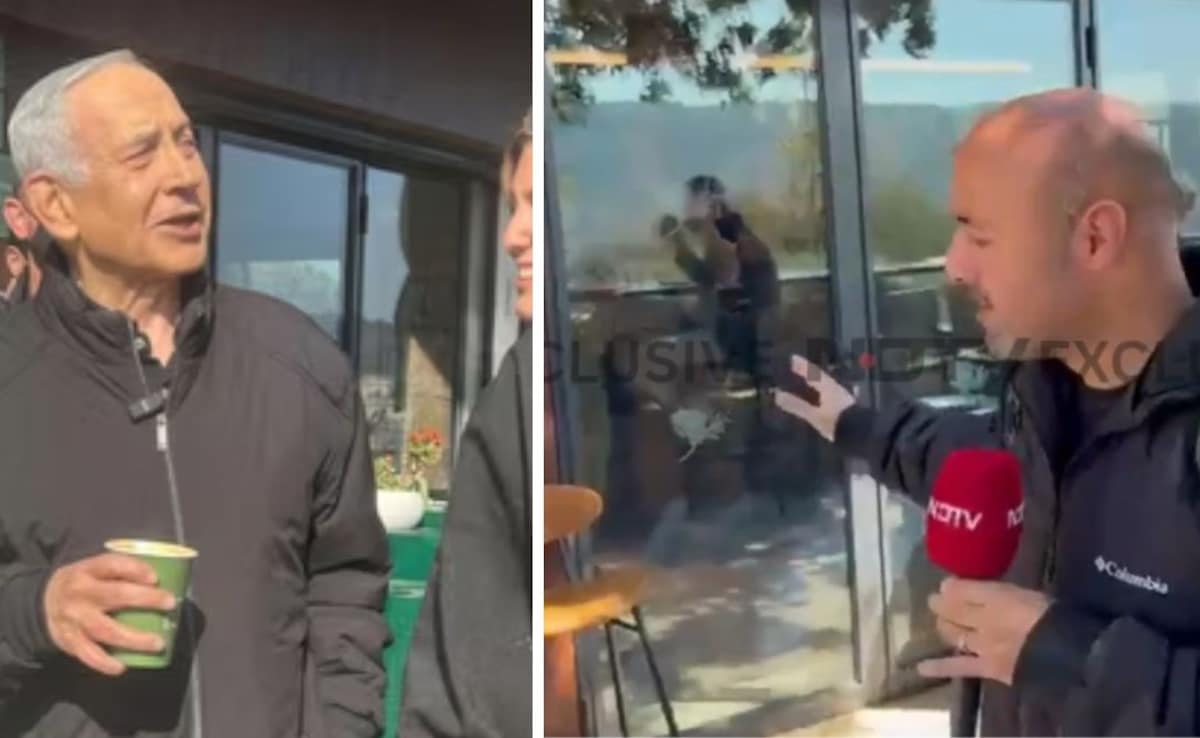
Benjamin Netanyahu is a man who understands that in modern warfare, a geolocated video is as powerful as a precision-guided munition. When rumors of his incapacitation or death began to circulate through the digital undergrowth of Telegram and X, the Israeli Prime Minister didn’t issue a dry press release. He didn't send a spokesperson to a podium. Instead, he walked into a nondescript cafe in the Gaza envelope, ordered a coffee, and let the background noise of civilian life do the talking.
This wasn’t just a lunch break. It was a calculated strike against the psychological operations of his adversaries. By appearing in a public space so close to the conflict zone, Netanyahu sought to kill two birds with one stone: prove his physical vitality and signal a return to normalcy in regions recently scarred by violence.
However, looking past the steam of the espresso machine reveals a more complex strategy of image management. The cafe visit serves as a microcosm of the current Israeli political moment, where the struggle for personal narrative is often as fierce as the military campaign itself. While the "death rumors" were easily debunked by his presence, the underlying questions about his political longevity and the state of the border communities remain far more difficult to answer.
The Architecture of a Proof of Life Video
When a high-profile leader vanishes from the public eye for even forty-eight hours, the vacuum is filled by speculation. In Netanyahu’s case, the rumors weren't just about health; they were about a perceived loss of control. The choice of a cafe is significant. A hospital setting would look like a recovery ward. An office would look like a bunker. A cafe suggests a man who is relaxed, mobile, and unafraid.
Security protocols for such a visit are immense. While the video portrays a spontaneous stop, the reality involves advanced scouting teams, signal jamming, and a sanitized perimeter. The "casual" patrons in the background are rarely there by accident. This is the theater of leadership. The Prime Minister’s team understood that the grainy, handheld nature of the footage would lend it an air of authenticity that a high-production broadcast lacks. They lean into the "ground report" aesthetic because it feels harder to fake.
The location—near the site of the October 7 attacks—is the most potent element of the staging. It is an attempt to reclaim the geography of the disaster. By sipping coffee in a zone that was once a killing field, the administration is trying to force a transition in the national psyche from "victimhood" to "recovery."
Why Rumors Find Fertile Soil
Information warfare thrives on the absence of transparency. The reason "death rumors" gained any traction at all isn't because of the brilliance of enemy propaganda, but because of a fundamental breakdown in trust between the Prime Minister’s Office and the Israeli press corps. When a government becomes overly secretive about a leader’s schedule or health, the public begins to treat every silence as a smoking gun.
We have seen this pattern before. During the judicial reform protests, and again in the early weeks of the war, the lag time between events and official confirmation created a "credibility gap." This gap is where conspiracy theories take root. If the public doesn't believe the official evening news, they will believe a whispered voice note on WhatsApp.
Netanyahu’s cafe visit was a tactical success in silencing a specific rumor, but it does little to address the strategic deficit of trust. It is a reactive move. A leader who is truly secure in his position doesn't need to perform a "proof of life" stunt in a coffee shop. The very necessity of the video confirms the fragility of the current political environment.
The Economy of the Border Towns
Behind the political theater lies a harsh economic reality that a thirty-second video clip cannot mask. The cafes and small businesses in the Gaza envelope are struggling. While the Prime Minister’s visit provides a momentary boost in visibility, the long-term viability of these communities is still in doubt.
Many residents are still living in hotels in Eilat or Jerusalem. Those who have returned find a landscape that is physically rebuilt but psychologically fractured. The "normalcy" projected in the video is a thin veneer. Business owners in the south report that foot traffic is a fraction of pre-war levels. The government’s compensation packages have been criticized as slow and insufficient, leaving entrepreneurs to wonder if they are being used as props for a narrative of "victory" while their bank accounts run dry.
The True Cost of Reconstruction
- Insurance Premiums: Small businesses in the border regions are facing skyrocketing costs for coverage, if they can get it at all.
- Labor Shortages: The absence of foreign workers and the ongoing mobilization of reservists have left the service and agricultural sectors paralyzed.
- Psychological Barrier: The greatest obstacle to the economy isn't a lack of coffee beans; it’s the lack of a sense of permanent security that would bring families back to stay.
The Regional Audience
This video wasn't just for the Israeli public. It was a message sent directly to Tehran, Beirut, and Gaza. In the Middle East, the physical presence of a leader is a proxy for the strength of the state. If Netanyahu is seen as "hiding," it emboldens proxies like Hezbollah to test the limits of Israeli deterrence.
By appearing in public, he is attempting to project an image of a state that is not only functional but unbothered. It is a classic move from the Netanyahu playbook: using personal bravado to compensate for institutional setbacks. Whether the regional actors buy the performance is another matter. Military intelligence suggests that adversaries look less at cafe visits and more at troop movements and air defense readiness. The video is for the masses; the satellites are for the generals.
The Counter Narrative
Critics of the Prime Minister argue that these outings are a distraction from the hostages still held in Gaza. Every time a video emerges of Netanyahu enjoying a meal or a coffee, it triggers a visceral reaction from the families of the captives. To them, the "normalcy" he is projecting feels like a betrayal.
There is a growing sentiment that the Prime Minister is more focused on his personal brand and political survival than on the grueling, un-glamorous work of negotiating a release. The cafe video, intended to show strength, often ends up highlighting a perceived disconnect between the leadership and the suffering of the citizenry. You cannot eat a sandwich in a war zone without looking like you are indifferent to those who are starving or in tunnels just a few miles away.
The Evolution of the Press Briefing
The "Ground Report" style of communication marks the end of the traditional press conference. Netanyahu has long had a contentious relationship with mainstream media, often accusing them of bias. By creating his own content—or "allowing" specific outlets to capture these "candid" moments—he bypasses the filter of critical journalism.
There are no follow-up questions in a cafe video. There is no one to ask about the lack of a "day after" plan for Gaza or the rising tensions in the north. It is a monologue disguised as a moment of human connection. For the analyst, this represents a dangerous shift toward a controlled information environment where the leader is the sole author of his reality.
Practical Realities of the Conflict Zone
If you are traveling through these areas today, the tension is palpable. The roads are filled with heavy transport vehicles, and the sound of outgoing artillery is a constant rhythm. The "cafe" in the video exists in a bubble. Outside that bubble, the infrastructure of the south is being repurposed for a long-term military presence.
The security apparatus required to protect a Prime Minister in such a location is a logistical nightmare. It involves:
- Aerial Surveillance: Drones providing 360-degree coverage of the approach paths.
- Plainclothes Security: Agents blended into the "civilian" environment.
- Quick Reaction Forces (QRF): Armored units stationed just out of sight, ready to intervene within seconds.
This is not a man going for a coffee. This is a military operation with a latte at the end of it.
The Missing Context
What the competitor's reports often miss is the timing of these rumors. They almost always coincide with significant military shifts or political scandals. By focusing on the "is he alive?" question, the media falls into a trap. They spend three days debating his pulse instead of debating his policies.
The "death rumor" might very well be a "dead cat" strategy—a term used in politics to describe throwing a shocking topic onto the table to make everyone stop talking about the previous, more damaging topic. If the public is talking about whether the PM had a heart attack, they aren't talking about the latest corruption hearing or the failure to prevent the initial breach of the border.
The cafe visit is a masterclass in redirection. It provides a visual answer to a superficial question while leaving the fundamental crises of the state unaddressed. The espresso may be hot, but the political climate remains chillingly uncertain.
Verify the source of your digital news by cross-referencing geolocated footage with independent satellite imagery to separate state-sponsored theater from the actual ground reality.