Using tax-advantaged retirement capital to fund a primary residence is a high-risk trade that swaps long-term compounding for immediate illiquid equity. While current political discourse often focuses on the accessibility of these funds to solve the housing affordability crisis, a rigorous financial analysis reveals that the structural "leakage" from a 401(k) often outweighs the utility of a larger down payment. The decision to tap into a 401(k) for a home purchase must be analyzed through three specific filters: the tax-drag coefficient, the disruption of the compounding curve, and the concentration of idiosyncratic risk.
The Taxonomy of Retirement Plan Distributions
To understand why financial advisors and policymakers remain skeptical of this strategy, one must first categorize the mechanisms of access. There is a fundamental difference between a loan and a withdrawal, yet both carry distinct economic penalties.
- The 401(k) Loan Mechanism: Most plans allow participants to borrow up to 50% of their vested balance, capped at $50,000. While the interest is paid back to the participant's own account, the true cost is the "double taxation" of the interest payments (made with after-tax dollars, then taxed again upon withdrawal in retirement) and the loss of market participation during the loan term.
- The Hardship Withdrawal: Under IRS guidelines, "heavy and immediate financial need" can justify a withdrawal. Unlike a loan, this capital never returns to the account. It is subject to immediate income tax and, for those under age 59.5, a 10% early withdrawal penalty.
- The First-Time Homebuyer Exception: While the IRA (Individual Retirement Account) allows for a $10,000 penalty-free withdrawal for first-time buyers, the 401(k) does not share this specific provision unless it is rolled over into an IRA first.
The Cost Function of Capital Depletion
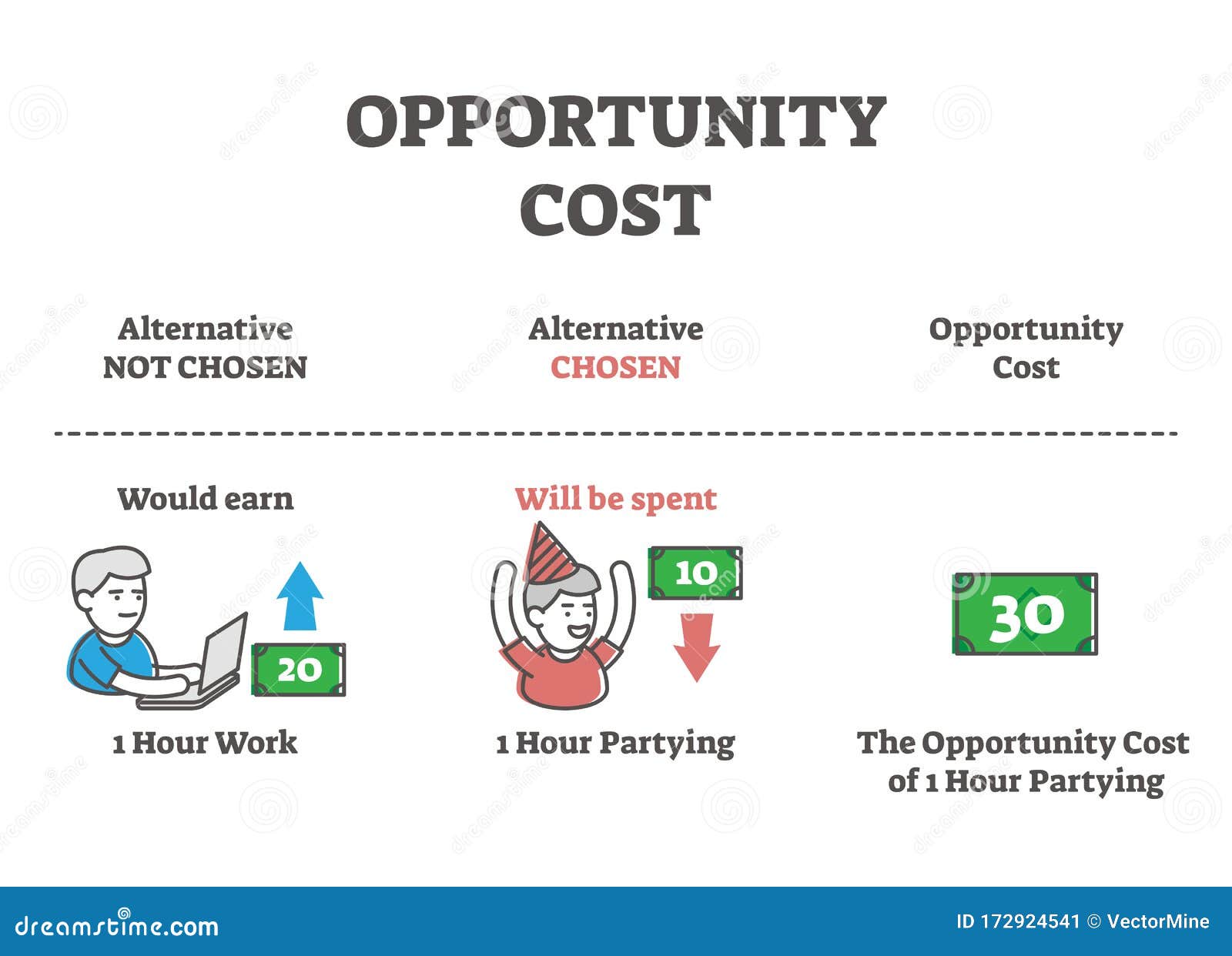
The primary argument for using retirement funds to buy a home is the reduction of Mortgage Insurance (PMI) or the lowering of a monthly payment. However, this is a narrow view of the balance sheet. The real cost is defined by the Opportunity Cost of Depleted Principal.
Consider a $50,000 withdrawal by a 30-year-old. Assuming a conservative 7% annual return, that $50,000 would grow to approximately $531,000 by age 65. If the individual withdraws that money to avoid a 6% mortgage interest rate, they are effectively trading a 7% projected gain for a 6% guaranteed "save." This 1% delta, compounded over 35 years, represents a massive destruction of terminal wealth.
The second variable in this cost function is the Tax Friction. When $50,000 is withdrawn from a traditional 401(k), the investor may only receive $35,000 after federal and state taxes and the 10% penalty. To put $35,000 toward a house, the investor must destroy $50,000 of retirement purchasing power. This 30% "entry fee" for the capital makes it some of the most expensive money available in the financial system.
The Risk Concentration Bottleneck
Housing is an idiosyncratic asset. Its value depends on hyper-local economic conditions, school districts, and physical maintenance. In contrast, a diversified 401(k) usually holds a basket of global equities and bonds. Using 401(k) funds to buy a home creates an unhealthy concentration of net worth in a single, illiquid asset.
- The Asset Correlation Trap: If a local economic downturn occurs, an individual might face job loss (affecting their ability to contribute to retirement) simultaneously with a decline in their home's value (their primary store of equity).
- The Liquidity Lock: You cannot sell a bedroom to pay for a medical emergency. 401(k) funds, while intended for retirement, offer greater structural flexibility through hardship provisions or loans than home equity, which requires a refinance or a sale to access.
- The Employment Dependency: A 401(k) loan typically must be repaid in full within a short window (often 60 to 90 days) if the employee leaves their job. Failure to repay triggers the 10% penalty and income tax on the remaining balance, creating a "liquidity cliff" during a period of professional transition.
The Displacement of the Compounding Curve
The most insidious damage of early 401(k) usage is the "Time-Value of Participation." Retirement accounts benefit from the exponential portion of the growth curve, which occurs in the final decade of a 30-year horizon. By removing capital in the early years, the investor truncates the base of the curve.
When a participant stops or reduces contributions to pay back a 401(k) loan, they often miss out on the "Employer Match." This match is an immediate, risk-free 100% return on investment. Sacrificing a 5% employer match to pay down a 6.5% mortgage is an objectively poor trade. The internal rate of return (IRR) on the match far exceeds any appreciation realistic for a residential property.
Analyzing the "Rent vs. Buy" Fallacy in Retirement Planning
A common justification for tapping retirement funds is that "renting is throwing money away." This ignores the "unrecoverable costs" of homeownership, which include property taxes, maintenance (typically 1% of home value per year), and the cost of capital.
If the 401(k) funds are used to move from a rental to a mortgage, the investor is shifting from one expense (rent) to a complex web of expenses (interest, taxes, insurance, maintenance). If the total cost of homeownership exceeds the rent, and the difference was previously being invested in the 401(k), the investor is compounding their losses by both depleting the original principal and reducing future contribution capacity.
Structural Incentives and Political Rhetoric
Politicians occasionally suggest making 401(k) funds more accessible for housing to lower the barrier to entry for the "American Dream." From a macro-economic perspective, this is a demand-side stimulus that does nothing to address the supply-side constraints of the housing market.
Increasing the pool of capital available for down payments without increasing the number of homes built simply inflates the price of housing. The result is that the first-time buyer uses their retirement savings to pay a higher price for the same home, ultimately transferring their long-term wealth to the current home seller.
Quantitative Thresholds for Action
There are rare instances where tapping a 401(k) might be mathematically defensible, though these are exceptions rather than the rule. These scenarios require a strict "Spread Analysis."
- The Debt-to-Income (DTI) Pivot: If a small 401(k) loan is the only way to bring a DTI ratio into a range that qualifies the buyer for a significantly lower interest rate on the entire mortgage, the "interest save" on the 80% loan might outweigh the "loss of gains" on the 5% 401(k) withdrawal.
- The PMI Elimination: If the 401(k) capital allows a buyer to reach a 20% down payment, eliminating Private Mortgage Insurance, the effective "return" on that capital is the sum of the avoided PMI (often 0.5% to 1.5% of the loan value) plus the mortgage interest rate. If this combined rate exceeds the expected 401(k) return, the move has a technical logic.
However, even in these cases, the investor remains exposed to the "Repayment Risk." If the borrower cannot maintain the loan payments to their 401(k) while also servicing a new mortgage, the resulting tax hit destroys any marginal gains found in the DTI or PMI calculations.
Strategic Execution Strategy
For those determined to utilize retirement assets for housing, the only disciplined path is a Pre-emptive IRA Conversion.
- Shift the target amount into a Roth IRA five years prior to the purchase.
- Utilize the ability to withdraw Roth contributions (but not earnings) tax-and-penalty-free at any time.
- Apply the $10,000 first-time homebuyer exception for earnings if applicable.
This approach preserves the 401(k) as a "protected" core while using the Roth IRA as a strategic liquidity bucket. It avoids the 10% penalty and the immediate tax-drag that makes 401(k) withdrawals so toxic to long-term wealth.
The most effective strategy remains the separation of concerns: use the 401(k) exclusively for capturing the market's equity risk premium over decades, and utilize a dedicated taxable high-yield savings account or brokerage account for home equity accumulation. Mixing these two distinct financial goals creates a systemic fragility that most households cannot afford to hedge.
If the down payment is not available without raiding the 401(k), the most logical conclusion is not that the 401(k) should be tapped, but that the individual is currently over-leveraged for the targeted housing market. The strategic play is to delay the purchase, increase the primary income stream, or adjust the target purchase price to align with available non-retirement cash flow. Would you like me to model a specific scenario comparing a 401(k) loan versus a high-interest mortgage to see the exact break-even point?