The White House is Gaslighting Your Reality
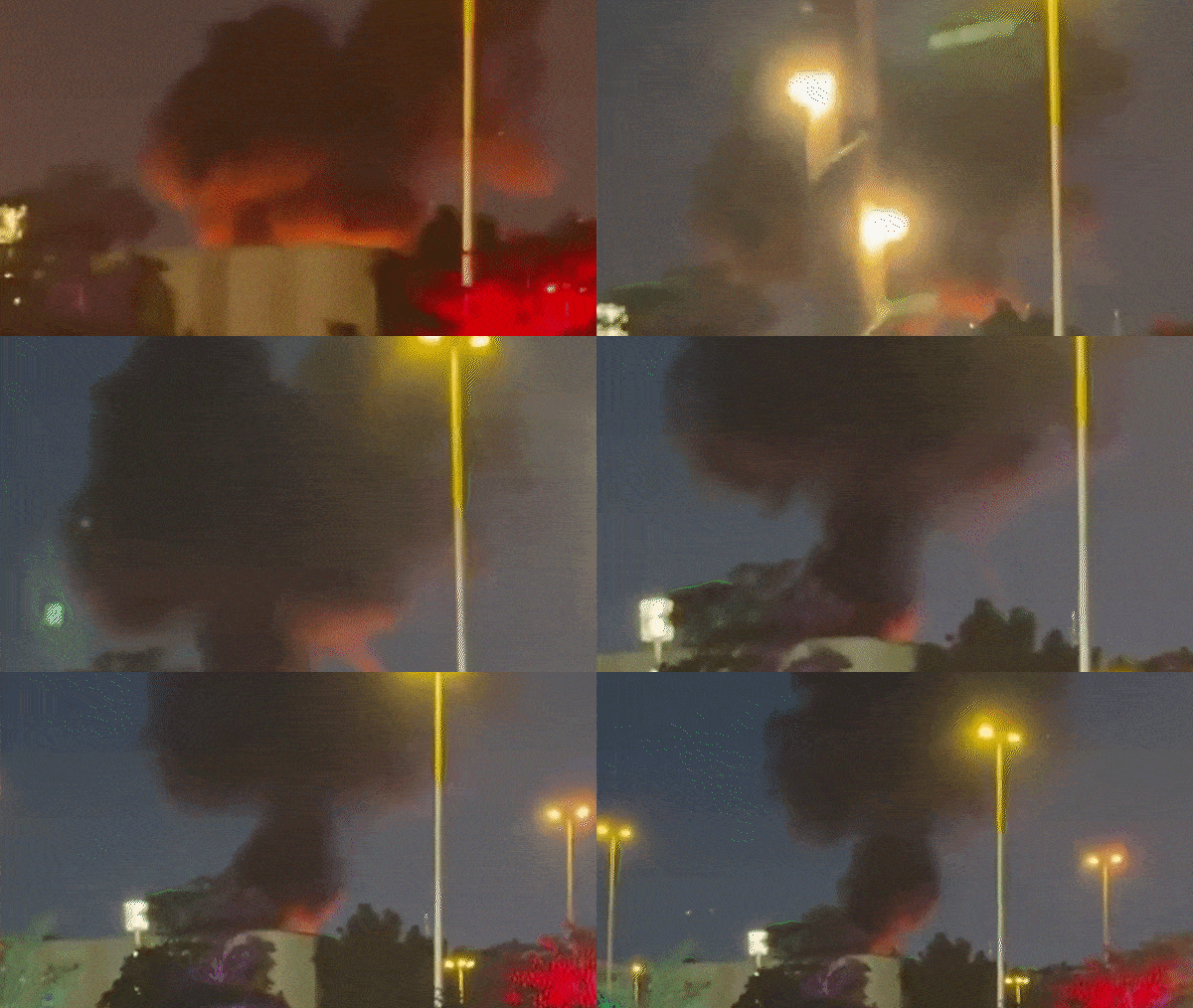
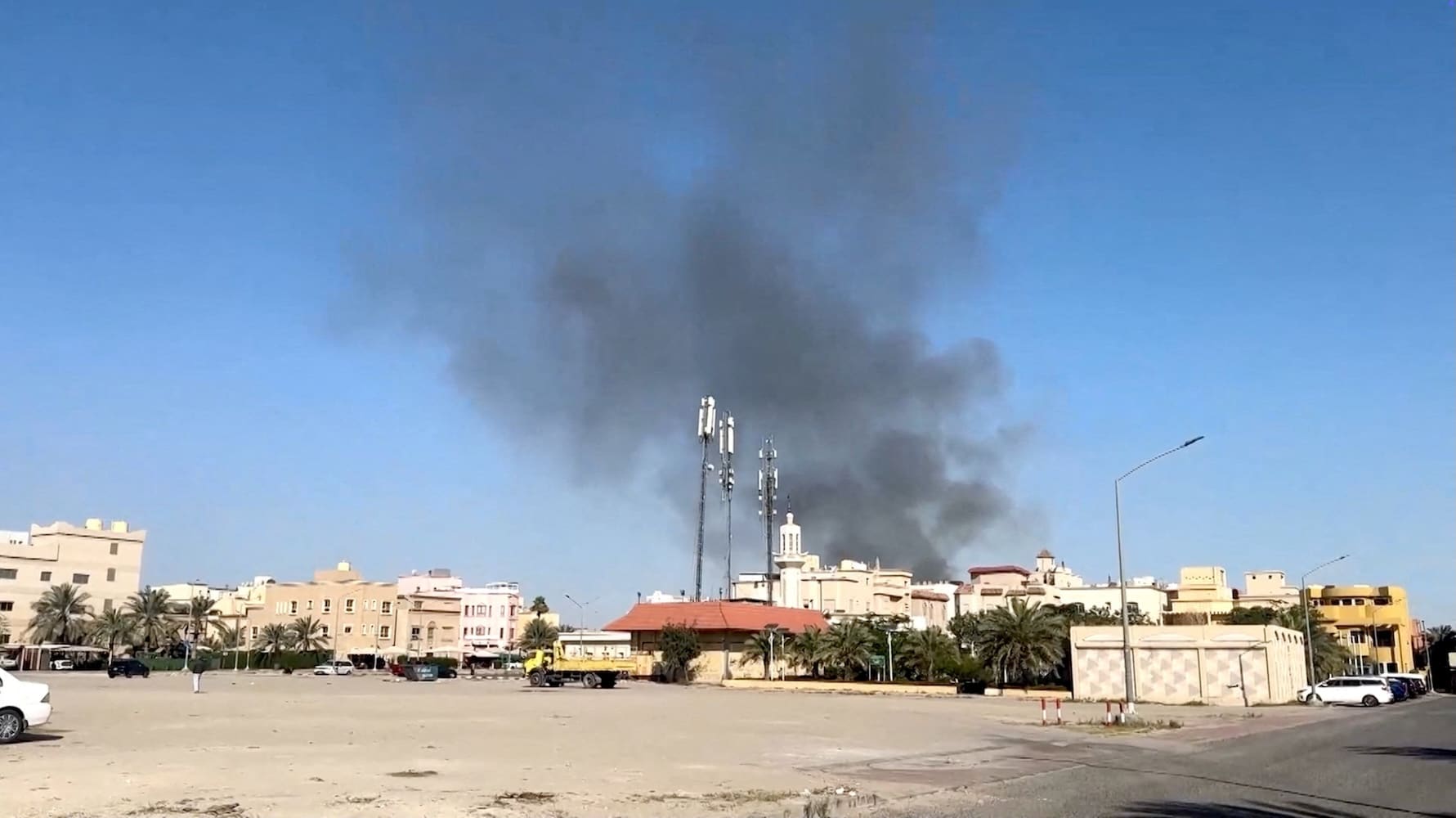
The Pentagon has a new favorite trick. They take a thousand-pound bomb, drop it on a sovereign nation’s command-and-control center, and tell you it isn't a war. They call it "Operation Epic Fury." They call it a "de-escalatory strike." They call it "kinetic diplomacy."
They are lying.
The competitor piece you just read—the one echoing the official White House press brief—is a masterpiece of stenography. It accepts the premise that war is a binary switch flipped by a Congressional declaration. It’s a comforting bedtime story for a taxpayer who doesn't want to admit we are currently in a high-intensity regional conflict.
In the real world, if you launch over 200 sorties in 48 hours to decapitate an adversary’s infrastructure, you are at war. The refusal to name it is not about "avoiding escalation." It is about avoiding accountability.
The Myth of the Surgical Strike
The lazy consensus in the media right now is that "Epic Fury" is a "surgical" operation designed to "neutralize" Iranian-backed assets without triggering a full-scale war.
Here is the truth: A surgical strike is a PR term, not a military reality.
I have spent two decades analyzing intelligence feeds and weapon systems deployments. There is no such thing as a "clean" decapitation of a foreign state’s command structure. When you take out a Tier 1 general or a subterranean facility, you are not just removing a "threat." You are creating a power vacuum.
The White House says this isn't a war because they haven't sent three carrier strike groups to the Persian Gulf yet. But that is a 20th-century metric for a 21st-century conflict.
Why the White House is Terrified of the W-Word
The moment the President says "This is a war," three things happen that the current administration cannot afford:
- Market Panic: Brent Crude would hit $120 a barrel before the press conference ended.
- Congressional Oversight: The War Powers Resolution of 1973 suddenly has teeth.
- Public Support: If you call it a war, the public expects a clear victory. If you call it an "operation," you can walk away whenever the optics get bad.
By calling it "Operation Epic Fury," they have given a name to a series of events that they can then claim have a "start" and an "end."
War, however, does not follow a press release.
Iran’s Asymmetric Response is Already Here
While the US-Israel coalition is busy patting itself on the back for hitting static targets, Iran is already winning the second phase of this conflict.
The "Epic Fury" strikes focused on kinetic targets—missile silos, drone factories, and command bunkers. But Iran’s retaliation is not going to be a mirror image.
Iran does not need to sink a US destroyer to "win." They only need to demonstrate that the US-Israel alliance cannot guarantee the safety of the global economy.
The Real Cost of "Not a War"
Imagine a scenario where a series of cyber-attacks, not attributed to any specific state, shuts down the power grid in Haifa and the NASDAQ for four hours.
Is that war?
The White House would say "No." The victims would say "Yes."
The competitor article you read focuses on the physical destruction. It ignores the Information and Economic Warfare (IEW) that is currently being waged in the shadows. Iran has spent decades perfecting the art of the "gray zone"—the space between peace and war where the US is notoriously bad at operating.
The Israel-US Disconnect
The most dangerous lie in the "Operation Epic Fury" narrative is that US and Israeli interests are perfectly aligned.
They are not.
Israel views this as an existential necessity. For them, a nuclear-capable Iran is a permanent threat that must be addressed with total military force.
For the US, this is a distraction from the Pacific.
Every Tomahawk missile fired during "Epic Fury" is one less missile available if things heat up in the South China Sea. Every billion dollars spent on this "non-war" is a billion dollars drained from the pivot to Asia.
The Strategic Failure of Targeted Killings
We’ve been here before.
- 2020: The assassination of Qasem Soleimani. The media said it would "cripple" Iran’s proxy network. It didn't.
- 2024: The strike on the Damascus consulate. The media said it would "deter" Iran. It didn't.
- 2026: Operation Epic Fury. The media is saying it is a "surgical" way to prevent a wider conflict.
It won't.
When you kill a leader in a decentralized, ideologically driven network, you don't kill the network. You just promote the more radical understudy who is eager to prove he is tougher than his predecessor.
The Tech Paradox: Why High-End Weapons Can't Win This
The US-Israel coalition is using some of the most advanced technology on the planet. F-35s, AI-driven targeting systems, and bunker-busting munitions.
But Iran is fighting with $20,000 Shahed drones and $500 cyber-exploits.
This is the Cost-Exchange Ratio Problem.
The math is brutal. If the US spends $2 million on a Patriot interceptor to shoot down a $20,000 drone, the US loses that engagement every single time. It doesn't matter if the drone is destroyed. The US is being bled dry by a thousand paper cuts.
"Operation Epic Fury" is the equivalent of trying to kill a swarm of bees with a high-end sniper rifle. It looks impressive on a 4K monitor in a briefing room, but it doesn't solve the problem.
The Invisible Casualties
The competitor article avoids talking about the "collateral damage." Not just the human cost, but the institutional cost.
By bypassing Congress and using the "Epic Fury" branding, the executive branch is further eroding the democratic process of going to war. We are moving toward a reality where the President can authorize massive military campaigns as long as they have a cool name and don't involve "boots on the ground."
But the bombs are real. The retaliation is real. And the risk of a nuclear exchange is more real than it has been in forty years.
The Only Path Forward is Truth
If we want to avoid a global catastrophe, we have to start by calling things what they are.
This is a war.
It is a multi-front, high-stakes conflict involving nuclear powers.
The White House’s insistence that this is just an "operation" is a tactic to keep the public compliant. It allows them to maintain the illusion of control while the situation spiraling out of their hands.
The next time you read a headline about a "surgical strike" or a "limited engagement," ask yourself: Who benefits from the lie?
It isn't the soldiers. It isn't the taxpayers. It’s the career politicians who want the glory of a military victory without the political risk of a war declaration.
Stop Asking if it Will Escalate
The most common question in the "People Also Ask" section of search engines is: "Will Operation Epic Fury lead to a world war?"
The question itself is flawed.
It assumes that a world war looks like 1944. It assumes there will be a clear moment where everything changes.
In the 21st century, the "World War" is a slow burn. It is a series of regional "operations" that collectively dismantle the global order. It is a cyber-attack in Estonia, a blockade in the Red Sea, and a "limited strike" in Iran.
We are already in the escalation. "Epic Fury" isn't the start of the war; it’s the point where we stopped pretending.
The only thing left to decide is how much more we are willing to lose before we admit the truth.
Stop reading the press releases. Start looking at the flight paths. The fuel prices. The cyber-outages.
The war is here.
And "Epic Fury" is just the latest chapter in a book the White House is trying to keep closed.
Do not let them.