The border between Uganda and the Democratic Republic of Congo does not exist in the mud. It exists on maps, in the minds of bureaucrats, and at checkpoints where flags droop in the heavy, humid air. But for a virus, the border is invisible.
Rain fell in sheets across the Rwenzori Mountains, turning the dirt tracks into red clay soup. In a small clinic just miles from the frontier, a kerosene lamp flickered, casting long, dancing shadows against concrete walls. A nurse named Jean—a composite of the countless healthcare workers standing on this forgotten frontline—adjusted his plastic face shield. It was fogging up. The heat inside his layers of protective gear was suffocating, a private sauna born of necessity. Beneath the mask, his breath came in short, jagged bursts.
On the cot before him lay a young boy. The child’s skin was slick with sweat, his eyes rolled back, revealing a terrifying, bloodshot yellow.
Jean did not need a laboratory PCR test to know what he was looking at. He had seen this monster before. The sudden fever. The profound weakness. The dark, ominous bruising beneath the skin that signaled internal bleeding.
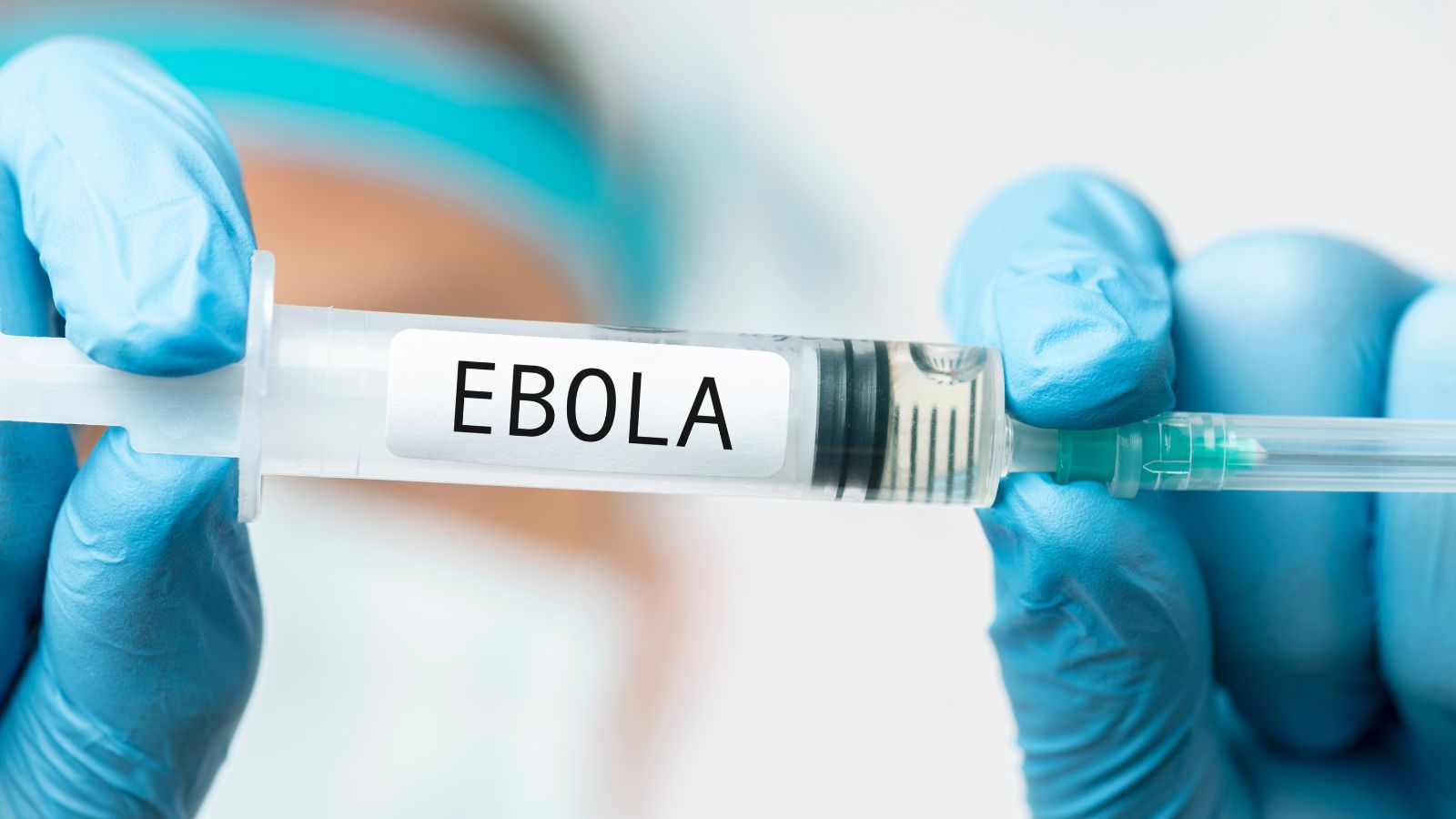
Ebola had returned.
This was not a isolated tragedy in a remote corner of the earth. This was the spark. Weeks later, the World Health Organization would convene in Geneva, thousands of miles away from the mud and the kerosene lamps, to declare a Public Health Emergency of International Concern. The declaration sounds clinical. It sounds bureaucratic. But what it actually means is simple: the fire has breached the containment line, and the rest of the world is downwind.
The Friction of Distance
We live under a comforting illusion. We believe that global health crises happen "over there," in places with unfamiliar names and complicated geopolitics. We view these outbreaks through the cold lens of evening news statistics—numbers on a screen, detached from our daily commute, our morning coffee, our comfortable routines.
But distance is a relic of the past.
Consider how a virus travels. It doesn't walk through the jungle. It boards a motorcycle taxi. It rides in the crowded back of a wooden truck carrying cassava roots to a market town. It crosses a river on a dugout canoe, undetected, nestled quietly in the bloodstream of a trader who merely thinks he has a mild case of malaria. By the time that trader reaches a bustling urban center with an international airport, the countdown has already begun.
The declaration by the WHO is an admission of vulnerability. It is an acknowledgement that the systems we built to keep the world safe are only as strong as the weakest link in the chain. When Ebola flares in the dense forests of the Congo or the border towns of Uganda, it is not an African problem. It is a human problem.
The pathogen in question is relentless. It is an RNA virus, a microscopic strand of genetic code wrapped in a protein coat, shaped like a shepherd's crook under an electron microscope. It does not think. It does not hate. It simply replicates. Once inside the human body, it targets the endothelial cells that line the blood vessels, effectively dissolving the integrity of the circulatory system. It turns our own immune defenses against us, triggering a massive, chaotic inflammatory response known as a cytokine storm.
To understand the scale of what is happening, we have to look past the biological mechanics and look at the social fabric.
The Anatomy of Suspicion
In the West, an emergency declaration triggers funding, logistics, and military-grade supply chains. In the dense communities along the Congo-Uganda border, it triggers something else entirely: memory.
People remember the previous outbreaks. They remember men in white spacesuits arriving in trucks, taking away their sick relatives, and returning them in body bags that could not be opened for traditional burial rites. To a grieving mother, the medical response can look less like a rescue mission and more like an alien invasion.
Imagine the terrifying disconnect. Your child is burning with fever. Strangers arrive speaking a different dialect or a foreign language. They tell you that you cannot touch your dying son. They tell you that the ancient rituals of washing the body to prepare it for the ancestors will kill you.
When rumor fills the void left by fear, the virus wins. Whispers spread through the markets. The foreigners brought the disease. The clinic is where people go to die. The medicine is poison. This is where the real battle against Ebola is fought. It is not fought in high-tech laboratories in Atlanta or Geneva. It is fought in the minds of local elders, religious leaders, and traditional healers. If they do not buy into the response, the containment fails.
During a past deployment to a similar zone, the tension was palpable. You could feel it in the stiffness of the air when entering a village. The skepticism was a physical wall. A colleague, an epidemiologist who had spent decades tracing contacts, explained it clearly over a cold soda in a dusty transit town.
"If they don't trust you," she said, rubbing her eyes, "you might as well be trying to stop a flood with a broom. They will hide the sick. They will bury the dead at night by flashlight. And the virus will just keep moving through the dark."
The current outbreak is complicated by a volatile cocktail of displacement and conflict. The region has been plagued by decades of rebel violence, shifting militias, and deep-seated political instability. When a population is constantly on the move, fleeing violence, contact tracing becomes a mathematical nightmare. How do you track down everyone who sat next to an infected person on a wooden minibus when that minibus has vanished into a war zone?
The Invisible Math of Survival
The response requires an extraordinary convergence of science and human endurance. We now possess tools that previous generations could only dream of. There are vaccines now—highly effective ones like ERVEBO—that can be deployed in a strategy known as "ring vaccination."
The concept is elegant in its simplicity. Think of a stone dropped in a pond. The ripples expand outward. When a case is identified, health workers map out every single person that individual interacted with—the inner ring. Then, they map out the contacts of those contacts—the outer ring. By vaccinating everyone in these concentric circles, they create a human shield of immunity around the virus, starving it of new hosts until it burns itself out.
But executing this strategy in a conflict zone is akin to performing surgery during an earthquake.
The vaccine must be kept cold. Not just refrigerator cold, but ultra-low temperatures, around minus sixty to minus eighty degrees Celsius. This requires specialized freezers, generators, and a constant supply of fuel in places where electricity is a luxury and the roads are frequently cut off by armed groups.
Every dose transported through the jungle is a logistical miracle. It requires a chain of human beings willing to risk their lives to protect people they have never met.
The stakes are immense. If the ring breaks, the virus leaks into major transit hubs. From there, the geometry of transmission shifts from linear to exponential.
We often ask ourselves why we should care about an emergency declaration for a disease thousands of miles away when we have our own economic worries, our own domestic political divides, our own daily stresses. The answer is brutal in its pragmatism: self-interest.
The health security of a resident in London, Tokyo, or New York is inextricably linked to the health security of a farmer in Beni or a market vendor in Kasese. We are bound together by a thin ribbon of jet fuel and global commerce. An infection anywhere is a threat everywhere.
The Price of Forgetting
The global community operates on a dangerous cycle of panic and neglect. When an outbreak hits the headlines, resources pour in. Cameras arrive. Pledges are made on international stages.
Then, the curve flattens. The news cycle moves on to a new scandal, an election, a celebrity divorce. The funding dries up. The surveillance systems are dismantled. The local staff, trained at great expense, are laid off. The clinics run out of basic personal protective equipment.
We return to the status quo of profound indifference. Until the next time the alarm sounds.
This cycle is incredibly costly, both in treasure and in human lives. Building a resilient healthcare system cannot be done during an emergency. You cannot dig a well while your house is actively on fire. It requires sustained, quiet, unglamorous investment in the mundane elements of medicine: clean water, reliable supply chains, decent salaries for local nurses, and robust public health education.
The declaration of a global health emergency is a siren. It is a warning that our collective defenses are being tested by an organism that has been perfecting its survival strategy for millions of years. The virus does not negotiate. It does not take vacations. It does not care about national sovereignty or funding cycles.
Back in the clinic, the rain finally began to ease, leaving behind the heavy, petrichor scent of damp earth. Jean carefully stripped off his personal protective equipment, following a strict, step-by-step protocol where a single mistake, a single touch of an unwashed glove to a bare wrist, could be fatal. He washed his hands in a chlorine solution that burned his cracked skin.
Through the window, he watched the mist rise off the Rwenzori slopes. The boy on the cot was resting, his breathing shallow but stable for now. Outside, the world was waking up. People were gathering their tools, preparing to walk down the muddy tracks, to cross the invisible borders, to live their lives.
The world feels vast when we look at a globe. But when a microscopic killer begins to move through the rainforest, that vastness evaporates. We are left looking at each other across a very small, very fragile room, wondering if we will have the wisdom to act before the lights go out.