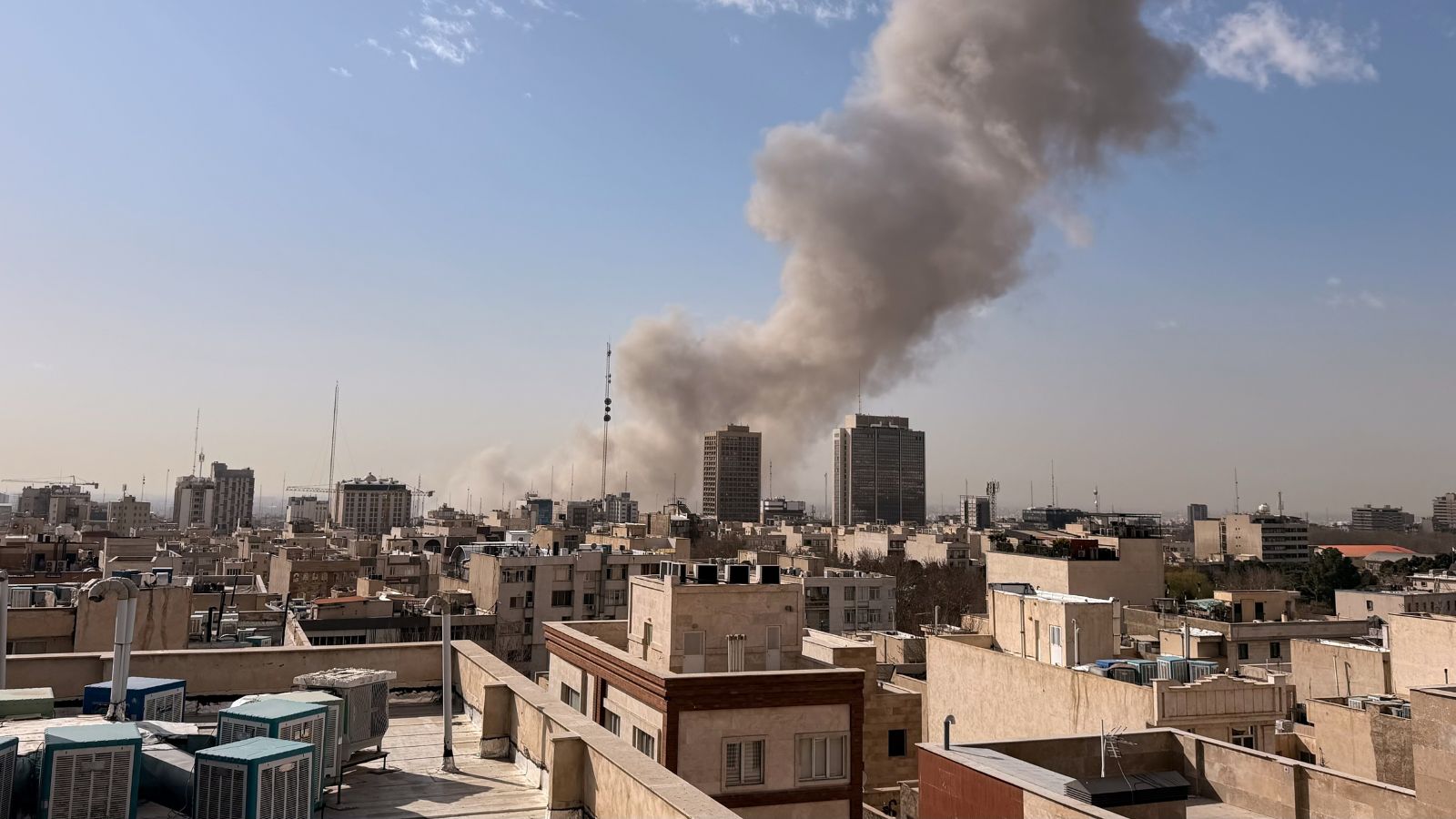
In a small apartment on the outskirts of Isfahan, a woman named Leila reaches for a glass of water. It is 2:30 AM. The silence of the desert night is absolute, the kind of quiet that feels heavy, almost pressurized. Then, the sky breaks. It isn't the low rumble of a passing storm or the sharp crack of a localized accident. It is a mechanical roar that vibrates through the marrow of her bones before it even hits her ears.
The windows rattle in their frames. For three seconds, the room is bathed in a synthetic, flickering orange light that belongs nowhere in nature.
Leila doesn't check the news. She doesn't have to. In this part of the world, the sky has its own language, and tonight it is shouting. This is what a "targeted strike" looks like when you are standing under it. While analysts in climate-controlled studios thousands of miles away talk about "calibrated responses" and "strategic messaging," people like Leila are counting the seconds between the flashes, wondering if the ceiling is about to become the floor.
The Ledger of Invisible Costs
When we discuss military friction between regional powers, we often fall into the trap of treating it like a game of chess played on a board of sand. We talk about the "attrition of air defense assets" or the "degradation of nuclear infrastructure." We use clean, clinical words to describe the messy reality of fire and steel.
But geopolitical strikes are never just about the targets they hit. They are about the ripples they send through the collective psyche of three hundred million people.
Consider the economic ghost that haunts the bazaars of Tehran and the tech hubs of Tel Aviv. The moment the first missile leaves its rail, the value of a currency can plummet. A father sitting in a coffee shop in Beirut watches the exchange rate on his phone, seeing his life savings evaporate in real-time because of a decision made in a bunker he will never see. This is the hidden tax of instability. It is a cost paid not in blood, but in the slow, grinding erosion of a future.
The strategy behind these strikes is often described as "deterrence." The logic is simple: if I hit you hard enough, you will be too afraid to hit me back. Yet, history suggests a different rhythm. Deterrence in the Middle East often functions less like a wall and more like a ladder. Each rung represents a higher caliber of explosive, a more daring breach of sovereignty, a more public display of power.
The Architecture of the Shadow War
For decades, the friction between Iran and its rivals was a shadow play. It was a war of proxies, cyber-attacks, and whispered assassinations. It stayed in the dark. It had "deniability." If a ship was limpet-mined in the Gulf, everyone knew who did it, but no one had to admit it. This ambiguity was a safety valve. It allowed both sides to save face without committing to a full-scale conflagration.
That valve has been hammered shut.
We have moved into an era of "direct exchange." When missiles fly directly from the soil of one nation to the heart of another, the shadow war ends and the daylight war begins. This shift is tectonic. It removes the layer of insulation that kept the region from a total breakdown. Now, every strike demands a visible, cinematic response. The audience is no longer just the military elite; it is the screaming masses on social media and the hardliners in the halls of parliament.
The math of these encounters is deceptively complex. If State A launches 300 drones and State B intercepts 99% of them, who won? In the world of military hardware, State B won. Their technology proved superior. But in the world of psychology, State A proved they could saturate the most advanced defense system on earth. They proved the "dome" isn't a solid roof, but a net with holes.
The Fragility of the Status Quo
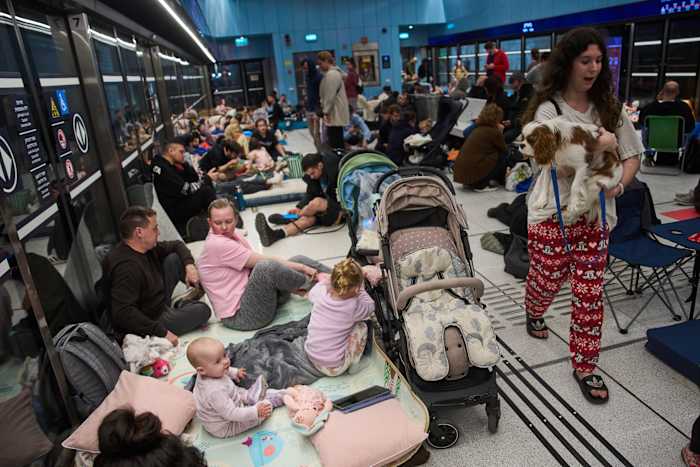
There is a specific kind of exhaustion that settles over a region that has been "on the brink" for forty years. You see it in the eyes of the shopkeepers in Jerusalem and the students in Baghdad. It is a weary resilience. They have learned to build lives in the cracks between crises.
But even resilience has a breaking point.
The danger of the current cycle isn't necessarily a planned invasion. Nobody wants a regional war. Not the Americans, who are tired of the sand; not the Iranians, whose economy is gasping for air; and not the Israelis, who are already stretched thin. The danger is the "fat finger" or the "misread signal."
Imagine a radar operator who hasn't slept in 20 hours. He sees a blip. It doesn't match the signature of a known commercial flight. He has 45 seconds to decide if he’s looking at a bird, a drone, or the opening shot of an apocalypse. He fires. He hits a civilian airliner. Suddenly, the "calibrated" conflict is a global tragedy, and the momentum toward war becomes an avalanche that no diplomat can stop.
This isn't a hypothetical fear. It has happened before. It is the friction of war, the way that heat builds up in a system until the parts begin to melt.
The Oil and the Arteries
Beyond the human drama, there is the cold, hard reality of the map. The Middle East isn't just a collection of nations; it is the world’s heavy-duty engine room.
The Strait of Hormuz is a narrow stretch of water that functions as the jugular vein of the global economy. Roughly one-fifth of the world’s oil passes through that tiny gap. When strikes occur, the insurance premiums for tankers skyrocket. Shipping lanes shift. The price of gas at a station in Ohio or a factory in Guangdong begins to tick upward.
But the "oil factor" is an old story. The new story is data and logistics. The region is increasingly a hub for the fiber-optic cables that stitch the internet together. A truly uncontained conflict wouldn't just mean a hike in gas prices; it could mean a "digital blackout," a disruption of the invisible threads that hold the modern world's financial systems in place.
We are all connected to the fate of Isfahan and Tel Aviv, whether we care to admit it or not. The world is too small for a fire of that magnitude to stay contained in one house.
The Sound of the Morning
As the sun begins to rise over the Alborz Mountains, the amber glow of the explosions fades into the pale blue of a desert morning. For now, the "exchange" is over. The press releases are being drafted. One side will claim a glorious victory against the "Zionist entity," and the other will claim a surgical triumph against "terrorist infrastructure."
Both will be lying, at least partially.
The truth is found in the trembling hands of people like Leila. The truth is in the quiet realization that the "red lines" we used to talk about have been crossed so many times they are now a muddy purple.
The real impact of these strikes isn't the craters they leave in the ground. It is the way they reshape the imagination of the people living there. When you grow up under a sky that can turn into a furnace at any moment, you stop planning for ten years from now. You stop investing in the long-term beauty of your community. You live in the "now," because the "later" is an unsecured loan.
We are watching the systematic dismantling of the future. Each strike, no matter how "successful" or "precise," adds another layer of scar tissue to a region that is already more scar than skin.
The missiles have landed. The dust has settled. But in the silence that follows, you can hear the faint, steady sound of a clock ticking toward an hour that no one is prepared to face.
The sky is quiet again. For now.