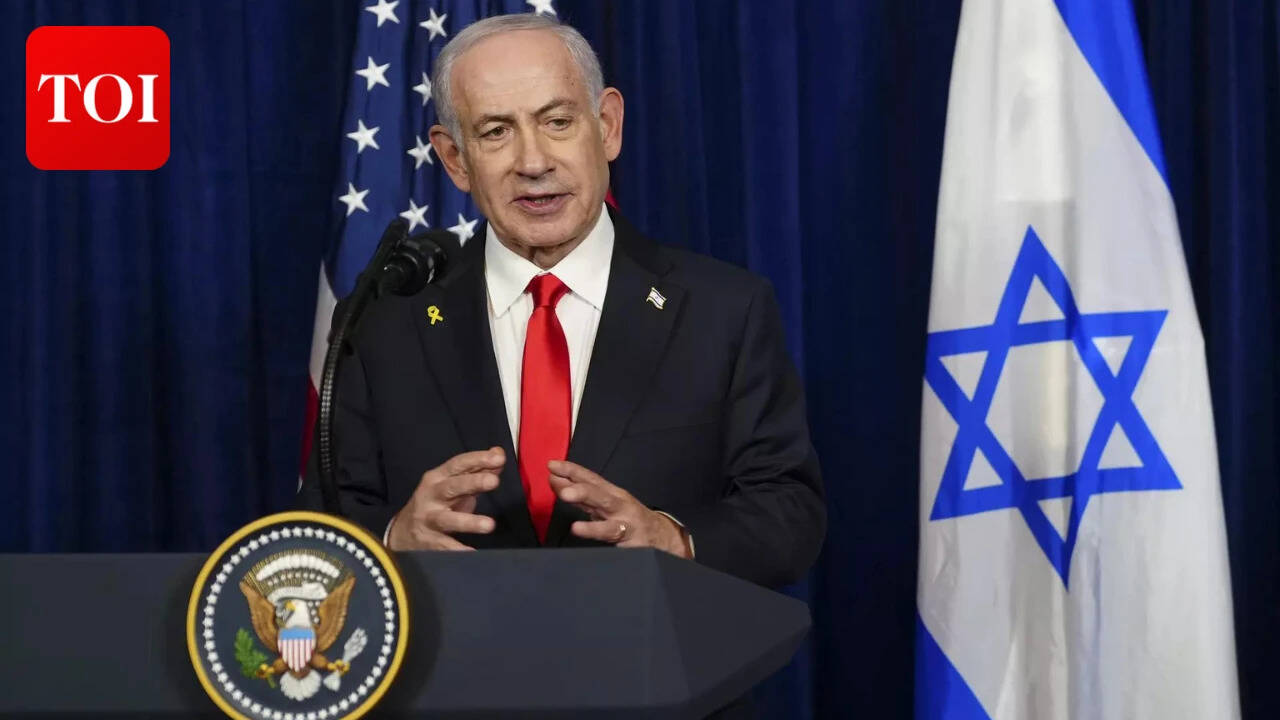
Benjamin Netanyahu just did something that most world leaders wouldn't dare. He spoke directly to the people of an enemy nation while his military prepared for the next phase of a high-stakes conflict. It wasn't a standard diplomatic cable or a leaked intelligence report. It was a video message aimed straight at the heart of Tehran. He told the Iranian people that "help has now arrived," a phrase that carries immense weight given the current volatility in the Middle East.
This isn't just about optics. It's a calculated psychological move. By framing the Israeli military response not as an attack on Iran the country, but as a strike against the "terrorist regime" that holds it captive, Netanyahu is trying to drive a wedge between the Iranian public and the Ayatollah’s inner circle. He’s betting that the average person in Isfahan or Shiraz is more worried about their failing economy and lack of freedom than they are about avenging a regional proxy war.
Whether this strategy works depends on how much the Iranian public actually buys into the idea of Israel as a liberator. History is full of leaders who thought they’d be greeted with flowers, only to find a much colder reality. But Netanyahu isn't talking to the hardliners. He’s talking to the Gen Z protesters who filled the streets during the "Woman, Life, Freedom" movement. He knows the regime is brittle.
Why Netanyahu is Bypassing the Islamic Republic
The logic here is pretty simple. Traditional diplomacy with the Iranian leadership has hit a brick wall. From the collapse of the nuclear deal to the constant firing of missiles by proxies like Hezbollah and the Houthis, the official channels are dead. Netanyahu's "Help has arrived" message serves two masters. First, it tells the Iranian people that Israel isn't their enemy. Second, it warns the regime that their grip on power is more fragile than they admit.
Israel’s recent strikes against Iranian targets have been surgical. They aren't carpet-bombing cities. They’re hitting missile factories, air defense systems, and military commanders. By emphasizing this, Netanyahu wants to make sure the Iranian people don't rally around the flag out of fear. He wants them to see the regime’s military infrastructure as a target that, once removed, actually makes the Iranian citizen safer.
It’s a bold claim. You’re basically telling a population that you’re bombing their country for their own good. That’s a tough sell in any language. But in the context of Iran’s internal struggles, it might actually find an audience. The Iranian rial is in the gutter. Inflation is rampant. People are tired of seeing billions of dollars shipped off to Lebanon and Gaza while they struggle to buy eggs. Netanyahu is tapping into that specific resentment.
The Reality of Direct Strikes and Regional Deterrence
We have to look at what’s actually happening on the ground. Israel has moved past the era of "shadow wars." The days of Mossad agents stealing documents in the middle of the night haven't ended, but they’ve been joined by overt, heavy-metal military action. When Iran launched hundreds of drones and missiles toward Israel earlier this year, the red line didn't just move—it disappeared.
Netanyahu’s warning of more strikes isn't an empty threat. Israel’s air superiority in the region is currently unchallenged. They’ve proven they can reach deep into Iranian territory and hit specific buildings without being detected until it’s too late. This technological gap is what gives Netanyahu the confidence to speak like a savior. He knows the Iranian regime’s air defenses are, frankly, outdated compared to the F-35s and electronic warfare suites Israel employs.
The Risk of Backfire
There's always a "but" in Middle Eastern politics. The biggest risk here is that Netanyahu’s rhetoric plays right into the regime’s propaganda. The Supreme Leader can easily point to these videos and say, "See? The Zionist entity wants to colonize us." If the Iranian people feel their national sovereignty is being insulted, they might put aside their hatred for the morality police to defend their borders.
Netanyahu is walking a razor-thin line. If he hits a civilian area by mistake, the "help has arrived" narrative dies instantly. If he hits a site that causes a massive environmental disaster, he becomes the villain. To keep the Iranian public on his side—or at least neutral—the military execution has to be perfect.
What the Iranian Public Really Thinks
I've followed the digital chatter coming out of Iran for years. There's a massive divide. You have the older, revolutionary generation and the IRGC (Islamic Revolutionary Guard Corps) loyalists who will fight to the death. Then you have the youth. They use VPNs to see the world. They know what life looks like in Dubai, Tel Aviv, and Los Angeles. They don't want a caliphate; they want high-speed internet and jobs.
When Netanyahu says the regime spends more on "terrorist wars" than on Iranian schools, he's quoting the same things protesters shout in the streets of Tehran. This isn't a coincidence. Israeli intelligence monitors Iranian social media extensively. They know exactly which pain points to poke.
- The regime prioritizes Hezbollah over its own citizens.
- Iranian wealth is being "exported" to fuel conflicts in Yemen and Iraq.
- The IRGC is a mafia that controls the economy.
Netanyahu is essentially acting as a megaphone for the Iranian opposition. It’s a form of political warfare that’s just as important as the physical bombs.
The Military Context of More Strikes
Netanyahu’s promise of "more strikes" suggests that the current cycle of escalation isn't over. Israel is looking at Iran’s nuclear program with renewed urgency. If the regime feels cornered by internal dissent and Israeli pressure, they might decide that a nuclear breakout is their only way to survive. Israel cannot let that happen.
The next set of targets likely includes the "head of the snake." This doesn't necessarily mean an assassination of top leaders—though that’s never off the table—but rather the decapitation of the regime's ability to communicate and control its proxies. If you take out the command centers in Iran, the fighters in Lebanon and Yemen lose their funding and their orders.
This is the "new order" Netanyahu keeps talking about. He’s trying to reshape the Middle East by removing the central hub of what he calls the "Axis of Evil." It’s an ambitious, some would say messianic, goal. It’s also incredibly dangerous.
Breaking Down the "Help" Narrative
What does "help" actually look like? Netanyahu didn't promise to send food or medicine. He promised to degrade the regime. For the average Iranian, "help" might just mean the regime being too busy defending itself to arrest women for not wearing a hijab. It means the IRGC being too broke to pay the thugs who beat protesters.
But there’s a vacuum problem. If the regime actually collapses, who takes over? The Iranian opposition is fragmented. Some want the Shah’s son back. Others want a secular republic. Without a clear plan for the day after, "help" could easily turn into "chaos." Netanyahu hasn't addressed that part yet. He’s focused on the destruction of the current threat, leaving the reconstruction to a future he can't control.
The Role of the United States
You can't talk about Israel and Iran without mentioning Washington. Netanyahu’s message is also a signal to the U.S. He’s showing that Israel is willing to take the lead. By positioning Israel as the ally of the Iranian people, he’s making it harder for any U.S. administration to condemn Israeli strikes. After all, how can you be against "helping" an oppressed population?
It's a clever bit of framing. It forces the international community to choose between supporting a regime that hangs its own people or supporting a democratic ally that’s taking out military targets.
The Immediate Impact on the Region
Expect the rhetoric to get even louder. The Iranian regime will likely respond with its own videos, its own threats, and potentially more missile tests. They need to show their own people—and their proxies—that they aren't intimidated. This "war of the videos" is the preamble to the next kinetic phase.
Keep an eye on the oil markets. Every time Netanyahu speaks, traders get nervous. While he’s talking to the citizens, the markets are listening for the sound of exploding refineries. So far, Israel has stayed away from Iran’s economic lifeblood, focusing instead on military assets. But if the "terrorist regime" doesn't back down, that could change.
Netanyahu's gamble is that the Iranian people hate their leaders more than they fear a foreign military. It's a high-stakes bet that could redefine the region for the next fifty years. If he’s right, we’re looking at the beginning of the end for the Islamic Republic. If he’s wrong, he’s just unified his greatest enemy.
If you’re watching this play out, don't just look at the explosions. Watch the Iranian internet. Look for the hashtags. See if the "help" Netanyahu offered is being welcomed or rejected by the people on the ground. That’s where the real war will be won or lost. Focus on the internal dissent within Iran as the primary indicator of whether Israel's psychological operations are hitting the mark or missing it entirely. Check credible news outlets like Reuters or the Associated Press for verified reports on internal Iranian protests following these statements. Be skeptical of state-run media from either side; the truth usually sits somewhere in the middle of the chaos.