Benjamin Netanyahu’s recent direct-to-camera address to the Iranian people represents a shift from traditional military posturing to a calculated form of psychological insurgency. By speaking over the heads of the Islamic Revolutionary Guard Corps (IRGC) and straight to the households of Tehran and Isfahan, the Israeli Prime Minister is betting on a specific historical gamble: that the gap between the Iranian public and its clerical leadership has become a chasm wide enough to swallow the state. This isn’t just a video message. It is a strategic attempt to accelerate an internal collapse, aiming to turn the Iranian street into a second front that the regime cannot bomb away.
The core of the strategy rests on the belief that the Islamic Republic is currently at its most vulnerable point since the 1979 Revolution. Economic mismanagement, brutal crackdowns on domestic dissent, and the systematic draining of national resources to fund regional proxies like Hezbollah and Hamas have created a powderkeg. Netanyahu’s rhetoric seeks to light the fuse by framing the "liberation" of Iran not as a foreign conquest, but as an inevitable homecoming for a great civilization currently held hostage by a "fanatic bureaucracy."
The Architecture of a Digital Coup
To understand the mechanics of this move, one must look at the timing. Israel has spent the last year systematically dismantling the "ring of fire" that Iran built around its borders. With Hezbollah’s command structure decapitated and Hamas reduced to an insurgency, the Iranian leadership finds its deterrents vanishing. Netanyahu is capitalizing on this perceived weakness to suggest that the regime is not only "evil," as he often claims, but increasingly "impotent."
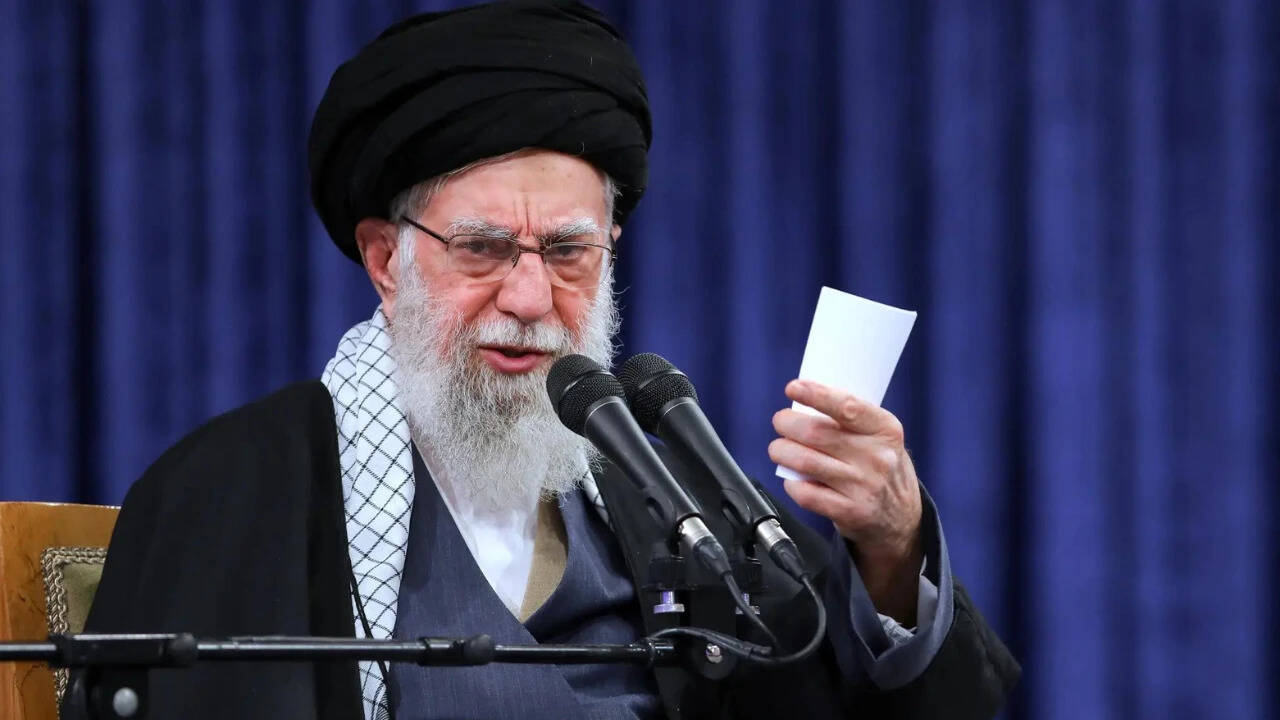
This distinction matters. A population might fear a powerful oppressor, but it will eventually revolt against an oppressor that can no longer protect its own interests or provide basic economic stability. By highlighting the massive sums spent on failed missile barrages against Israel—money that could have been spent on Iranian infrastructure, healthcare, and education—Netanyahu is performing a real-time audit of the regime’s failures. He is effectively telling the Iranian middle class that their poverty is a direct policy choice made by Supreme Leader Ali Khamenei.
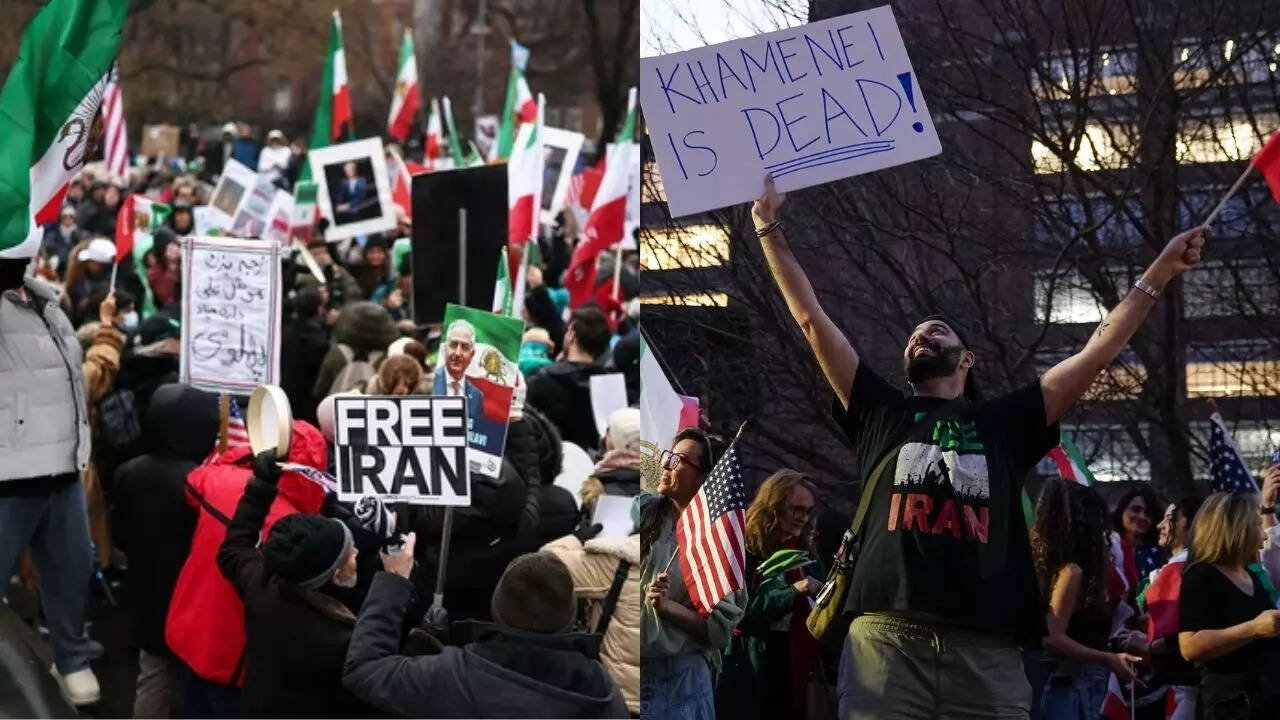
The Iranian government’s response has been a predictable mix of internet blackouts and intensified patrols by the Basij paramilitary. However, the old playbooks are losing their efficacy. The "Woman, Life, Freedom" protests of 2022 proved that a significant portion of the youth—roughly 60% of the population is under the age of 30—no longer buys into the revolutionary ideology. They see the regime not as a guardian of faith, but as a barrier to a normal life.
The Proxy War Comes Home
For decades, the Islamic Republic operated on the principle of "forward defense." The idea was simple: fight Israel and the United States in Lebanon, Syria, Iraq, and Yemen so you never have to fight them in the streets of Tehran. That doctrine is currently in shambles. When Israeli jets strike targets inside Iran with relative impunity, the aura of invincibility that the IRGC worked so hard to cultivate evaporates.
Netanyahu’s message leans heavily into this loss of face. By promising a future where "Israel and a free Iran" live in peace, he is attempting to decouple the Iranian national identity from the Islamic Republic’s identity. It is a sophisticated form of rebranding. He is trying to offer the Iranian people a "way out"—a vision of a post-clerical era where the country rejoins the global community as a regional powerhouse rather than a pariah state.
However, this approach carries immense risks. Nationalism is a fickle beast. Even Iranians who loathe their government may find a foreign leader, particularly one from a traditional adversary, telling them how to run their country to be deeply offensive. There is a fine line between encouraging a domestic movement and appearing to manufacture one from the outside. If the Iranian public perceives this as a precursor to a full-scale invasion, they may rally around the flag, regardless of who is holding it.
The Economic Catalyst
The "how" of this potential regime change is almost entirely tied to the Iranian Rial. The currency has been in a tailspin for years, losing value faster than the government can print it. Inflation is rampant, and the price of basic goods like eggs and fuel has skyrocketed. Netanyahu’s speech specifically targeted this pain point.
- Resource Diversion: Every Shabab-3 missile launched represents millions of dollars that didn't go into the Iranian power grid.
- Sanction Pressure: The threat of "crippling" strikes on oil refineries looms large.
- The Shadow Economy: The IRGC controls a massive portion of the Iranian economy through various front companies. If those companies are targeted by intelligence operations, the very patronage system that keeps the military loyal begins to fray.
The Intelligence War Behind the Scenes
The public address is only the visible tip of the spear. Behind the scenes, Mossad and other intelligence agencies have been engaged in a years-long campaign of "gray zone" warfare inside Iran. This includes the assassination of nuclear scientists, the theft of massive nuclear archives, and sophisticated cyberattacks on infrastructure.
These operations serve two purposes. First, they physically delay the regime’s nuclear ambitions. Second, they demonstrate a terrifying level of penetration. If Israel can spirit away half a ton of secret documents from a warehouse in the heart of Tehran, what else can they do? This creates a sense of paranoia among the Iranian elite. They begin to wonder who among them is a mole, leading to internal purges that further destabilize the government.
Netanyahu’s call for the Iranian people to "not lose hope" is a signal to these internal networks as much as it is to the general public. It suggests that there is an organized, high-level effort to support a transition of power. Whether that effort is real or a clever piece of psychological warfare is almost irrelevant; the goal is to make the Iranian leadership believe their downfall is being plotted from within their own inner circle.
The Regional Repercussions
The "Abraham Accords" remain the unspoken backdrop to this drama. While Saudi Arabia and other Gulf states must officially condemn Israeli military action, there is a quiet consensus that a weakened or reformed Iran would be the single greatest boon to regional stability. The "Sunni Block" has grown weary of Iranian-backed militias destabilizing their borders and threatening shipping lanes in the Red Sea.
If Netanyahu succeeds in helping to topple the regime—or even just severely distracting it—the regional map changes overnight.
- Syria: Bashar al-Assad, whose survival depends on Iranian muscle, becomes incredibly vulnerable.
- Lebanon: Hezbollah loses its primary source of funding and weaponry, potentially allowing the Lebanese state to reassert control.
- Yemen: The Houthis find themselves isolated, likely forcing them to the negotiating table.
This is the "Grand Bargain" Netanyahu is chasing. He isn't just looking for a tactical win in Gaza; he is looking to rewrite the geopolitical DNA of the Middle East. It is an ambitious, perhaps even arrogant, objective that ignores the historical reality that revolutions rarely go exactly as planned.
The Fragility of the "Persian Spring"
The comparison to the 2011 Arab Spring is inevitable, and it serves as a warning. When external powers attempt to guide internal revolutions, the results are often chaotic. If the Islamic Republic were to collapse tomorrow, there is no guarantee that a liberal democracy would take its place. Power vacuums in the Middle East tend to be filled by the most organized and violent actors, not necessarily the most moderate ones.
The IRGC is not just a military; it is a sprawling conglomerate with hundreds of thousands of members whose livelihoods and lives depend on the regime’s survival. They will not go quietly. Any real attempt at "eradicating the regime" would likely result in a civil war that could make the Syrian conflict look orderly.
Netanyahu’s rhetoric glosses over these complexities. He paints a picture of a "swift and easy" transition, a narrative that veteran analysts find dangerously optimistic. The Iranian state has spent 45 years building a sophisticated apparatus of repression designed specifically to withstand the kind of pressure Israel is now applying.
The Nuclear Clock
Finally, there is the issue of the nuclear program. All roads in this conflict eventually lead to the enrichment facilities at Natanz and Fordow. Netanyahu’s appeal to the people may be a final diplomatic and psychological "hail mary" before a kinetic strike on Iran’s nuclear infrastructure. If he can convince the Iranian people that the coming strikes are the fault of their leaders' stubbornness, he might mitigate some of the inevitable backlash.
The message is clear: The regime is the problem, not the country. By framing the conflict in these terms, Israel is attempting to give itself the moral high ground for whatever comes next. It is a high-stakes play for the hearts and minds of a nation that has been the "Great Satan’s" adversary for nearly half a century.
History is littered with the failures of foreign leaders who thought they could orchestrate the internal politics of a distant nation through televised speeches. Netanyahu knows this. But he also knows that the current status quo—a nuclear-armed Iran with its proxies at Israel’s throat—is an existential threat he is no longer willing to tolerate. He is betting that the Iranian people’s desire for a "normal life" is stronger than their fear of the secret police. It is a gamble that will either redefine the region for the next century or ignite a fire that no one, not even Netanyahu, can put out.
The Iranian people now face a choice that will be forced upon them by the weight of their own history and the relentless pressure of a neighbor that has decided the time for containment is over. The "eradication" Netanyahu speaks of may start with a video, but it will end in the streets.
Start monitoring the official Telegram channels of Iranian dissident groups to see how this rhetoric is being localized and distributed on the ground.