The salt air in Havana doesn’t just smell like the sea; it smells like decay and defiance. It’s a scent that clings to the crumbling limestone of the Malecón, where 1950s Chevrolets rattle past like colorful, metallic ghosts. For decades, this island has been a locked room in the house of the Americas. Now, a heavy hand is rattling the doorknob.
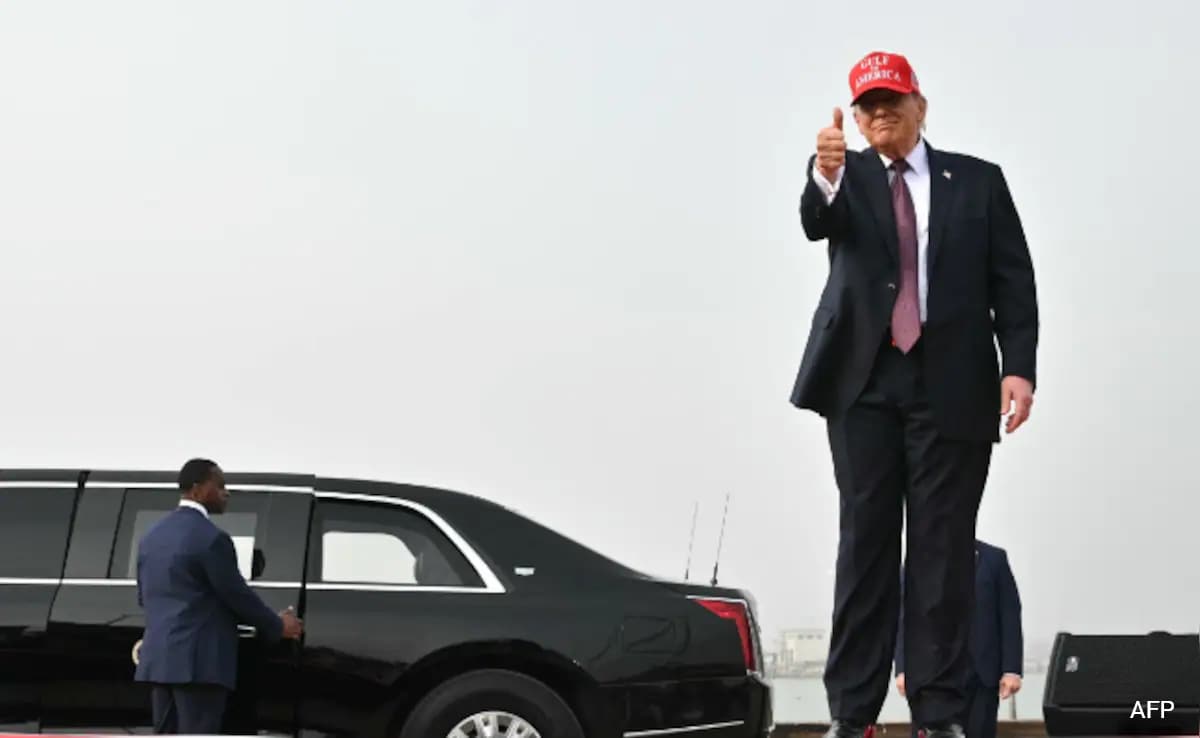
When Donald Trump speaks about Cuba, he isn't talking about diplomacy in the way a State Department cable might describe it. He talks about it like a distressed asset. "They have no money," he noted recently, a blunt observation that carries the weight of a foreclosure notice. He floated the idea of a "friendly takeover." The phrase sounds clinical, almost corporate, like a hedge fund absorbing a struggling mid-sized tech firm. But nations aren't spreadsheets.
The Ledger of the Long Wait
Consider a man named Mateo. He is hypothetical, but his reality is shared by millions. Mateo spends four hours a day standing in lines—lines for bread, lines for fuel, lines for a hope that never quite arrives. In his pocket, the Cuban peso is a piece of paper that loses value while he sleeps. To Mateo, the geopolitical chess match between Washington and Havana isn't about ideology anymore. It is about calories.
When the American political machine looks at Cuba and sees a "friendly takeover" opportunity, they are looking at a country that has been pushed to the edge of a fiscal cliff. The statistics are staggering. The Cuban economy shrank significantly in recent years, battered by the disappearance of Venezuelan subsidies, the choking grip of renewed sanctions, and a tourism industry that never fully recovered from the global silence of 2020.
The logic of the takeover is simple: if a neighbor can’t pay their mortgage, you don’t just wait for the bank to move in. You offer to buy the debt. You bring the capital. You bring the "efficiency." But in the Caribbean, efficiency has a history, and it usually involves a foreign flag.
A Caribbean Mar-a-Lago
The vision being cast is one of transformation. Imagine the north shore of Cuba—not as a restricted military zone or a series of crumbling fishing villages, but as a glittering extension of the Florida coastline. This is the "real estate" lens of foreign policy. It views the 90 miles of water not as a barrier, but as a short commute for developers.
The proposal of a friendly takeover suggests a grand bargain. The United States provides the massive infusion of cash needed to fix the power grid, which currently fails with agonizing frequency, leaving cities in sweltering darkness. In exchange, the ideological barriers fall. It is a gamble that the stomach will eventually overrule the heart.
But history is a stubborn tenant.
The last time American interests held a "friendly" grip on Cuban infrastructure, the island was the playground of the mob and United Fruit. That memory isn't just in textbooks; it is baked into the national identity of the people living in those peeling pastel buildings. When a billionaire-turned-politician talks about a takeover, the older generation in Havana hears the echo of a dial being turned back sixty years.
The Mechanics of the Deal
How do you actually take over a country "friendly"? It isn't through tanks or paratroopers. It’s through the dollar.
- Debt Absorption: Cuba owes billions to international creditors, including Russia and China. An American-led "rescue" would involve restructuring this debt, effectively moving the pink slip of the country into Western hands.
- Infrastructure Privatization: The crumbling bridges and the archaic telecommunications system are ripe for "investment." In a takeover scenario, American firms would rebuild the island, owning the very veins and arteries of Cuban life.
- Currency Substitution: The peso is already a ghost. Formalizing the U.S. dollar as the primary medium of exchange would tether the island’s heartbeat to the Federal Reserve.
This isn't just theory. We’ve seen versions of this play out in various "dollarized" economies across Latin America. The result is often a surface-level glitter that masks a deep, structural inequality. The hotels get air conditioning; the locals get jobs cleaning the vents.
The Invisible Stakes
There is a specific kind of silence that happens in a Havana courtyard when the power goes out. It’s the sound of a million fans stopping at once. In that heat, the "friendly takeover" starts to look less like a political threat and more like a tempting, dangerous exit ramp.
The risk, however, is the soul of the place. Cuba’s poverty is undeniable, but so is its terrifyingly resilient culture. A corporate absorption of the island would likely mean the end of the very things that make it unique. The "Disneyfication" of Havana is a real fear among those who value the grit and the art that survived the embargo.
If the island is treated as a distressed asset, the "restructuring" will be brutal. Regulations on labor, environmental protections for those pristine reefs, and the sovereignty of local courts would all be on the bargaining table. The "friendly" part of the takeover refers to the lack of gunfire, not the lack of pain.
The Mirror on the Wall
We have to ask why this narrative is surfacing now. It’s a reflection of a shift in American thinking—a move away from the slow, grinding gears of traditional diplomacy and toward the high-stakes world of the leveraged buyout. It treats the world as a collection of properties rather than a collection of peoples.
The "They have no money" comment is a tell. It reveals a belief that sovereignty is a luxury of the wealthy. If you are broke, you are up for grabs. It’s a predatory form of neighborliness that assumes every man has a price and every island has a closing date.
Think back to Mateo. If an American developer knocks on his door and offers him a job that pays in stable currency, a fridge full of meat, and a car that doesn't require a miracle to start, will he care about the flag flying over the capitol? Perhaps not at first. The tragedy of extreme poverty is that it makes the long-term cost of a "friendly takeover" feel like a bargain in the short term.
But the bill always comes due.
When the resorts are built and the "distressed asset" has been flipped for a profit, the people who lived through the transition often find they are strangers in their own streets. They become the "authentic" backdrop for a tourist's sunset photo, leaning against a wall they no longer own, watching a sea that has been sold.
The door is being rattled. The hinges are rusty. The man inside is hungry. Outside, the buyer is waiting with a briefcase full of cash and a contract that hasn't been fully read. The tragedy isn't that the takeover might happen; it's that for many, it's starting to sound like the only way to turn the lights back on.
A shadow is lengthening across the Florida Straits, shaped like a skyscraper, waiting for the ink to dry on a deal that hasn't even been signed yet.