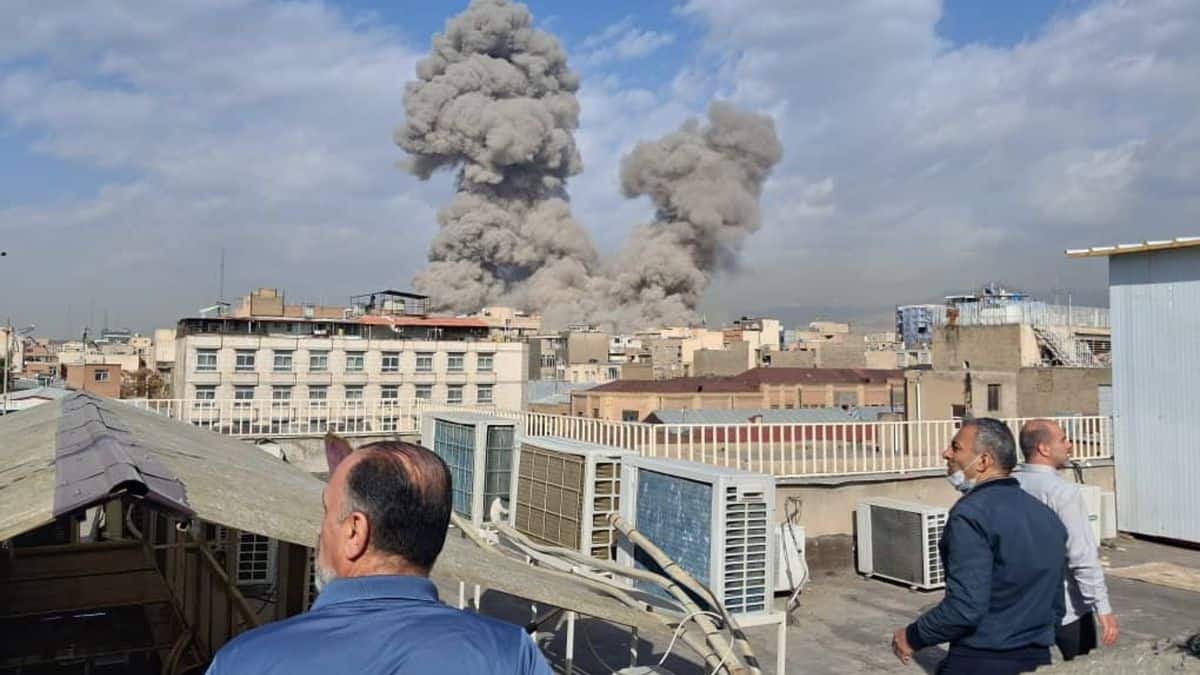
Don't believe the hype that the nuclear threat is over. Just when we thought the "12-Day War" of 2025 had finished the job, the International Atomic Energy Agency (IAEA) just dropped a reality check. On March 3, 2026, the watchdog confirmed that the entrances to Iran's Natanz enrichment plant were bombed—again. If you're wondering why a few doors and hallways in the middle of the desert are making global headlines, it's because these aren't just any entrances. They’re the physical gates to one of the most contentious spots on Earth.
The timing is what really gets me. This confirmation comes right as the U.S. and Israel have ramped up a new military campaign that started late last month. While everyone’s focused on the political chaos and the death of high-level officials in Tehran, the IAEA is looking at satellite dots and confirming what many suspected. The gates are gone.
What the IAEA Actually Saw
We're not talking about a total meltdown here. Rafael Grossi and his team were very specific. The damage is localized to the "entrance buildings" of the underground Fuel Enrichment Plant (FEP). This is the same site that was basically turned into a crater during the June 2025 conflict.
You might ask: why hit the same place twice?
It’s about access. If you can’t get in, you can’t enrich. The IAEA says there's "no radiological consequence expected." That's the technical way of saying "the radiation didn't leak out." But that’s cold comfort when the infrastructure is being systematically dismantled. Satellite imagery from Vantor—formerly Maxar—shows fresh scars on the earth and rubble where personnel used to walk in.
Why Natanz Refuses to Die
Iran's nuclear program is like a hydra. You cut off one head, and another pops up, usually deeper underground. Natanz is the heart of it. It's located about 225 kilometers southeast of Tehran, buried under layers of concrete and rock specifically designed to withstand exactly what’s happening now.
The site houses thousands of centrifuges—those spinning machines that separate uranium isotopes. Before the 2025 war, they were hitting 60% purity. That's a hair's breadth away from the 90% needed for a bomb. The U.S. and Israel claim they "obliterated" the site last year, but clearly, there was enough left—or enough being rebuilt—to warrant another round of bunker busters.
I've watched this cycle for years. We saw the Stuxnet cyberattack back in the day, then the 2021 power failure, then the massive strikes of 2025. Each time, the world says it's over. And each time, the IAEA has to come back and report "recent damage." It’s a game of whack-a-mole with stakes that could literally glow in the dark.
The Diplomacy Gap
Honestly, the IAEA is in a tough spot. They’re basically playing the role of the ref in a game where both teams have stopped listening to the whistle. Grossi has been calling for a "return to diplomacy," but that feels like a pipe dream right now.
Consider these facts:
- No On-Site Access: IAEA inspectors haven't had boots on the ground at Natanz since June 2025. They’re relying on satellites and remote monitoring.
- The 60% Problem: Iran proved they could enrich to near-weapons grade. Even if the machines are broken now, the knowledge doesn't just disappear.
- Retaliation: Every time a building at Natanz gets hit, Tehran responds. We’re seeing drone and missile strikes across the region as a direct result of these "surgical" hits.
The paradox here is that by bombing the entrances, the U.S. and Israel might be making the site more dangerous in the long run. If the IAEA can't see what's happening inside because the doors are buried under ten tons of debris, we lose all visibility. Transparency dies in the dark, and Natanz is getting very dark.
What This Means for You
You don't need to be a nuclear physicist to see where this is going. We're looking at a permanent state of high-tension conflict. The global energy markets are already twitchy—European gas prices jumped 48% recently because of this mess.
If you're waiting for a "final" resolution, stop. There isn't one. There's just the next satellite photo and the next IAEA report. The "peaceful, safeguarded" narrative from Tehran and the "totally destroyed" narrative from the West are both probably wrong. The truth is somewhere in the rubble of those entrance buildings.
If you want to stay ahead of this, keep an eye on the IAEA's social media and official reports. They're often the only ones telling the truth while the politicians are busy posturing. Don't look at the big explosions; look at the access points. That's where the real story is written.
Check the latest satellite updates from Vantor or the Institute for Science and International Security. They’ll show you the next set of "recent damage" before the official press releases even hit the wire. This isn't just news—it's the blueprint for the next decade of Middle East policy.