The removal of Ayatollah Ali Khamenei from the Iranian chessboard was supposed to be the "black swan" event that broke the back of the Islamic Republic. For decades, Western hawks and exiled opposition groups have whispered that the regime is a house of cards, held together only by the singular, uncompromising will of the Supreme Leader. They argued that once the head was severed, the body would wither, paving the way for a liberal democracy to rise from the ashes of the theocracy.
They were wrong.
Current intelligence assessments circulating through the halls of the State Department and the CIA paint a far more grim and complicated picture. Instead of a spontaneous democratic awakening, U.S. officials are staring into a void. The skepticism regarding regime change isn’t born of a lingering fondness for the status quo; it is rooted in the cold, hard reality of who actually holds the keys to the kingdom in Tehran. The death of Khamenei hasn't triggered a revolution. It has triggered a consolidation of military and paramilitary power that makes the previous era look predictable.
The Iron Grip of the Praetorian Guard
The primary reason for the lack of a democratic breakthrough is the Islamic Revolutionary Guard Corps (IRGC). Over the last twenty years, the IRGC has evolved from a mere ideological military branch into a sprawling corporate and security conglomerate. They do not just staff the checkpoints; they own the construction companies, the telecommunications networks, and the shadow banking systems that keep the Iranian economy breathing under the weight of international sanctions.
For the IRGC, "regime change" is not a political shift. It is an existential threat to their balance sheets.
U.S. analysts have identified that the IRGC had been preparing for a post-Khamenei world long before the event occurred. By positioning loyalists in the Assembly of Experts—the body officially tasked with choosing the next leader—the military elite has ensured that any successor will be a figurehead. The real decisions are being made in the barracks and the boardrooms of IRGC-affiliated firms.
Washington knows this. This is why the rhetoric coming out of the White House remains cautious. To push for a total collapse of the current structure is to invite a scenario where a nuclear-capable state is governed by a fragmented military junta with no central point of contact for diplomacy.
The Fragmented Opposition and the Street Paradox
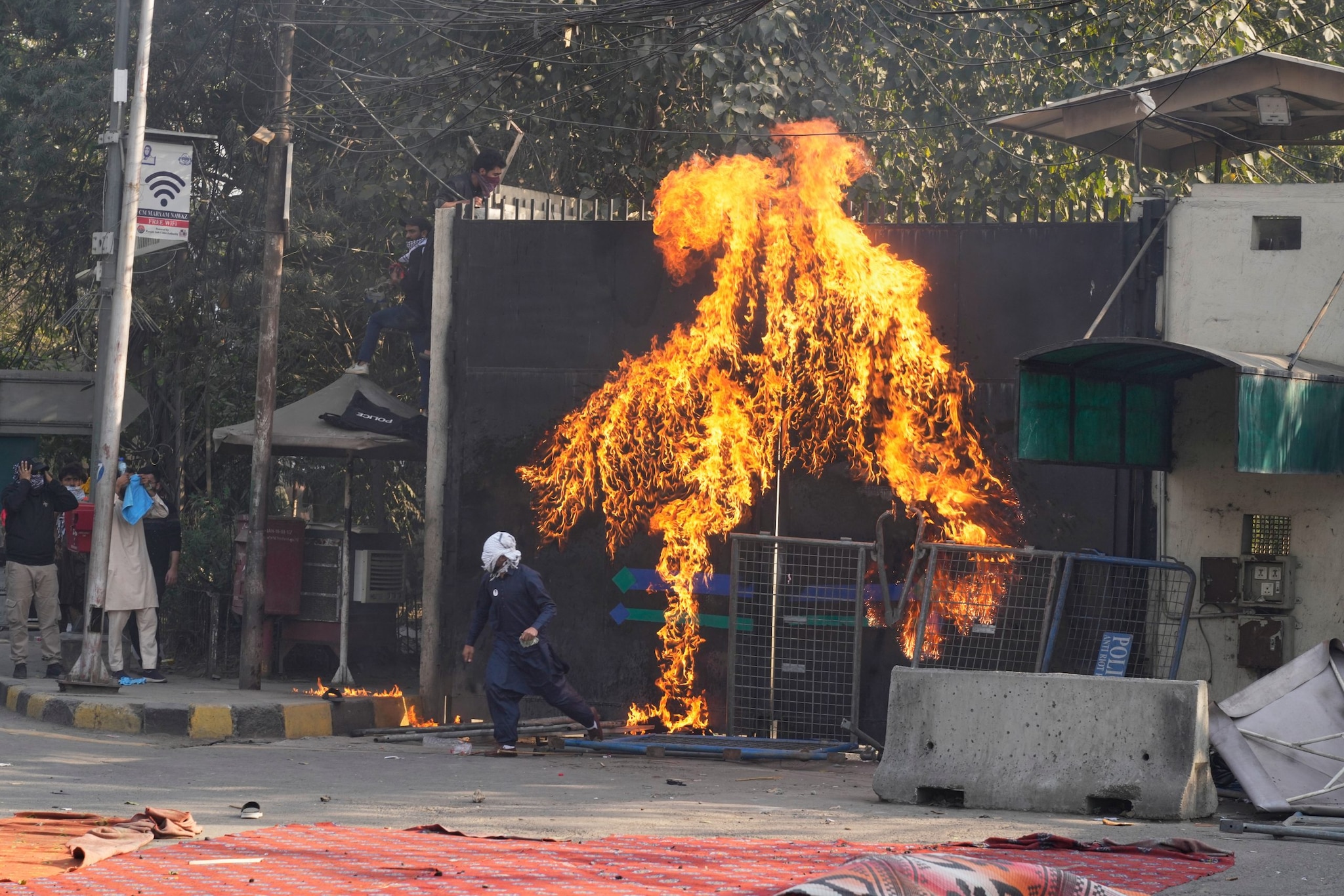
The images of protests in the streets of Tehran often lead Western observers to believe that a unified revolutionary front is ready to take the reins of government. This is a dangerous miscalculation. While the Iranian public’s resentment toward the clerical establishment is genuine and deep, it lacks a cohesive political architecture.
The opposition is a patchwork of disparate groups with conflicting visions. You have the monarchists who want a return to the Pahlavi era, the leftists who dream of a secular socialist republic, and the ethnic minorities in the fringes of the country who are pushing for regional autonomy.
Without a unifying leader or a clear transitional roadmap, these groups are more likely to clash with each other than to form a stable government. Historical precedent in the region—most notably the aftermath of the Arab Spring—shows that when an autocrat falls without a viable, organized alternative, the result is rarely a Jeffersonian democracy. More often, it is a decade of civil war or the rise of an even more radical faction.
The Regional Shrapnel of a Tehran Collapse
American skepticism also stems from the "shrapnel effect." Iran has spent forty years building a "Ring of Fire" across the Middle East. Through the "Axis of Resistance," Tehran exerts significant control over Hezbollah in Lebanon, various militias in Iraq, the Houthis in Yemen, and the Assad government in Syria.
If the central authority in Tehran were to crumble, these proxy groups would not simply disappear. They would become independent, well-armed actors with no oversight.
- Hezbollah: With an arsenal of over 150,000 rockets, a leaderless Hezbollah might feel pressured to initiate a full-scale conflict with Israel to justify its existence.
- Iraqi Militias: Groups like Kata'ib Hezbollah would likely move to seize total control of the Iraqi state apparatus, potentially leading to a renewed sectarian conflict.
- The Nuclear Question: A disorganized collapse raises the terrifying prospect of "loose nukes" or the leakage of sensitive missile technology to non-state actors.
Washington is terrified of a "failed state" scenario in a country of 85 million people. A Syrian-style civil war in Iran would create a refugee crisis that would destabilize Europe and a series of proxy wars that would set the global energy market on fire.
The Economic Fortress of the Bonyads
To understand why the regime persists, one must follow the money. The "Bonyads" are massive, tax-exempt charitable trusts controlled by the religious and military elite. They account for a massive chunk of Iran's GDP.
These organizations function as a patronage network that keeps the "Gray Middle"—the millions of civil servants and middle-class workers—tethered to the state. Even those who hate the morality police rely on the state for their pensions, their subsidized food, and their jobs. A sudden regime change threatens the very survival of these families.
The U.S. Treasury Department has struggled to untangle these webs. Sanctions have squeezed the economy, but they have also forced the regime to become masters of the "resistance economy." They have built sophisticated smuggling routes through Turkey, the UAE, and Central Asia. This infrastructure doesn't just bypass sanctions; it provides the regime with a steady stream of hard currency that never touches the formal banking system.
The Role of Beijing and Moscow
We are no longer in a unipolar world where U.S. pressure alone determines the fate of a Middle Eastern power. Both China and Russia have a vested interest in the survival of the Iranian state, even if the faces in the window change.
China sees Iran as a critical node in its Belt and Road Initiative and a reliable source of discounted oil. Russia views Iran as a vital military partner, especially given the drone and missile technology exchanges that have characterized the conflict in Ukraine.
Neither Beijing nor Moscow will sit idly by while a pro-Western government is installed in Tehran. They have provided the regime with the tools for digital surveillance and "sovereign internet" capabilities that allow the IRGC to crush dissent with surgical precision. The "Great Firewall of Iran" is a testament to this cooperation, making it nearly impossible for activists to coordinate on a national scale without the state seeing every keystroke.
The Intelligence Gap
Finally, there is the issue of what we simply do not know. The Iranian intelligence apparatus is one of the most difficult to penetrate in the world. Human intelligence (HUMINT) is notoriously unreliable, often skewed by the biases of informants who have been out of the country for decades.
U.S. officials are haunted by the intelligence failures of 1979, when the CIA was caught completely off guard by the Islamic Revolution, and 2003, when the assumptions about post-Saddam Iraq proved to be catastrophically optimistic.
The current skepticism is a sign of institutional maturity. It is an admission that we cannot manufacture a revolution from the outside, and that the internal dynamics of the Iranian state are far more resilient than they appear on a protestor’s placard.
The transition of power in Tehran is not the end of the story. It is the beginning of a more dangerous, less predictable chapter. The clerical robes may be fraying, but the boots on the ground are as heavy as ever.
If the goal is a stable, democratic Iran, the death of a leader is not a shortcut. It is a reminder that the regime is not a person, but a system. And that system is designed to survive the people who created it.
Check the deployment of the U.S. Fifth Fleet and monitor the internal communications of the IRGC’s Quds Force over the next forty-eight hours. The true successor to Khamenei won’t be announced in a press release; he will be revealed by who controls the streets of Isfahan and the oil terminals at Kharg Island.