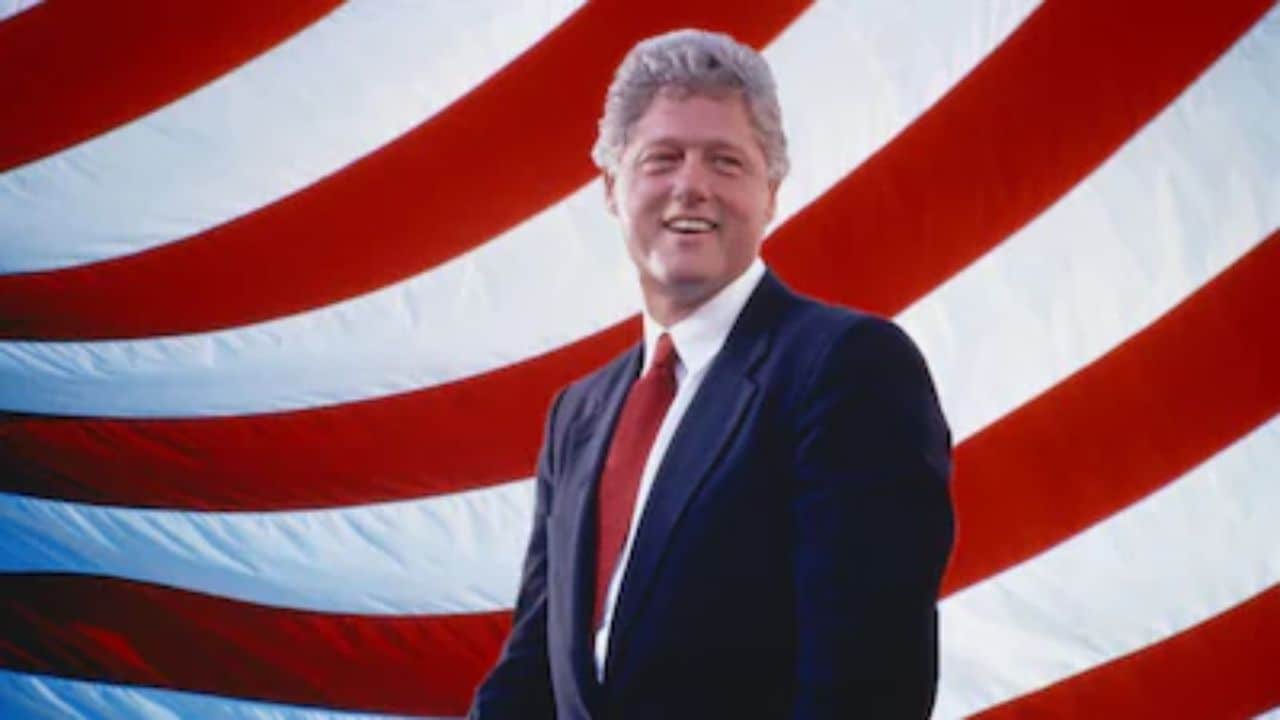
Plausible deniability is the currency of the powerful. It is the invisible shield that separates a leader from the wreckage of their associations. When a former president stands before the public and claims he saw no signs of depravity in a man whose primary social utility was the curation of it, we aren't just witnessing a legal defense. We are witnessing the ultimate failure of elite vetting.
The standard narrative—the "lazy consensus" pushed by mainstream outlets—is that these figures were simply "tricked." They were victims of a charismatic financier who hid his dark side behind a veneer of philanthropy and private jets. This isn't just a naive take; it’s a dangerous one. It ignores the fundamental mechanics of power.
People at that level of global influence do not move through the world by accident. Every handshake is briefed. Every flight is logged. Every association is weighed for its political and social ROI. To suggest that the leader of the free world was a passive observer in his own social circle isn't just a stretch—it’s an insult to the intelligence of anyone who has ever managed a high-stakes organization.
The Vetting Vacuum
In any professional context, "I didn't know" is a firing offense. If a CEO's top donor is caught in a massive fraud, the board doesn't accept "I saw no signs" as a valid excuse. They ask why the due diligence failed.
When it comes to the highest echelons of politics, we've allowed a lower standard. We’ve accepted the idea that the "private lives" of associates are off-limits or invisible. This is a logical fallacy. In the world of high-power networking, the private life is the currency. You aren't invited to a private island for the climate; you’re invited for the access and the exclusivity.
The argument that one could spend dozens of hours in the company of a predator and see "no signs" assumes that these behaviors exist in a vacuum. They don't. They manifest in the culture of the entourage, the choice of staff, and the atmosphere of the environment. Ignoring those cues isn't a lack of information; it’s a choice of perception.
The ROI of Willful Ignorance
Why would a statesman choose to stay blind? Because the benefits of the association—wealthy donors, logistics, "global networking"—outweigh the risk of asking too many questions.
Imagine a scenario where a politician is offered a free, secure, and private way to travel the globe. It solves a dozen logistical headaches. Do they ask where the money comes from? Do they ask what happens on the flights they aren't on? Usually, they don't. They treat the asset as a "black box." As long as the box delivers value, they don't look inside.
This is the "Strategic Blindness" model. It’s not that they don't see the red flags; it’s that they’ve trained themselves to view those flags as background noise. In the pursuit of political legacy or post-presidential influence, the "who" matters less than the "what." What can this person do for my foundation? What can this person do for my reach?
The Fallacy of the Charismatic Con
The media loves the "Dr. Jekyll and Mr. Hyde" trope. It makes for a better story if the villain is a master of disguise. But history tells a different story. Predators of this scale usually operate in plain sight, protected by a "gilded cage" of institutional protection.
When people ask, "How could they not know?" they are asking the wrong question. The right question is: "What did they consider an acceptable trade-off for the association?"
If you are an insider, you know that the "inner circle" is rarely a surprise. You know who the fixers are. You know who the "party guys" are. You know who provides the "entertainment." Claiming total ignorance in a deposition isn't a reflection of reality; it’s a tactical deployment of the Fifth Amendment's spirit without actually invoking it.
Dismantling the "Nothing Wrong" Defense
When a public figure says they "did nothing wrong," they are usually using a very narrow, legalistic definition of "wrong." They mean they didn't commit a statutory crime. They mean they weren't in the room when the worst happened.
But leadership isn't just about avoiding an indictment. It’s about the stewardship of moral authority. When you lend the prestige of the presidency to a person of questionable character, you are providing them with "reputational laundering." You are the detergent.
- The Laundering Cycle:
- The Association: A high-profile leader attends an event or uses a resource (like a jet).
- The Validation: The predator uses that association to gain trust from others. "If the President trusts him, he must be okay."
- The Exploitation: The predator uses that new trust to find more victims or secure more deals.
- The Denial: When the bubble bursts, the leader claims they were just an acquaintance.
By the time the denial happens, the damage is done. The leader’s presence was the very thing that allowed the predator to operate with impunity for so long.
The Institutional Failure of "Good People"
We have a habit of giving "good people" a pass for being around "bad people." We assume that because someone did good work in office or passed a specific bill, they are somehow immune to the stain of their social choices.
This is where the industry of image management comes in. I’ve seen teams spend millions to "sanitize" a calendar. They look at a list of names and figure out how to frame each one. "He was a donor." "It was a one-time meeting." "They were both interested in the same charity."
The truth is usually much more banal. It’s a lack of discipline. It’s the arrogance of believing that you are too big to be touched by the filth of your associates.
Why Logic Dictates Suspicion
Let’s look at the numbers. If you are a world leader, your time is your most valuable asset. Every minute is accounted for by staff. You do not accidentally end up on a private jet to a private ranch multiple times. You do not accidentally host a person at your home or office without a briefing folder sitting on your desk.
If that briefing folder was empty, the staff failed. If the folder was full and the leader ignored it, the leader failed. There is no third option where everyone is both competent and completely surprised.
The Actionable Truth
If we want to stop this cycle, we have to stop accepting "I didn't see anything" as a viable defense. We have to demand a higher standard of association for those we vest with power.
- Accountability for Assets: If you use a private resource, you are responsible for the source of that resource. No exceptions.
- Mandatory Transparency: Post-presidential social circles should be subject to the same scrutiny as active administrations.
- End Reputational Laundering: Call out the "charity" defense for what it is—a smokescreen for access.
The "shock" expressed by lawmakers and the public every time a new name surfaces in a scandal is a performance. We know how the world works. We know that power seeks power. We know that the elite protect their own until the cost of protection becomes higher than the cost of abandonment.
Stop asking if they knew. Start asking why they thought you’d be dumb enough to believe they didn't.
Leadership is not a passive activity. You are defined by what you tolerate. If you tolerate the presence of rot because it offers a comfortable seat, you are part of the decay. The statesman didn't "miss" the signs; he just didn't think the bill would ever come due.
The bill is here. It’s time to stop pretending the ink is invisible.