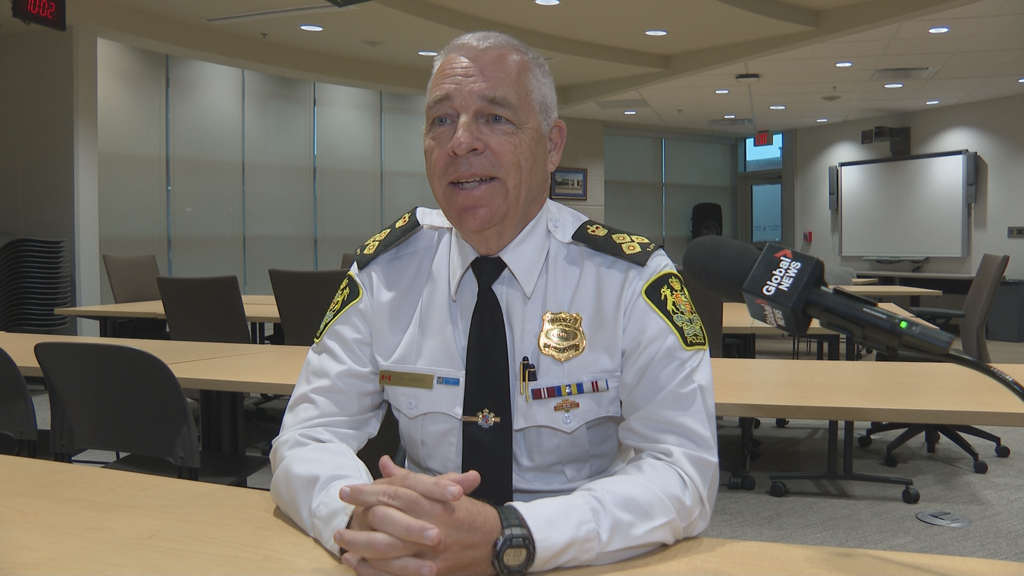
The recent spat between the New Brunswick Police Association and its chief isn't a labor dispute. It isn't a "union tactic." It is a symptom of a necrotic management culture that has forgotten how to lead without looking for a scapegoat. When a Chief of Police claims that a surge in internal complaints is merely a strategic maneuver to gain leverage at the bargaining table, they aren't just insulting the rank-and-file. They are admitting they have lost control of the shop floor.
Management loves the "union tactic" narrative because it’s easy. It’s a pre-packaged excuse that allows leadership to ignore legitimate grievances by labeling them as cynical theater. But here is the reality that bureaucrats refuse to face: you cannot manufacture a wave of complaints out of thin air if there isn't a pre-existing reservoir of resentment and mismanagement to draw from.
The Cheap Excuse of Strategic Litigiousness
Whenever a contract is up for renewal, the same tired script plays out. Leadership Tightens the screws. The union pushes back. Suddenly, every HR violation and breach of protocol is documented and filed. The Chief calls it a "tactic." The union calls it "accountability."
The truth? Both sides are usually lying, but the Chief's lie is more dangerous.
Labeling internal complaints as a bargaining chip is a tactical error that destroys the very institution of policing. If a complaint is valid, it doesn't matter if it was filed during a contract dispute or on a sunny Tuesday in July. A violation of policy is a violation of policy. By dismissing these filings as "union strategy," leadership effectively tells the public that police misconduct is only relevant when it's convenient for the budget.
I’ve seen this play out in municipal governments and private corporations for twenty years. When leadership loses the locker room, they stop managing and start litigating. They stop looking at the root causes of turnover and burnout and start looking for ways to discredit the messengers.
The Data Gap in Police Accountability
We need to stop pretending that "volume" equals "strategy." In any other industry, a spike in formal complaints would trigger an immediate internal audit of management practices. In policing, it triggers a press release attacking the union’s motives.
Let’s look at the mechanics. Most police departments operate on a paramilitary structure. This structure depends entirely on the "consent of the governed"—the officers’ belief that the chain of command is fair. When that belief evaporates, the only tool left for the subordinate is the formal grievance.
- Misconception: Unions "order" officers to file fake complaints.
- Reality: Unions provide the legal cover for officers to file the complaints they were already too scared to file.
If you think a union boss can force a hundred officers to sign their names to a legal document just for a 2% raise, you’ve never spent five minutes in a precinct. Officers are notoriously protective of their reputations. They don't file paperwork that puts them in the crosshairs of Internal Affairs unless the situation is already untenable.
The Cost of the "Tactic" Label
The danger of the Chief’s rhetoric isn't just that it’s wrong; it’s that it’s expensive. Every time a leader dismisses internal friction as a "union game," they are burning the bridge of institutional trust.
Imagine a scenario where a private sector CEO blamed a sudden spike in safety reports on a union drive. The board would fire them. Why? Because ignoring safety reports—regardless of the timing—creates a massive liability. Yet, in the public sector, we allow Police Chiefs to hand-wave away internal dissent as "politics."
This creates a feedback loop of incompetence:
- Management fails to address cultural issues.
- Officers feel unheard and use the union to voice grievances.
- Management labels grievances as "tactics" to ignore them.
- The culture worsens.
- Repeat until the department is unmanageable.
Stop Asking if the Union is Playing Games
The media loves to ask, "Is the union using these complaints to get a better deal?"
That is the wrong question. It’s a distraction.
The real question is: "Why were there so many valid complaints available to be filed in the first place?"
If your department is running correctly, there shouldn't be a backlog of grievances for a union to "weaponize." If a union can suddenly find fifty violations of the collective bargaining agreement to throw at the Chief during negotiations, it means the Chief has been violating the agreement fifty times over the last year and getting away with it.
You cannot weaponize a clean record. You cannot manufacture a crisis of morale if the officers feel supported and the rules are applied consistently.
The Power Vacuum in Command
What we are seeing in New Brunswick is a power vacuum. When a Chief goes to the press to complain about the union’s "tactics," they are signaling to the city that they have no internal mechanism to resolve conflict. They are asking for public sympathy because they can’t handle their own staff.
True leadership in policing requires navigating the tension between the badge and the budget without making it personal. When it becomes personal—when the Chief starts attacking the integrity of the officers' grievances—the department is effectively rudderless.
- The Amateur Move: Publicly decrying "union interference" to deflect from a bad audit.
- The Pro Move: Fixing the underlying policy failures so the union has nothing to complain about.
Why the Status Quo is Defending the Chief
The "lazy consensus" among city officials is to back the Chief because the alternative—admitting the department has a systemic management failure—is too expensive to fix. It’s much cheaper to let the Chief and the Union President trade barbs in the paper than it is to actually overhaul a toxic internal culture.
But this "stability" is a facade. High-performing officers leave departments where management is in a permanent state of war with the rank-and-file. What’s left behind is a skeleton crew of people who are either too tired to care or too invested in the drama to work.
The Brutal Truth About "Labor Relations"
Labor relations in policing isn't about handshakes and photo ops. It’s a blood sport. But the best "players" don't win by filing the most complaints or issuing the loudest denials. They win by being so technically proficient and so transparently fair that the other side has no ground to stand on.
The New Brunswick Police Association isn't "disrupting" the department. They are reflecting it. A union is a mirror. If the Chief doesn't like what he sees in the mirror, his first instinct shouldn't be to break the glass. It should be to fix his face.
Stop blaming the "tactics" of the people you are supposed to be leading. If the complaints are frivolous, prove it in a hearing. If they are real, fix the problem. Anything else is just noise from a leader who has run out of ideas.
Fire the management that allows "tactics" to exist by leaving the door open to legitimate grievance. Clean house, or get out of the way.



