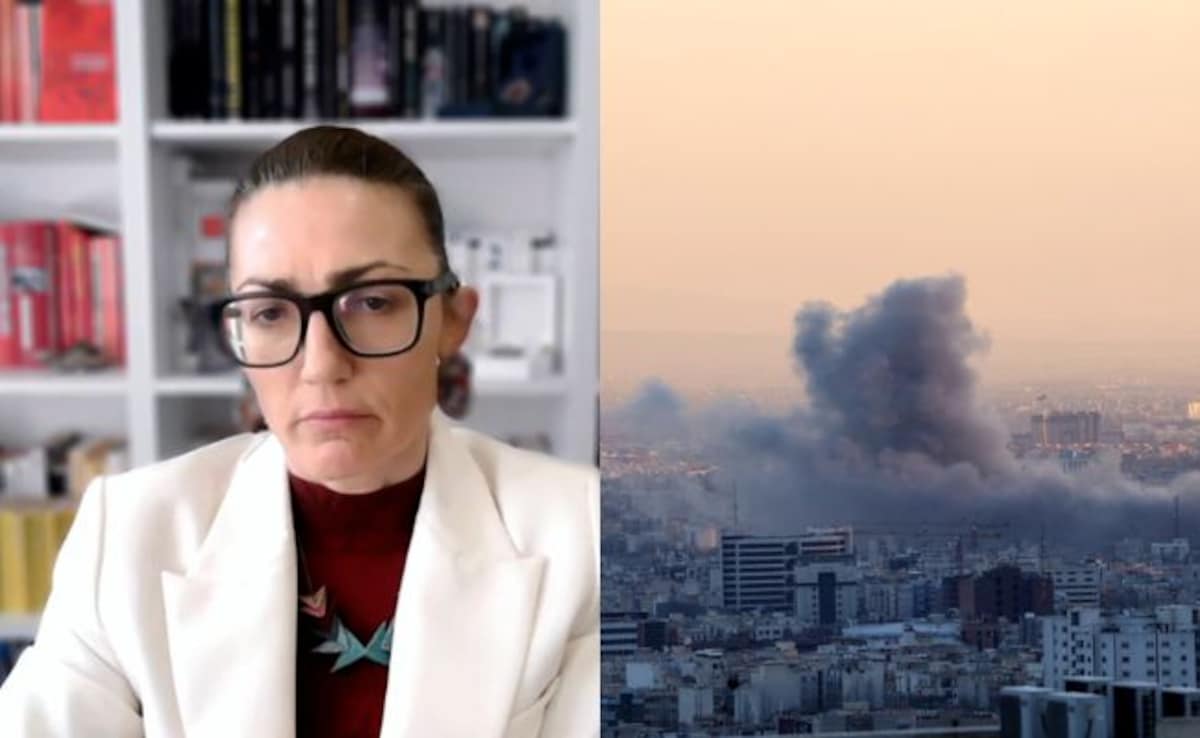
Geopolitical analysts love a good martyr story. When news outlets report that Iran will "fight until the last moment," they aren't describing a military strategy. They are recycling a tired romantic trope that ignores the cold, mathematical reality of modern attrition. The "last moment" isn't a heroic stand; it is a balance sheet hitting zero.
The consensus view suggests that Tehran is a monolithic ideological force ready to endure infinite pain for regional hegemony. This is a fantasy. It ignores the friction between the clerical elite and a technocratic class that knows exactly how close the country is to structural failure. You don't fight to the last moment when your currency is a joke and your power grid is a collection of prayers and duct tape. Discover more on a related issue: this related article.
The Attrition Fallacy
Mainstream media experts often mistake rhetoric for capability. When a strategist tells a network that a nation will fight to the end, they are usually trying to sell a narrative of "unbreakable will." History is a graveyard of "unbreakable wills" that met superior logistics.
In modern warfare, "will" is a variable dependent on the supply of spare parts. Iran’s military apparatus—specifically the IRGC—operates on a model of asymmetric defiance. This works during gray-zone operations. It fails during sustained, high-intensity conflict. If you cannot secure your skies or your internal data flows, your "last moment" arrives much sooner than the pundits think. More journalism by Al Jazeera highlights similar views on this issue.
I have sat in boardrooms where energy traders bet on Iranian "resilience." They lost. Why? Because they overestimated the regime's ability to keep its domestic population quiet while the infrastructure crumbles. A state doesn't collapse because it runs out of soldiers; it collapses because it runs out of the ability to pay them in anything of value.
The Proxy Paradox
The biggest misconception in the current discourse is that Iran's "Ring of Fire"—its network of proxies—is an asset that buys them infinite time. In reality, these proxies are becoming a massive liability.
- The Cost of Maintenance: Funding Hezbollah, the Houthis, and various militias in Iraq isn't cheap. When your own inflation rate is hovering in the stratosphere, sending billions abroad is a recipe for internal revolt.
- The Command and Control Mirage: Everyone assumes Tehran has a joystick for every drone launched from Yemen. They don't. They have a loose association of interests. When the center cannot hold, the fringes go rogue or go silent.
- Diminishing Returns: Each strike by a proxy invites a conventional response against the benefactor. Iran is playing a game of poker where they show their hand every time a subordinate makes a move.
The "experts" on TV claim these proxies keep the war away from Iranian soil. Wrong. These proxies are the very reason the war is moving toward Iranian soil. They have stripped away the layer of deniability that used to be Tehran’s strongest shield.
The Myth of Total War
When people ask, "Will Iran go all in?" they are asking the wrong question. In 2026, "all in" doesn't mean a grand invasion. It means the complete evaporation of the state’s ability to function.
We need to stop viewing this through the lens of 20th-century warfare. This isn't about flags on a map. It’s about the Kinetic-Economic Feedback Loop. Every missile Iran fires is a piece of capital they cannot replace. Every refinery targeted is a decade of GDP gone. The "last moment" is a fiscal reality, not a cinematic one.
The strategist interviewed by NDTV and others focuses on the "ideological commitment" of the leadership. This is a classic mistake. Ideology doesn't fix a broken centrifuge. It doesn't replace a downed Sukhoi. When the IRGC’s top brass realizes that their personal wealth and survival are at stake, the "fight to the end" rhetoric will vanish faster than a Western diplomat’s promise.
Why the Status Quo is Dead
The international community keeps trying to "manage" the escalation. This assumes there is a rational actor on the other side who values the same things we do.
The Iranian leadership values survival of the system above all else. But the system is currently being cannibalized to feed the war machine. You cannot have a "robust" defense when your middle class is fleeing and your talent pool is drying up.
Stop asking if they will fight. Start asking who will be left to give the orders.
I’ve seen this pattern in failing corporate entities. A CEO stands on a stage and screams about "unleashing" potential and "staying the course" while the CFO is out back loading the office furniture into a van. That is the current state of the Iranian geopolitical posture. The bravado is a marketing campaign for a product that is out of stock.
The Intelligence Gap
Most analysts are looking at satellite photos of missile silos. They should be looking at the price of bread in Mashhad. They should be looking at the defection rates in the lower ranks of the Basij.
Modern warfare is 10% kinetic and 90% social-structural. If the Iranian state "fights to the last moment," it won't be against an external invader. It will be a desperate, bloody attempt to keep its own streets from swallowing the government whole.
The Real Risks Nobody Mentions:
- The Technical Debt of War: Using 1970s airframes against 2020s electronic warfare is a slaughter, not a struggle.
- The Succession Vacuum: The leadership is aging. A war of attrition during a leadership transition is a death sentence for any regime.
- The Cyber-Economic Collapse: You don't need to bomb a city if you can turn off the banking system. Iran's digital defenses are a sieve.
Stop Buying the Hype
The "Geopolitical Strategists" are paid to provide certainties where none exist. They tell you Iran is a formidable, endless threat because "threats" sell airtime. The reality is far more pathetic. We are watching a middle-management regime try to play a high-stakes game with a deck of cards that is missing all the aces.
The next time you see a headline about "fighting to the last breath," remember: breaths are cheap. Bullets, bread, and bytes are expensive. And Iran is broke.
Stop analyzing the "will to fight." Start analyzing the "capacity to function." When the lights go out in Tehran because the fuel is gone and the technicians have quit, the "last moment" will have arrived, and it won't look anything like a movie.
Burn the playbook that says these regimes are indestructible. They are glass houses in a neighborhood where everyone has started throwing stones.
Invest in the reality of the collapse, not the myth of the struggle.


