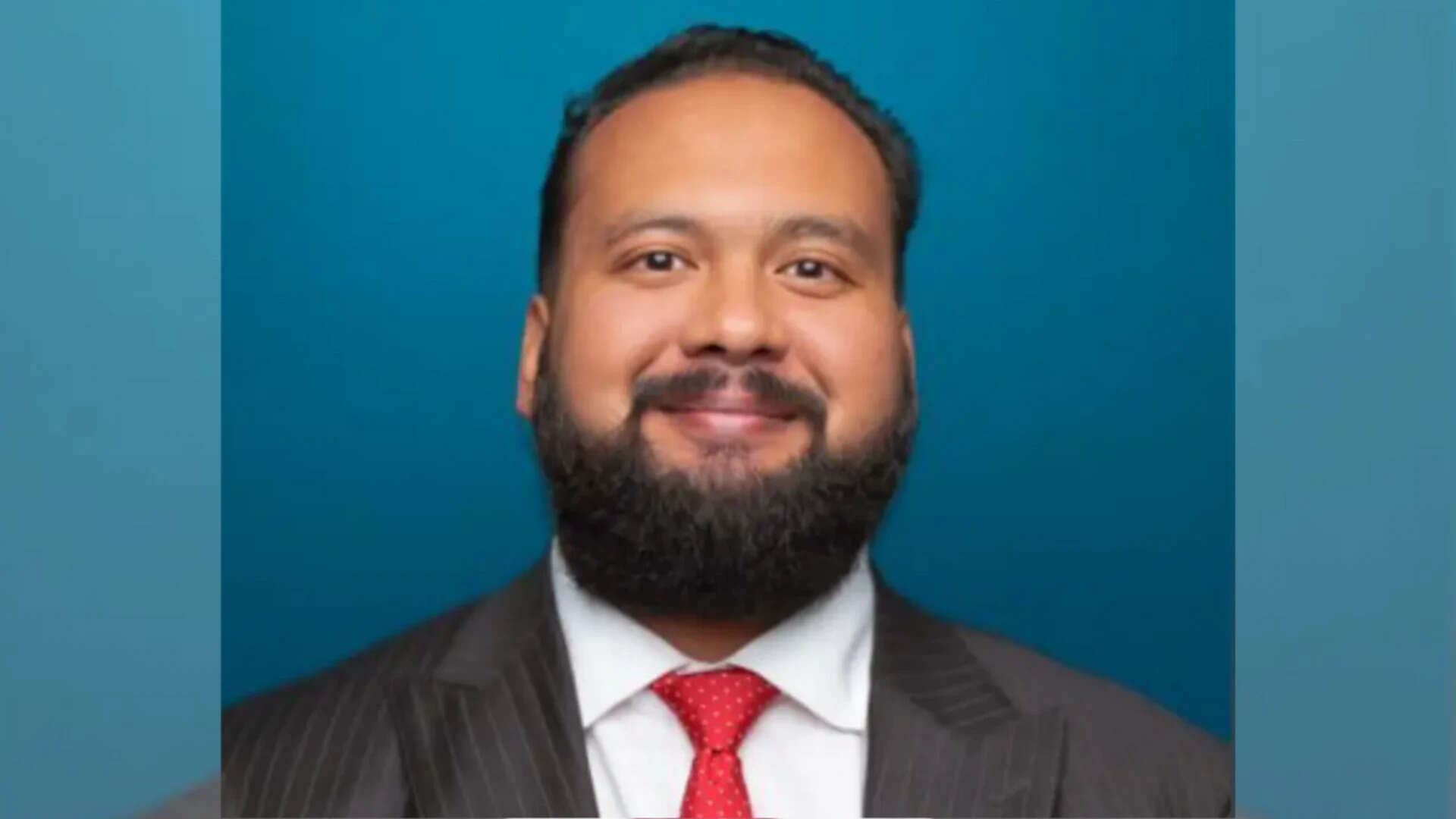
For decades, the American political establishment treated the Indian diaspora as a foregone conclusion. They were the high-achieving, Democratic-leaning donors who turned out in droves and asked for little in return besides a seat at the table. But as the 2026 midterms loom, that era of predictability has vanished. A new, sophisticated digital project is now pulling back the curtain on a community that is no longer content to be a footnote in a stump speech.
The Indian American Voter Atlas, a non-partisan data platform launched by former Capitol Hill strategist Anang Mittal, is not just another tracking tool. It is a forensic autopsy of a demographic in flux. By aggregating federal, state, and local datasets into a single dashboard, the Atlas reveals a community that is rapidly diversifying its political interests, moving beyond the "model minority" tropes to become a decisive, yet unpredictable, electoral force.
The End of the Democratic Stronghold
The primary realization for any strategist looking at the Voter Atlas is that the days of 70-20 Democratic margins are over. Recent data suggests a significant softening of loyalty. While Indian Americans still lean left, the intensity of that attachment has eroded. According to the 2026 Indian American Attitudes Survey, Democratic identification among the community has dropped from 52% in 2020 to roughly 46%.
The Republican Party is no longer an afterthought for this group. The Atlas tracks "persuasion potential" in 24 key congressional districts, showing that while the community remains socially moderate, economic concerns and shifting views on immigration are driving a wedge into the old coalition. In states like Texas and Michigan, the diaspora's high median income and concentration in competitive districts mean they are no longer just donors; they are the swing voters who could decide control of the House.
How Data Debunks the Nativist Narrative
One of the most aggressive features of the Voter Atlas is its Discourse Monitor. This tool tracks legislative and media narratives, specifically focusing on the rise of anti-Indian rhetoric. Mittal, who previously served as Head of Digital for House Speaker Mike Johnson, built the platform partly to counter what he describes as "racist grifters" and "nativists" who have increasingly targeted the community online.
The numbers are staggering. Anti-Indian posts on X (formerly Twitter) garnered over 280 million views in a span of just two months. By providing hard data on economic contributions—such as business ownership, PERM certifications, and household wealth—the Atlas provides a factual shield against the "immigrant drain" narrative. It shows, in cold, hard numbers, that the diaspora is a pillar of the American economy, not a passenger.
The Immigration Pipeline Paradox
A particularly insightful section of the Atlas is the Immigration Pipeline feature. It visualizes wage data and PERM certifications, highlighting the professional hurdles faced by a community often wrongly characterized as having an "easy" path to citizenship.
- H-1B Vulnerability: Despite high salaries, many Indian Americans remain in a state of permanent "legal limbo" due to backlogs.
- Wage Growth: The data shows a massive concentration of wealth in specific tech and medical hubs, but also a growing class of entrepreneurs in less traditional sectors.
- Political Donation Trends: The Atlas tracks where the money goes, revealing a community that is increasingly strategic with its political capital, often rewarding individual candidates rather than blindly following party lines.
The Safety Gap
Beyond the voting booth, the Atlas introduces a Community Safety Tracker. This isn't just about crime statistics; it’s about the tangible sense of unease within the diaspora. By compiling hate crime and bias incident data, the platform highlights a reality that many in Washington ignore: the Indian American community is being targeted with increasing frequency.
This sense of vulnerability is reshaping political behavior. When voters feel their physical safety or their children’s futures are at risk from rising xenophobia, their priorities shift. They stop voting based on abstract social ideals and start voting for the candidate who promises the most direct protection and stability. The Atlas maps these anxieties, showing a direct correlation between districts with high bias incidents and shifts in partisan lean.
A Mirror for Both Parties
The Atlas is ultimately a challenge to the two-party system. For Democrats, the tool signals that the Indian American vote can no longer be assumed. The community is becoming more independent, with nearly one-third identifying as unaffiliated. They are frustrated by what they perceive as a lack of focus on their specific concerns, ranging from merit-based immigration to community safety.
For Republicans, the data shows an opening. The community’s center of gravity remains moderate, and while Donald Trump’s rhetoric has alienated many, his party's focus on economic growth and deregulation resonates with a high-earning, entrepreneurial demographic. However, the GOP continues to struggle with a "brand problem" among the diaspora, driven by the same nativist elements the Atlas was built to debunk.
The tool provides a granular look at 24 specific congressional districts where Indian Americans have the "persuasion potential" to tip the scales. These aren't just in traditional hubs like Edison, New Jersey, or Fremont, California. They are in the suburbs of Atlanta, the tech corridors of North Carolina, and the energy belts of Texas. In these areas, the "Indian American Voter" is not a monolithic block, but a collection of distinct interests, religious backgrounds, and economic tiers.
Would you like me to analyze the specific economic data for one of these 24 key congressional districts?