Stop looking for the "Made in China" sticker on every missile that falls in the Middle East.
The defense analyst community has fallen into a comfortable, lazy trap. They see a sophisticated submunition—a cluster bomb—mounted on an Iranian ballistic missile, and they immediately start hunting for Russian blueprints or Chinese supply chains. It is the ultimate Western cope: the refusal to believe that a sanctioned, isolated middle power could actually out-innovate the legacy giants.
The narrative that Iran is merely a proxy for Eastern tech is not just wrong. It’s dangerous. It underestimates a localized, hyper-iterative military-industrial complex that has learned more from forty years of "maximum pressure" than Russia has learned from decades of fossil fuel wealth.
The Submunition Fallacy
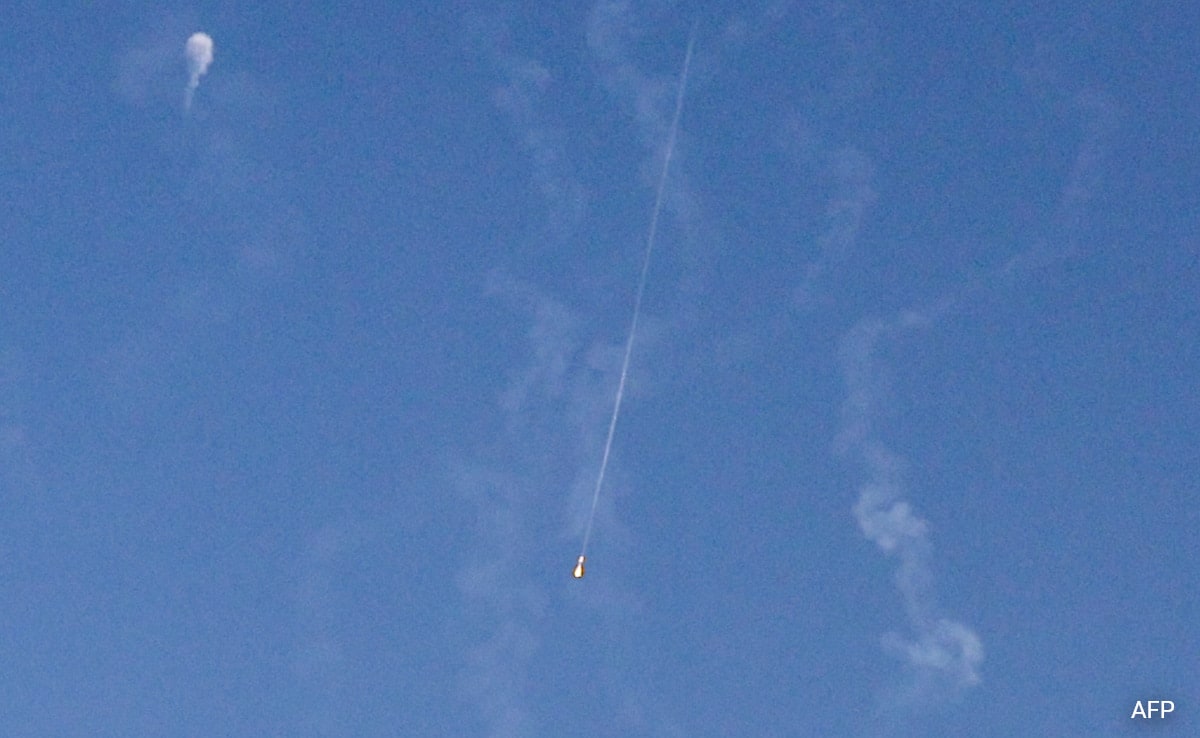
The recent panic over Iran’s cluster-capable missiles—like the Kheibar Shekan or the newer Fattah variants—misses the technical reality of how these weapons function. A cluster munition is not some arcane, high-barrier technology that requires a "nod" from Moscow. It is essentially an exercise in fluid dynamics and reliable separation mechanisms.
The assumption is that Iran is using Russian RBK-500 technology. I have spent years looking at these debris fields. The Iranian approach is fundamentally different because their constraints are different. Russia builds for mass-scale attrition in a European theater. Iran builds for surgical saturation against high-value, pinpoint targets like the Nevatim airbase.
When you see a warhead deploy 30 small, guided bomblets, you aren't seeing a copy of a Soviet design. You are seeing the result of Iran’s unique mastery of Cold Gas Thrusters (CGTs) and miniaturized inertial navigation systems (INS). These are components they didn't buy from a Beijing catalog; they developed them because they had to compensate for the lack of a traditional air force.
The Reverse Flow Reality
Here is the truth that makes the Pentagon uncomfortable: The tech flow is reversing.
For decades, the "experts" told us Iran was a scavenger. Today, Russia is the one begging for Iranian Shahed-136 OWA (One-Way Attack) drones. Why? Because Iran mastered the cost-to-lethality ratio better than anyone on the planet.
While the U.S. builds $2 million missiles to intercept $20,000 drones, and Russia struggles to ramp up production of high-end cruise missiles, Iran has perfected the art of "good enough" saturation. Their cluster bomb missiles are the next evolution of this philosophy. By deploying submunitions, they aren't just trying to kill a target; they are trying to bankrupt the interceptor logic of the Iron Dome and the Patriot batteries.
If you fire one missile, an interceptor kills it. If that missile splits into 50 submunitions at the edge of the atmosphere, the math breaks. Iran didn't need China to teach them math.
The Sanction Paradox
We need to talk about why sanctions failed so spectacularly to stop this specific advancement.
Sanctions create a "bottleneck evolution" effect. When a country cannot import high-end carbon fiber or specific German-made CNC machines, they don't stop building. They re-engineer the entire design philosophy to work with what is available on the grey market or what can be 3D printed locally.
I’ve seen this in aerospace startups and I see it in Tehran's "Missile Cities." They have bypassed the need for the Russian industrial base. By forcing them to be self-reliant, the West accidentally created the most resilient, decentralised defense manufacturing hub in the world.
The "Lazy Consensus" says: "Iran is a threat because China provides the parts."
The "Brutal Truth" says: "Iran is a threat because they no longer need the parts."
The Complexity Smokescreen
When analysts talk about "Chinese influence" in the Iranian missile program, they usually point to the solid-fuel motors. It’s true that in the 90s, the foundations were laid with foreign assistance. But continuing to credit China for Iran's current solid-fuel breakthroughs is like crediting the Wright brothers for the design of a SpaceX Falcon 9.
The Fattah-1 hypersonic missile (or "hypersonic-capable," if you want to be pedantic about mid-course maneuverability) uses a movable nozzle for vectoring. This requires high-heat resistant materials that were once the sole province of the "Big Three" superpowers. Iran is now producing these materials in-house.
Why the "Copycat" Argument Fails:
- Environmental Optimization: Russian missiles are built for the Arctic and the Steppe. Iranian missiles are built for the heat and salt of the Persian Gulf. You cannot simply "plug and play" Russian tech into an Iranian frame without massive structural failure.
- Propellant Chemistry: Iran has developed unique composite propellants that have higher specific impulse ($I_{sp}$) than the old Scud-based designs they started with.
- Guidance Logic: Western systems rely on GPS/GNSS. Russian systems rely on GLONASS. Iranian systems use a "multi-constellation" approach paired with indigenous optical sensors that make "jamming" almost irrelevant.
Stop Fixing the Wrong Problem
The global policy community is obsessed with "stopping the flow" of tech from China to Iran. This is a waste of time. The horse has not only bolted; it has built its own stable and started a breeding program.
If you want to understand the threat of cluster-capable Iranian missiles, stop looking at satellite photos of Chinese ports. Start looking at the PhD graduation rates in materials science at the Sharif University of Technology. That is where the "cluster bomb" problem actually lives.
We are entering an era of Democratic Lethality. Small, motivated nations can now produce Tier-1 effects on a Tier-3 budget. The cluster bomb missile is the ultimate "asymmetric equalizer." It doesn't require a stealth bomber. It just requires a truck, a hidden silo, and a bit of clever physics.
The "insider" view is simple: Russia and China aren't the masters here. They are the spectators, watching Iran beta-test the future of 21st-century siege warfare.
The next time a "defense expert" tells you that Iran is just a puppet of Eastern technology, ask them why Russia is currently the one using Iranian tech to keep their war effort alive.
The dependency has flipped. Deal with it.