The relentless shelling of the Donetsk region remains the most lethal constant in the ongoing war in Ukraine. Over the last twenty-four hours, Russian artillery and missile strikes have claimed at least six more civilian lives, marking another grim milestone in a conflict that has long since transitioned from a war of maneuver into a brutal war of attrition. While global attention frequently shifts toward geopolitical maneuvering in Western capitals or the fluctuations of the front lines, the immediate reality for those in the Donbas is a calculated, daily erosion of civilian infrastructure and life. These are not accidental casualties. They are the result of a systematic campaign of long-range strikes designed to make the eastern territories uninhabitable and break the psychological resolve of the population.
The Mechanics of Urban Attrition
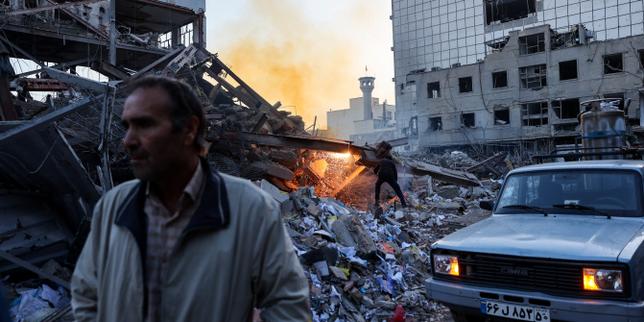
The recent strikes focused on the Pokrovsk and Kramatorsk districts indicate a shift in tactical priority. For months, Russian forces have utilized a combination of S-300 missiles—repurposed from their original air-defense role—and heavy tube artillery to saturate residential areas. This isn't precision warfare. It is a mathematical exercise in devastation. By targeting logistics hubs like Pokrovsk, the Russian military effectively severs the arteries that supply both the Ukrainian military and the remaining civilian populace.
Local administrative reports confirm that the six deaths occurred across multiple locations, suggesting a dispersed strike pattern. This strategy forces emergency services to stretch their resources thin. When multiple apartment blocks or utility stations are hit simultaneously, the response time increases, and the survival rate for those trapped under rubble plummets. It is a deliberate tactic meant to overwhelm the municipal governance of the Donetsk Oblast.
Why the Front Line Refuses to Move
To understand why these six deaths matter beyond the immediate tragedy, one must look at the strategic stalemate. The Kremlin's inability to secure a decisive breakthrough on the ground has led to an increased reliance on "stand-off" weaponry. If they cannot occupy a city, they will level it.
The Donbas remains the primary theater because it offers the most significant political "win" for Moscow. However, the geography of the region—characterized by dense industrial zones and slag heaps that provide natural high ground—makes a traditional ground assault incredibly costly. Consequently, the Russian command has opted for a scorched-earth approach. The logic is simple: a pile of ash is easier to capture than a fortified city.
The Problem with International Observation
Western analysts often struggle to quantify the impact of these daily strikes. They are frequently buried in the "live updates" sections of news outlets, overshadowed by larger political narratives. This creates a dangerous "normalization of the abnormal." When six deaths become a standard daily metric, the urgency for diplomatic or military intervention begins to wane in the eyes of the international public.
Furthermore, the verification of these deaths is becoming increasingly difficult. With many international observers unable to access the hardest-hit areas due to safety concerns, the world relies on local officials and citizen journalists. This information vacuum is often filled by state-sponsored narratives that attempt to justify civilian hits as "targeting military assets," even when the evidence on the ground—shattered playgrounds and burning grocery stores—clearly contradicts those claims.
The Collapse of the Humanitarian Buffer
The humanitarian corridors that were discussed early in the invasion have effectively ceased to exist in any meaningful way. The remaining residents of the Donetsk region are often the most vulnerable: the elderly, the disabled, and those who lack the financial means to start a new life in Kyiv or abroad.
The psychological toll on these populations is profound. Constant shelling creates a state of perpetual hyper-vigilance. It isn't just about the physical danger; it is about the destruction of the concept of "home." When a missile strikes a residential building in the middle of the night, it sends a clear message to every neighbor that nowhere is safe. This is state-sponsored terror in its most literal form.
Resource Exhaustion in the East
The infrastructure in Donetsk is failing. Water, electricity, and heating are no longer guaranteed services but luxuries that appear and disappear based on the rhythm of the bombardments. Repair crews often find themselves targeted in "double-tap" strikes—a second missile hitting the same location shortly after the first, designed to kill the first responders. This has led to a critical shortage of skilled laborers willing to risk their lives for basic maintenance.
The Ukrainian government continues to urge evacuations, but the logistical hurdles are immense. Moving thousands of people out of an active war zone requires fuel, vehicles, and secure routes—all of which are under constant threat. Every person who stays behind is another potential statistic in the next twenty-four-hour report.
The Strategic Failure of Terror Bombing
History suggests that targeting civilians to break national morale rarely works. In fact, it often has the opposite effect, hardening the resolve of the survivors. In the Donbas, we see this playing out daily. Instead of surrendering, the local population has integrated the war into their existence. They have built underground schools and improvised hospitals.
However, resilience has its limits. The Ukrainian military is being forced to divert air defense systems from the front lines to protect these cities, creating gaps that Russian aviation can exploit. This is the "why" behind the strikes. It is a gambit to force Ukraine into a choice: protect its soldiers or protect its grandmothers.
The Cost of Hesitation
The ongoing debate in NATO countries regarding the provision of long-range defense systems directly impacts the body count in Donetsk. Each day of political gridlock in Washington or Brussels translates to more unintercepted missiles hitting Ukrainian soil. The six lives lost today are a direct consequence of a defensive umbrella that is currently too small to cover the entire country.
Providing Ukraine with the means to strike the launch sites—the airfields and missile batteries located deep inside Russian territory—remains a red line for many Western leaders. Yet, as long as Russia can fire with impunity from behind its own borders, the civilians of the Donbas will continue to pay the price. The current policy of "defensive-only" support ensures that the war remains a one-sided slaughter for those living in the east.
Tracking the Shift in Russian Munitions
As the war drags on, we are seeing a change in the types of weapons being used. The stockpile of high-precision Kalibr missiles is reportedly dwindling, leading to the increased use of older, less accurate Soviet-era munitions. The Kh-22, for example, was designed to hit aircraft carriers in the open ocean. When used against a city, its margin of error is hundreds of meters.
This inaccuracy is a feature, not a bug, for a military that is no longer concerned with international law. A weapon that could land anywhere within a two-block radius is a weapon of indiscriminate fear. It ensures that the civilian population remains in a state of constant panic, never knowing if their building is the target or simply a victim of a guidance system failure.
The Economic Death of the Region
Beyond the immediate loss of life, the Donetsk region is facing an economic apocalypse. The coal mines and steel mills that once formed the backbone of the Ukrainian economy are largely silent or destroyed. The loss of these industries means that even if the war ended tomorrow, there would be no jobs for the survivors to return to.
This creates a permanent class of internally displaced persons. The social friction of millions of people moving from the east to the west of Ukraine is another factor that the Kremlin is likely banking on to destabilize the country from within. The six people who died today were not just individuals; they were part of a dying social fabric that may never be repaired.
The Reality of the "Frozen" Conflict
There is a growing narrative in some political circles that the conflict has become "frozen." This is a luxury of perspective held by those who do not live under the flight path of a glide bomb. For the people of Donetsk, the war is as hot as it has ever been. The front line may move by only a few hundred meters in a month, but the volume of fire directed at civilian centers has not decreased.
Labeling this a stalemate is a disservice to the intensity of the violence. A stalemate implies a lack of action. What we are seeing in the Donbas is an incredibly active, deliberate destruction of a society. The "six dead" headline is a snapshot of a larger, more terrifying trend: the normalization of mass casualty events in the heart of Europe.
The international community must decide if it is willing to accept this as the new status quo. If the response to six deaths is a collective shrug, the aggressor is emboldened to make it twelve, then sixty, then six hundred. The only way to stop the shelling of Donetsk is to provide the Ukrainian military with the technical superiority required to make the Russian positions untenable. Anything less is merely managing a massacre.
The names of the six people killed in the last twenty-four hours may never be known to a global audience. They will be folded into the aggregate data of a long-running war. But their deaths represent a fundamental failure of the international order to protect the most basic human right: the right to exist in one's own home without being obliterated by a missile.
Stop viewing these casualties as an inevitable byproduct of war and start seeing them as the intended goal of a specific military strategy.