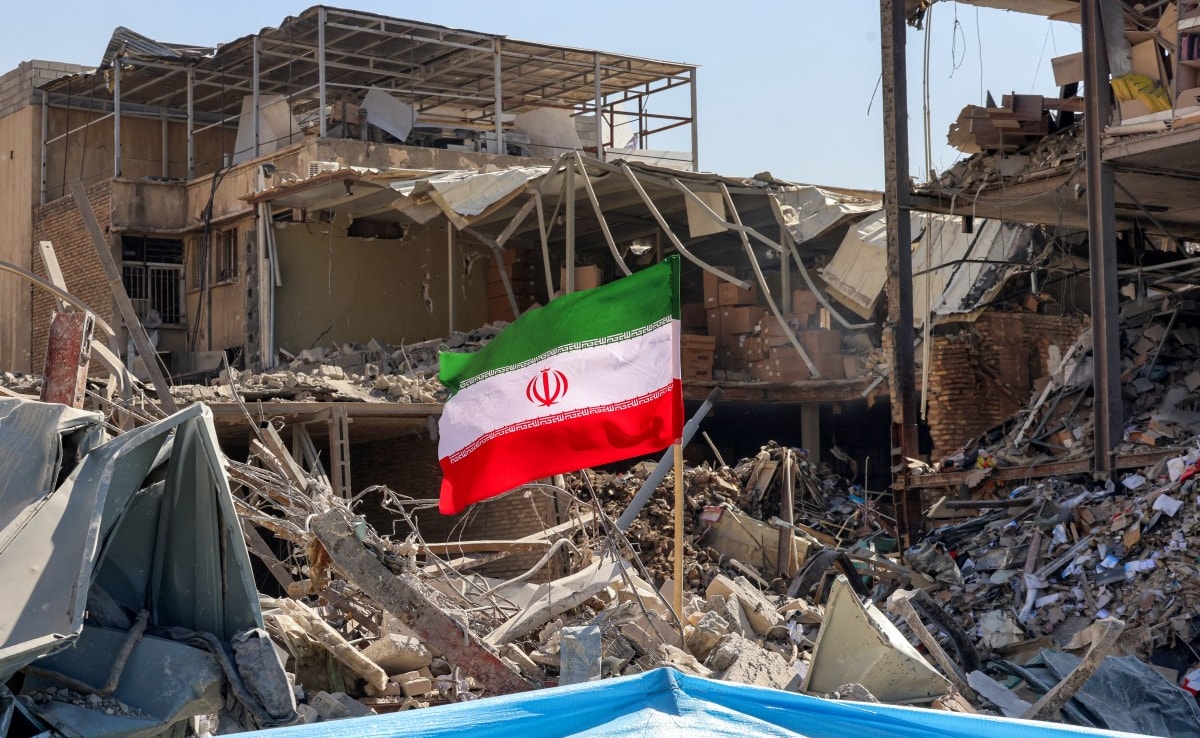
The Iranian Red Crescent has confirmed that at least 780 people have died since the start of the joint US-Israel military campaign targeting Iranian infrastructure. While official tallies often lag behind the chaotic reality on the ground, this figure marks a grim milestone in a conflict that has rapidly moved beyond surgical strikes into a widespread humanitarian crisis. The casualties are no longer confined to the military barracks or enrichment facilities that were the initial targets. They are now appearing in the morgues of Isfahan, Shiraz, and Tehran, as the collateral damage of a high-intensity air campaign begins to hollow out the nation’s internal stability.
The Fracturing of Urban Life
This is not a clean war. The notion of a pinpoint strike is a sanitized myth sold to the public to make the reality of bombardment more palatable. When a munition hits an integrated military-industrial site located near a residential hub, the shockwaves do not respect property lines. In the crowded corridors of Iranian cities, the destruction of a command center often means the leveled apartment complex next door.
The Iranian Red Crescent reports that the bulk of these 780 deaths occurred during the second wave of strikes, which shifted focus from purely offensive capabilities to dual-use infrastructure. This includes power grids, transport hubs, and communication nodes. When the lights go out in a major metropolitan hospital, people die. They die on operating tables. They die in neonatal units. They die because the backup generators, starved of fuel due to disrupted supply lines, fail after forty-eight hours of continuous use.
We are seeing a systemic collapse of the urban safety net. The Red Crescent is struggling to reach trapped civilians in the ruins of provincial capitals because the very roads needed for ambulances have been cratered by munitions designed to stop Iranian mobile missile launchers. It is a closed loop of misery where the tools of war prevent the delivery of aid.
The Intelligence Gap and the Civilian Toll
Military analysts often talk about "intelligence-driven targeting" as if it were an infallible science. It is not. In an environment as opaque as Iran, the distance between a "suspected IRGC safehouse" and a "civilian office building" is frequently a matter of outdated satellite imagery or a single bad tip from an informant.
The high death toll suggests that the margin of error in this campaign has widened significantly. Whether this is due to a shift in the rules of engagement or a desperate attempt by Iranian forces to shield assets within civilian populations remains a subject of heated debate. However, the result for the person on the street remains the same. The "why" matters little when the ceiling is collapsing.
Economic desperation is also driving the numbers higher. As the strikes continue, the internal displacement of thousands of families has created a secondary wave of vulnerability. People are fleeing the cities for the countryside, often traveling through active conflict zones or across terrain that lacks the basic infrastructure to support a sudden influx of refugees. Exposure, lack of clean water, and the sheer physical toll of flight are starting to claim lives that won't show up on a military damage assessment but are deeply felt by the Iranian Red Crescent teams on the front lines.
The Supply Chain of Death
To understand how the toll reached 780 so quickly, one must look at the precision of the strikes against the Iranian logistical network. By targeting fuel depots and bridge crossings, the coalition has effectively paralyzed the internal movement of food and medicine. This is a deliberate strategy intended to cripple the regime's ability to mobilize, but the side effect is the slow strangulation of the civilian populace.
In Tehran, the price of basic staples has quadrupled in a week. While the wealthy can still find ways to survive, the working class is being pushed to the brink. This creates a volatile environment where civil unrest becomes a survival mechanism. The Red Crescent is now reporting that some of the casualties are coming from internal clashes—scuffles at bread lines and fuel stations that turn lethal as the police and paramilitary forces use heavy-handed tactics to maintain a semblance of order.
The Breakdown of Emergency Services
The Iranian emergency response system was designed for earthquakes, not sustained aerial bombardment by two of the world’s most advanced air forces.
- Personnel Exhaustion: First responders have been working 20-hour shifts for days, leading to critical errors in triage.
- Equipment Shortages: Specialized heavy-lifting equipment used to pull survivors from rubble has been destroyed or seized for military defensive works.
- Blood Scarcity: The national blood bank is depleted, and the logistics required to move supplies from unaffected regions have vanished.
A Conflict Without an Exit
The grim tally provided by the Red Crescent is likely a conservative estimate. In many rural areas, there is no one left to count the dead. Communication blackouts have turned vast swaths of the country into information black holes. What we are seeing is the beginning of a protracted humanitarian disaster that will outlast the current military objectives.
The strategy of "maximum pressure" via kinetic means assumes that the population will eventually turn their frustration toward the leadership in Tehran. History, however, suggests a different outcome. When a family loses a child to a foreign bomb, the nuance of geopolitical alignment disappears. It is replaced by a singular, burning grievance.
The coalition forces are currently operating under the assumption that they can degrade Iranian capabilities without triggering a total societal collapse. But with 780 dead and the numbers climbing daily, that line has already been crossed. The infrastructure of a modern state is fragile. It relies on the seamless interaction of power, water, and transport. Once those threads are cut, the descent into chaos is rapid and often irreversible.
The international community is watching a high-stakes gamble play out in real-time, where the currency is human life. Each strike might take a missile off the board, but it adds another dozen names to a ledger that is becoming increasingly difficult for the world to ignore. The Iranian Red Crescent’s report is more than just a statistic. It is a warning that the "clean" war is over, and the era of the humanitarian abyss has begun.
Monitor the regional shift in casualty reporting from neighboring border zones.


