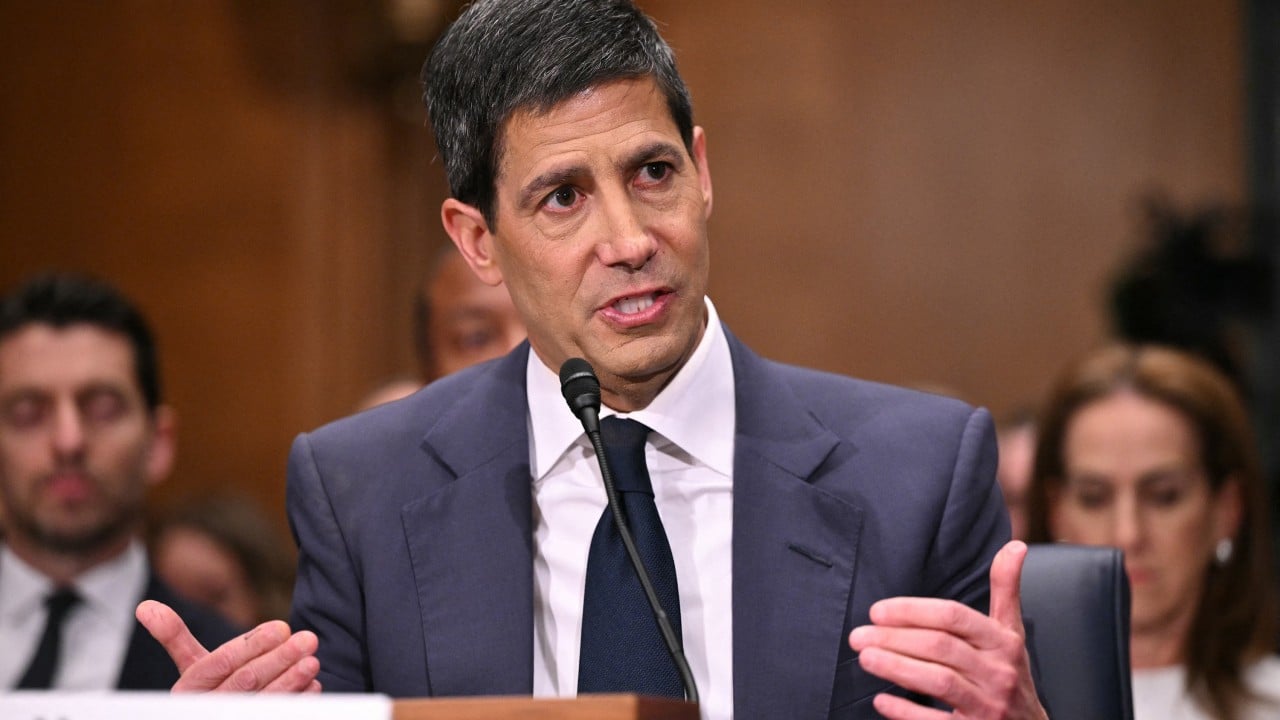
The appointment of Kevin Warsh as a potential Treasury Secretary or Federal Reserve Chair represents a fundamental challenge to the post-1951 Accord era of central bank independence. While market commentary often focuses on the superficial tension between the executive branch and the FOMC, the underlying shift is structural. Warsh’s advocacy for "monetary sovereignty" suggests a transition from a technocratic, inflation-targeting regime toward a geostrategy-integrated monetary policy. This realignment prioritizes the U.S. dollar’s role as an instrument of national power over the traditional singular focus on domestic price stability.
The Trilemma of Modern Central Banking
The classical Mundell-Fleming "Impossible Trinity" posits that a country cannot simultaneously maintain a fixed exchange rate, free capital movement, and an independent monetary policy. The Warsh Doctrine introduces a fourth variable: the requirement for monetary policy to support national industrial and fiscal objectives.
The friction between the White House and the Federal Reserve stems from three specific structural bottlenecks:
- Fiscal-Monetary Synchronization: The current Federal debt-to-GDP ratio creates a "fiscal dominance" environment where the Fed’s interest rate path is constrained by the Treasury’s interest expense.
- Trade-Weighted Dollar Valuation: A strong dollar curbs domestic inflation but handicaps the "America First" manufacturing agenda.
- Global Liquidity Competition: The rise of alternative payment rails (BRICS+, CBDCs) threatens the dollar’s hegemony, necessitating a Fed that defends the currency’s global utility rather than just its domestic purchasing power.
Deconstructing the Warsh Framework
Warsh’s critique of the Federal Reserve centers on its reliance on "backward-looking" data models and a perceived lack of accountability to the broader economic strategy of the United States. His approach can be categorized into three pillars of reform.
The Institutional Accountability Pivot
The Federal Reserve’s current independence is shielded by the 1951 Treasury-Fed Accord, which separated debt management from monetary policy. Warsh signals a desire to tighten the feedback loop between the executive branch and the FOMC. This is not merely a request for lower rates; it is a demand for "strategic alignment." If the Treasury is pursuing an aggressive tariff regime to reshore industry, the Fed’s mandate would shift to ensuring that the resulting inflationary pressures do not lead to a reflexive tightening that kills the domestic investment the tariffs were meant to stimulate.
Macroprudential Sovereignism
Under a Warsh-led or influenced regime, the Fed would likely move away from the "Jackson Hole Consensus" of global central bank cooperation. Instead, it would adopt a posture of "monetary sovereignty." This involves:
- Priority of Domestic Growth over Global Spillovers: Ignoring the impact of U.S. rate hikes on emerging markets or European stability if those hikes serve U.S. capital formation.
- Selective Liquidity Provision: Using swap lines and the discount window as tools of economic diplomacy rather than neutral market-stabilization mechanisms.
The Taylor Rule Reimagined
Warsh has historically critiqued the Fed's "Groupthink" and its adherence to the Philips Curve—the inverse relationship between unemployment and inflation. His preferred framework suggests a more discretionary, forward-looking model that weighs asset price bubbles and financial stability as heavily as CPI.
The mathematical tension can be expressed through a modified Taylor Rule:
$$i = r^* + \pi + 0.5(\pi - \pi^) + 0.5(y - y^) + \alpha(s)$$
In this equation, $\alpha(s)$ represents the "Sovereignty Variable," where $i$ is the nominal fed funds rate and $s$ is a composite of trade balance targets, national debt serviceability, and strategic industrial output. The addition of this variable fundamentally changes the predictability of the Fed, introducing a geopolitical risk premium into US Treasury yields.
Mechanisms of Executive Influence
The narrative that the President can simply "fire" the Fed Chair is legally tenuous but strategically irrelevant. The actual mechanism of influence is the "Shadow Mandate." This occurs through three distinct channels:
1. Personnel as Policy
By appointing a Treasury Secretary who also holds a future claim to the Fed Chair (the "Chair-in-waiting" model), the administration creates a dual-track authority. Market participants begin to price in the "Warsh Path" rather than the "Powell Path" eighteen months before a formal transition occurs. This effectively "front-runs" the Fed’s decision-making process.
2. The Exchange Stabilization Fund (ESF)
The Treasury Secretary has broad discretion over the ESF. By using this fund to intervene in currency markets, the Treasury can create conditions that force the Fed’s hand. For example, if the Treasury weakens the dollar to support exports, the Fed may be forced to maintain higher rates to prevent a rout in the Treasury market, thereby achieving the administration's goal of attracting foreign capital while maintaining high domestic yield.
3. Regulatory Capital Requirements
The Fed’s role as a bank regulator provides a backdoor to monetary easing. By loosening capital requirements (such as the Supplementary Leverage Ratio), the Fed can increase bank lending capacity without lowering the federal funds rate. This "stealth easing" provides liquidity to the private sector while maintaining the appearance of a restrictive inflation-fighting stance.
Quantifying the Cost of Alignment
The transition to an "America First Fed" is not a Pareto improvement; it involves significant trade-offs. The primary cost function is the "Credibility Premium."
- Inflation Volatility: If the market perceives the Fed as subservient to the Treasury, inflation expectations become unanchored. Investors will demand higher long-term yields (the term premium) to compensate for the risk of future currency debasement.
- Capital Flight Risks: While the U.S. remains the "cleanest dirty shirt" in the global economy, a politicized Fed risks the "Japanification" of the dollar—where the currency becomes a tool of the state rather than a reliable store of value.
Strategic Divergence from the Powell Era
Jerome Powell’s tenure has been defined by "transparency" and "guidance." Warsh represents a return to "strategic ambiguity." By making the Fed less predictable to global markets, the administration gains a tactical advantage in trade negotiations. If a trading partner does not know whether the Fed will defend the dollar or allow it to slide, that partner is less likely to engage in competitive devaluation.
This creates a bottleneck for institutional investors who rely on the "Fed Put." The new regime replaces the "Fed Put" (the belief that the Fed will save markets) with the "Sovereign Call" (the belief that the Fed will act to save the U.S. industrial base).
Tactical Implications for Capital Allocation
Investors must recalibrate their models to account for a Fed that is no longer a neutral referee but a player on the national team.
- Yield Curve Steepening: Expect a persistent steepening of the 2-10 spread as the market prices in long-term fiscal dominance.
- Commodity Weighting: In a monetary sovereignty regime, real assets act as a hedge against the inevitable coordination between fiscal spending and monetary accommodation.
- Sector Rotation: Financials and heavy industry stand to benefit from "stealth easing" via regulatory rollbacks, even if headline rates remain elevated to combat the inflationary effects of tariffs.
The most critical variable is the velocity of the transition. A sudden break in Fed independence would likely trigger a massive repricing of the 10-year Treasury. A gradual "Warsh-ification," characterized by subtle shifts in rhetoric and the appointment of aligned governors to the board, allows for a managed transition of the dollar's role in the global order.
The shift toward Kevin Warsh signals that the era of the Fed as a global liquidity provider of last resort is ending. The Fed of 2026 and beyond will be tasked with a more parochial, yet more ambitious, goal: the preservation of U.S. fiscal solvency and the financing of a new industrial age. This necessitates a move away from the "data-dependent" mantra toward a "strategy-dependent" reality.
Direct your attention to the upcoming FOMC vacancies. The appointment of "sovereigntist" governors will be the first quantifiable confirmation of this regime shift. Watch the 5-year, 5-year forward inflation break-evens; if they begin to climb despite a hawkish Fed, the market is signaling that it no longer believes in the separation of powers. Position for a world where the Fed’s balance sheet is not a neutral tool for market stability, but a weapon in an era of renewed great power competition.