The air in Geneva is often described as sterile. It is a city of polished glass, neutral tones, and the hushed clicking of expensive pens against high-grade paper. But on this particular morning, the stillness felt different. It wasn’t the calm of diplomacy; it was the stunned silence of a witness who has seen something they cannot unsee.
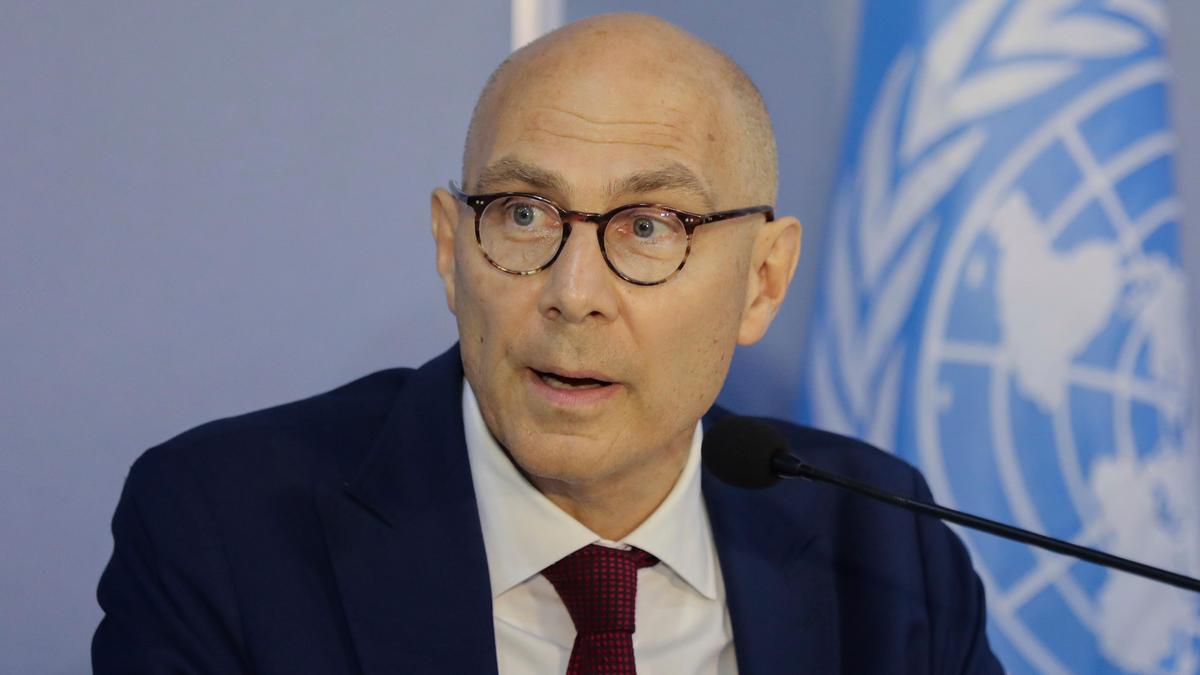
Volker Türk, the United Nations High Commissioner for Human Rights, did not step to the podium to offer a standard briefing. He stepped up as a man who had reached the edge of his vocabulary. When he spoke of being "deeply shocked," it wasn't the scripted outrage of a bureaucrat. It was the visceral reaction of someone watching a collective descent into madness.
West Asia is screaming.
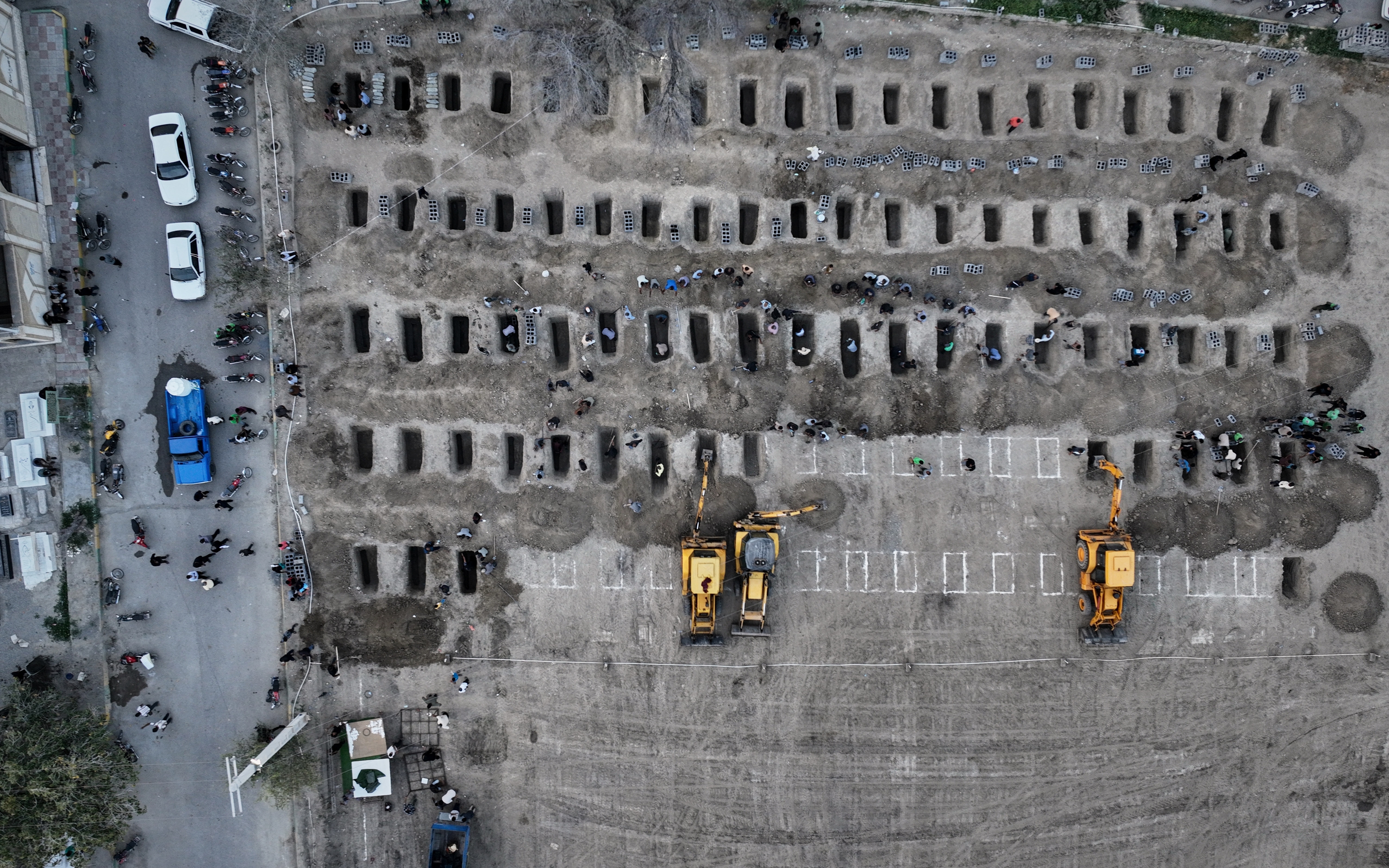
The sound doesn't always carry over the Mediterranean, but it is there, vibrating in the soil and the scorched concrete. We often talk about conflict in terms of "sides" or "strategic interests." We treat geopolitical maps like board games where the little plastic pieces represent battalions rather than breathing human beings. But the "sides" have lost their way, and the "interests" have become nothing more than a shared commitment to mutual destruction.
The Anatomy of a Breaking Point
Consider a hypothetical woman named Adara. She doesn't exist in the official U.N. report, but she exists in every city currently under fire. Adara isn't a combatant. She isn't a strategist. She is a mother who spent four hours yesterday trying to find a single gallon of clean water, only to realize that the path to the well was now a jagged line of craters. To Adara, the "geopolitical shift" mentioned in news tickers is simply the sound of her ceiling fan falling because the vibration of a distant blast loosened the screws.
When Türk calls for all parties to "come to their senses," he is speaking directly to the leaders who have forgotten Adara. He is pointing out a terrifying reality: when a war reaches this level of intensity, the original goal usually evaporates. It ceases to be about security or justice. It becomes a self-sustaining engine of grief.
The numbers are staggering, yet they somehow make us feel less. We hear "thousands displaced" and our brains switch to spreadsheet mode. We forget that every single one of those "units" is a person who had a favorite shirt, a specific way they liked their coffee, and a collection of private jokes that are now being buried under the weight of "military necessity."
The Invisible Stakes of Silence
There is a specific kind of erosion that happens when international law is treated as a set of suggestions rather than a boundary. It’s like watching a sea wall crumble. At first, it’s just a few cracks. You think the structure will hold. Then, the water starts to seep through, and suddenly, the very idea of "protection" becomes a myth.
The High Commissioner’s shock stems from this erosion. We are witnessing the normalization of the unthinkable. When hospitals become targets, when entire neighborhoods are erased in an afternoon, and when the response from the global community is a series of "deep concerns" that lead to no change, the framework of our shared humanity begins to dissolve.
It is a terrifying precedent. If the rules don't apply here, why should they apply anywhere?
Think about the psychological toll on the generation growing up under these skies. In a child’s mind, the world is supposed to have a logic. You do your homework, you play with your friends, and the adults keep the world from catching fire. But in West Asia, that logic has been inverted. The "adults" are the ones pouring the gasoline. The homework has been replaced by the grim art of identifying the difference between an outgoing rocket and an incoming shell by the pitch of the whistle.
The Weight of the "Humanitarian" Label
We use the word "humanitarian" so often that it has lost its edge. We think of it as a category of aid, like "medical" or "financial." But humanitarianism is actually a plea. It is the last-ditch effort to remind the guys with the guns that there is something more important than their victory.
Türk’s plea for a return to "sense" is an admission that we are currently operating in a vacuum of reason. The escalations we see daily—the tit-for-tat strikes that expand like ripples in a pond of blood—don't have a logical endgame. There is no version of this story where more bombs lead to a more stable peace. It is a mathematical impossibility. Violence, by its very nature, generates the friction required to keep itself going.
Imagine the room where these decisions are made. The lighting is likely soft. The air conditioning is humming. There are maps on the wall, and the people around the table are speaking in the calm, measured tones of experts. They use words like "degradation of capabilities" and "tactical maneuvers." They are shielded from the smell of cordite and the sound of a father screaming for a son he can't find in the smoke.
This distance is the real enemy. It allows for the dehumanization of the "other" until they aren't even people anymore—just obstacles to a goal that becomes more abstract with every passing day.
Why the World Can't Look Away
It is tempting to turn off the news. The sheer volume of the tragedy is exhausting. We feel a "compassion fatigue" that makes us want to retreat into our own small, safe lives. But the High Commissioner’s alarm is a reminder that we don't live in a vacuum. The instability of one region is the instability of the world.
When the "senses" of a region are lost, the fallout travels. It travels through displaced populations seeking safety. It travels through the radicalization of those who feel the world has abandoned them. It travels through the global economy, but more importantly, it travels through the collective conscience of humanity. We are all diminished by what we allow to happen.
The facts are clear. The death tolls are rising. The infrastructure of life—water, power, medicine—is being systematically dismantled. But the core fact, the one that should keep us awake at night, is that this is a choice.
Every bomb dropped is a choice. Every ceasefire ignored is a choice. Every diplomat who prioritizes political survival over human survival is making a choice.
The shock expressed in Geneva isn't just about the violence itself. It's about the realization that we have the power to stop this, yet we are choosing to watch the clock run out. We are choosing to let the darkness win because we are too afraid or too stubborn to imagine a different way.
Adara is still there. She is sitting in the dust of her hallway, clutching her children, waiting for the sound of the next choice to fall from the sky. She doesn't care about the U.N. press release. She doesn't care about the diplomatic maneuvers in New York or Geneva. She only cares if the sun will rise on a world that still remembers she is a human being.
The tragedy of West Asia isn't just the war. It's the silence that follows when the world’s "shock" wears off and everyone goes back to their pens and paper, leaving the Adaras of the world to navigate the ruins of our collective failure.
The ink on the report is dry. The blood on the ground is not.