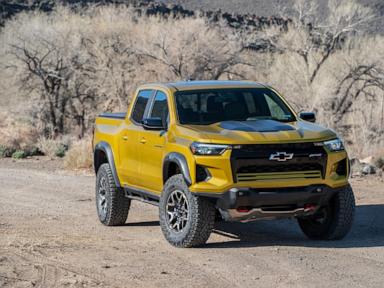
You're standing in a showroom looking at a truck with a 3-inch lift and stickers that scream "Trail Rated" or "Raptor." It looks mean. It's expensive. But here’s the cold truth: most of these rigs are overkill for a gravel driveway and underwhelming when you’re actually staring down a rock garden in Moab.
In 2026, the midsize truck market is crowded. Manufacturers are stuffing these pickups with enough tech to land a rover on Mars, but that doesn't mean they're all equal. You want a truck that doesn't just look the part but actually survives the dirt without snapping a tie rod.
The Reality of the 2026 Midsize Dirt Kings
If you’re hunting for the best midsize truck for off-roading, you've likely seen the usual suspects. The Ford Ranger Raptor, the Toyota Tacoma Trailhunter, and the Chevrolet Colorado ZR2. They're the big three. But they handle the dirt in fundamentally different ways.
I’ve seen guys take a $60,000 truck into the woods and realize within ten minutes that it’s too wide, too heavy, or too "smart" for its own good. You need to know if you’re a high-speed desert runner or a slow-and-steady rock crawler.
Ford Ranger Raptor: The Desert Speedster
The 2026 Ford Ranger Raptor is basically a trophy truck with a license plate. It’s got a 3.0L EcoBoost V6 that pumps out 405 horsepower and 430 lb-ft of torque. That's plenty of punch.
The real magic isn't the engine; it’s the FOX 2.5-inch Live Valve shocks. These things are proactive. They adjust their damping rates hundreds of times per second based on what the sensors see. If you’re the type who wants to skip across sand whoops at 60 mph, this is your rig.
Don't buy it for towing, though. The suspension is too soft. It’s rated for about 5,510 lbs, which is pathetic compared to its rivals. It’s a toy, not a workhorse.
Chevrolet Colorado ZR2: The Technical Surgeon
While the Raptor wants to fly, the Colorado ZR2 wants to climb. It uses Multimatic DSSV dampers. Unlike traditional shocks that use shim stacks, these use spool valves. It’s technology borrowed from Formula 1, and in the dirt, it’s spooky how good it feels.
The ZR2 sits on 33-inch tires and has a 3-inch factory lift. But the "cheat code" is the lockers. You get electronic locking differentials in both the front and the rear. Most "off-road" trucks only lock the back. When you’re hung up on a wet rock, having that front locker is the difference between driving out and calling a recovery winching service.
Toyota Tacoma Trailhunter: The Overlanding Specialist
Toyota finally stopped living in the 90s. The 2026 Tacoma Trailhunter is built specifically for people who want to disappear into the woods for a week. It uses the i-FORCE MAX hybrid powertrain, giving you 326 horsepower and a massive 465 lb-ft of torque.
The Trailhunter comes factory-equipped with:
- Old Man Emu (OME) position-sensitive shocks.
- A high-mount air intake (snorkel).
- Integrated ARB bed rack.
- A 2400W AC inverter to run your fridge or power tools.
It’s heavy. It’s not as nimble as the Chevy. But it’s built to carry 500 lbs of gear over bad roads for 500 miles.
Stop Ignoring the Jeep Gladiator Rubicon
People love to hate on the Gladiator because it looks like a Wrangler that swallowed a Lego brick. It’s long. It’s loud on the highway. Honestly, it’s kind of a pain to park.
But on a technical trail? It’ll embarrass almost anything else. It’s the only truck in the class with a solid front axle. That means better articulation. When the independent front suspension (IFS) on a Tacoma or Ranger runs out of travel and leaves a tire hanging in the air, the Jeep’s tires stay planted.
Plus, you can take the doors off. There’s nothing like smelling the pines and getting covered in dust while you’re picking your way through a creek bed.
The Specs That Actually Matter
Don’t get distracted by the infotainment screen size. When you're 40 miles from cell service, you care about these numbers:
- Ground Clearance: You want at least 10 inches. The Colorado ZR2 gives you 10.7, while the Gladiator Mojave can push up to 11.6.
- Approach Angle: This is how steep a hill you can start climbing without smashing your front bumper. Anything over 30 degrees is solid. The Gladiator Rubicon hits nearly 45 degrees.
- Crawl Ratio: If you’re rock crawling, you want a high number here. It’s a measure of how much torque is multiplied at low speeds. The Gladiator’s 77:1 ratio is king.
Common Mistakes New Buyers Make
I see it every weekend. Someone buys a Pro-4X or a Trail Boss and thinks they're invincible.
- Tire Pressure: They leave their tires at 35 PSI. You've got to air down. Dropping to 18-20 PSI doubles your footprint and saves your kidneys from the vibration.
- Payload Math: You see a "Best-in-Class" towing claim of 7,700 lbs on the Chevy Colorado. That's great, but that's for the base model. Once you add the heavy ZR2 suspension and steel skid plates, your actual payload capacity drops. If you load four big friends and a bed full of camping gear, you might be over your limit.
- The "Auto" 4WD Trap: Many 2026 trucks have a 4-Auto setting. It's fine for a snowy highway. It’s useless for deep mud. Engagement is too slow. Switch to 4-High or 4-Low before you get stuck, not after.
What to Do Next
If you're ready to pull the trigger, don't just look at the monthly payment.
Go to a dealership and look under the truck. If you see plastic "skid plates" (usually just splash guards), you'll need to spend another $1,500 on real steel or aluminum protection. Check the recovery points. Are they bolted to the frame, or are they just flimsy loops?
Buy the Colorado ZR2 if you want the best all-around technical performer.
Get the Ranger Raptor if you have a "send it" mentality and a flat desert nearby.
Pick the Tacoma Trailhunter if you plan on living out of your truck for weeks at a time.
Stick with the Gladiator if you’re a purist who doesn't mind a rough ride in exchange for legendary trail access.
The 2026 midsize segment is better than it's ever been. Just make sure you're buying the capability you'll actually use, not just the badge on the tailgate.


