Governments love a good optics play. A charter jet touching down on a rain-slicked runway in Middle England, filled with weary citizens, is the ultimate "we take care of our own" PR stunt. But look past the Minister’s somber press release about the "delayed Thursday flight" and you’ll see the gears of a broken, performative machine.
The British government is patting itself on the back for managing to get a single plane into the air after "technical delays." In reality, they are operating a glorified travel agency with the efficiency of a 1990s dial-up modem.
If you’re waiting for a government-chartered flight to save you in a conflict zone, you’ve already lost the logistics war.
The Fallacy of the Ministerial Rescue
Ministers stand at podiums and talk about "complex security environments" as if they are navigating a Martian landscape. They aren't. They are dealing with commercial airports, standard flight paths, and insurance underwriters.
The "delay" cited for the Thursday flight out of the Middle East isn't a byproduct of some unpredictable fog of war. It is the result of bureaucratic inertia. Private security firms and high-net-worth individuals evacuated their people weeks ago. They didn't wait for a press release. They moved when the data signaled risk.
The UK government, however, operates on a "wait and see" protocol that prioritizes political signaling over rapid extraction. They wait for the situation to get bad enough that a rescue looks heroic, but not so bad that the insurance premiums for the charter company become "politically unviable."
It’s a cynical dance. By the time the Minister announces the flight, the window for a safe, orderly departure has usually been slammed shut by escalating local tensions.
Why You Should Never Wait for a "Rescue" Flight
The biggest misconception in international travel is that the British passport is a "get out of jail free" card that includes a complimentary seat on a Titan Airways charter.
Here is the brutal truth:
- Government flights are the most expensive way to fail. Taxpayers foot the bill for empty seats on the way in and astronomical "emergency" charter rates on the way out.
- They are magnets for chaos. When you announce a specific departure point and time in a destabilized region, you create a bottleneck. You create a target.
- They prioritize the wrong people. Eligibility is often a nightmare of paperwork. While the embassy staff argues over who qualifies as a dependent, the last commercial flight is taking off with half-empty rows.
I have seen corporate security teams move 400 employees across three borders in 24 hours while the Foreign, Commonwealth & Development Office (FCDO) was still trying to figure out which website to host their "Registration of Interest" form on.
The Insurance Shadow Government
Why was the flight delayed until Thursday? The Minister won't tell you it’s because the Lloyd’s of London underwriters hadn't cleared the hull war risk for that specific tail number.
The state doesn't own these planes. They rent them. And the companies that own them—the ones the government "partners" with—are beholden to their insurers. If the risk profile ticks up 1%, the plane stays on the tarmac in Cyprus or Dubai.
When the government says "security concerns," they usually mean "the premium went up and the Treasury is still arguing about the budget."
This is the nuance the mainstream media misses. They report the delay as a tactical military-style hurdle. It’s actually a spreadsheet hurdle. If you want to know when the next rescue flight is leaving, don't watch the news; watch the maritime and aviation insurance indices.
The "People Also Ask" Delusions
People ask: Is it safe to wait for the government to tell me when to leave?
No. If you wait for the government to tell you to leave, you’re already late. The "Leave Now" advisory is the final stage of a multi-week failure of diplomacy.
People ask: Will the government pay for my flight?
Rarely. Most of the time, you’ll be asked to sign a "Promissory Note." You’re essentially taking out a high-interest payday loan from the taxpayer to sit on a cramped plane with no catering.
People ask: Why can't the RAF just fly me out?
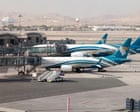
Because the optics of a C-17 landing in a sovereign nation’s commercial airport are "escalatory." The government would rather you wait three days for a civilian Boeing 737 than risk the diplomatic headache of a grey-tail military bird on the apron.
The Actionable Truth: Your Own Extraction Plan
Stop looking at the FCDO website for hope. It’s a repository of outdated advice and CYA (Cover Your Assets) language.
If you find yourself in a region where the British government is starting to talk about "contingency planning," do three things:
- Burn the "Go-Bag" Mentality: You don't need a tactical backpack. You need a liquid stash of multiple currencies and a burner phone with a local SIM card that isn't registered to your primary identity.
- Identify Secondary Hubs: Don't look at the main international airport. Look at the regional hubs three hours away by car. These are the ones the "rescue" flights will ignore, which means they remain functional long after the main gates are mobbed.
- The Commercial First Rule: Buy a commercial ticket the moment the "Work from Home" advisories start for embassy staff. A $1,000 economy seat on a Friday is cheaper than a "free" government flight on a Tuesday that never arrives.
The Logistics of Incompetence
The UK’s "Rescue Thursday" flight is a symptom of a larger rot. We have outsourced our national duty of care to private contractors and then tied their hands with red tape.
We saw it in Kabul. We saw it in Sudan. We are seeing it now. The script never changes.
- Denial: "The situation is stable."
- Urgency: "Register your presence on our portal."
- The Pivot: "Commercial routes are still open; use them." (Translation: We haven't booked any planes yet).
- The Rescue: One or two flights that carry a fraction of the citizens, publicized heavily to mask the thousands left to fend for themselves.
The delay isn't a technical glitch. It's the sound of a system that wasn't built for speed, but for deniability.
If you are still in the Middle East waiting for a Minister to save you, you aren't a passenger. You’re a prop in a political theater piece that’s running behind schedule.
Quit waiting for the Thursday flight. Find a car, find a boat, or find a commercial route. The government isn't coming to save you; they're coming to take a photo of you being saved.
Get out on your own terms or don't get out at all.