The cockpit of an F-16 is not a room. It is a suit you wear, a pressurized glass bubble where the horizon is merely a suggestion and the roar of the Pratt & Whitney engine is a vibration felt in the marrow of your teeth. For decades, the American public has viewed these machines as invincible ghosts—invisible on radar, untouchable in the clouds, and eternal in their dominance. We grew used to the idea that a pilot goes up, completes a mission, and comes home for a debrief.
But the sky is getting harder to hold.
The reports filtering through the wire are no longer just dry statistics about mechanical failure or training "mishaps." When we talk about US fighter planes being shot down, we are talking about the end of an era. We are witnessing the puncture of a myth. Behind every headline about a downed jet is a story of a human being strapped into twenty tons of screaming metal, suddenly realizing that the technology they were promised would protect them has been outpaced by a faster, cheaper, and colder reality.
The Ghost in the Machine
Consider a pilot we will call Miller. He isn't a hero in a movie; he’s a thirty-four-year-old father of two who spent ten years learning how to master the complex symbology of a Head-Up Display. In the old world, Miller’s greatest threat was another pilot. It was a duel of wits, G-force, and nerves. If he went down, it was because someone outflew him.
Today, the threat is an algorithm tucked inside a shoulder-fired missile that costs less than Miller’s flight suit.
When a multi-million dollar aircraft is brought down by a localized defense system, the math of warfare shifts violently. It is no longer a game of high-tech dominance. It is a game of attrition. The reports of these losses are often buried in the middle of news cycles, framed as "operational losses" or "incidents involving hostile fire," but the emotional weight is heavy. Each loss represents a vacuum. A gap in the line. A family waiting for a phone call that starts with a long silence.
We have built a military culture on the assumption of air superiority. We assume the sky belongs to us because, for a long time, it did. But the proliferation of advanced anti-aircraft systems—the S-400s, the Man-Portable Air-Defense Systems (MANPADS), and the increasingly lethal drone swarms—has turned the heavens into a graveyard of expensive titanium.
The Cost of the Invisible
The numbers are startling when you actually sit with them. An F-35 costs roughly $80 million, depending on the variant and the day of the week. That doesn’t include the lifetime of maintenance, the fuel, or the thousands of hours invested in the person sitting in the ejector seat. When one of these planes is shot down, it isn't just a loss of hardware. It is a localized economic collapse.
Why does this matter to the person sitting at home, scrolling through the news? Because these losses dictate our foreign policy, our tax brackets, and our sense of national security. When a plane goes down, the "invincibility" of the superpower takes a hit. It emboldens adversaries. It makes the world feel smaller and more dangerous.
The technical reality is that the gap between "stealth" and "visible" is closing. Radar technology is catching up. Infrared sensors are getting sharper. The "invisible" cloak we spent trillions of dollars developing is starting to look a bit threadbare. It’s a terrifying realization for a pilot. You are flying a billboard in the sky, hoping the light reflects off your wings in just the right way to keep you a secret.
The Weight of the Ejector Seat
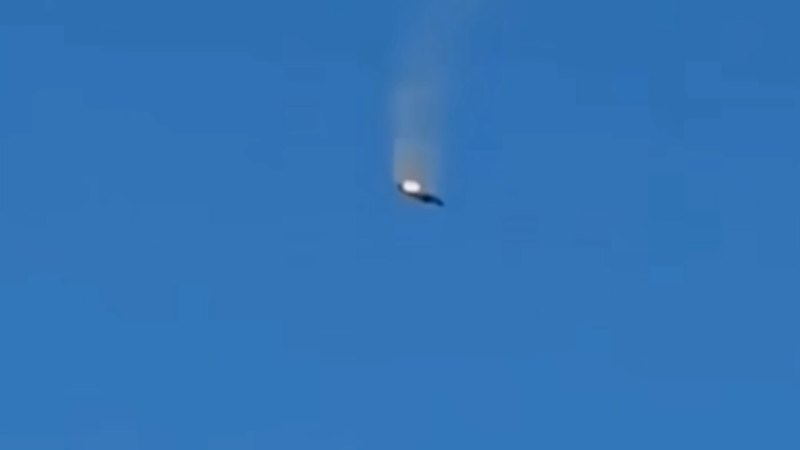
There is a specific sound when a pilot has to punch out. It’s a violent, bone-crunching explosion of pyrotechnics that hurls a human body into the air at speeds that often cause permanent spinal damage. It is the sound of a billion-dollar strategy failing in a fraction of a second.
Reports of downed planes often focus on the "asset." They talk about the "airframe." They rarely talk about the scent of ozone and burnt hydraulic fluid. They don't mention the way a pilot's heart rate spikes to 180 beats per minute when the "warning" tone in their headset turns into a flat, continuous scream of a missile lock.
The reality of modern conflict is that we are sending humans into a space that is increasingly designed for machines. The human body cannot handle more than 9 Gs without blacking out. A missile can turn at 30 Gs without breaking a sweat. We are asking our sons and daughters to win a race against physics and silicon.
A New Geography of Fear
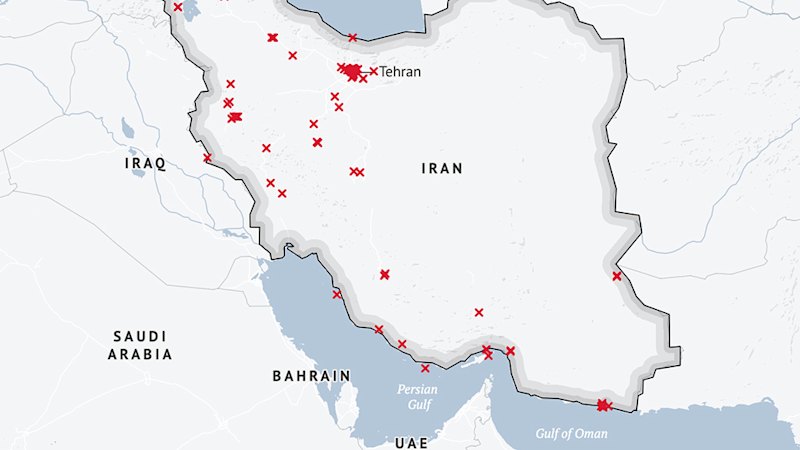
The geography of where these planes are falling tells its own story. These aren't just accidents in the Nevada desert. They are happening in contested corridors where the shadow of the Cold War has lengthened into something new and unrecognizable. From the mountains of the Middle East to the borders of Eastern Europe, the reports of lost aircraft are markers on a map of shifting power.
Every time a US plane is downed, the wreckage is scavenged. It’s a gold rush for intelligence. Every circuit board, every scrap of radar-absorbent material, and every line of code is picked over by rival engineers. The loss of the plane is the beginning of a second, invisible war: the war to keep our secrets from being reverse-engineered.
This isn't just about "war" in the abstract. It's about the erosion of a standard. For fifty years, the American jet was the ultimate symbol of the Pax Americana. If an F-15 appeared over your city, the argument was over. Now, the argument is just beginning.
The Silence After the Crash
The most haunting part of these reports isn't the explosion. It’s the silence that follows. The silence in the command center when a transponder goes dark. The silence in the hangar where a crew chief realizes their bird isn't coming back. The silence in the media when the details are classified "for national security reasons."
We are entering a period where the sky is no longer a safe harbor. The technology that once gave us an absolute advantage has become a target. We are learning, painfully and slowly, that no amount of money can buy a permanent lead in the arms race.
The metal falls from the sky, and we are left to wonder if we are witnessing the end of a long, golden afternoon. The sun is setting on the era of the untouchable pilot. What comes next is a twilight of drones, autonomous swarms, and a different kind of courage—one that doesn't involve a heartbeat in the cockpit, but rather the cold calculation of a remote operator miles away.
The next time you see a headline about a downed fighter, don't look at the serial number. Look at the empty space where a person used to be, and the way the clouds seem a little more crowded than they used to.
The sky hasn't changed. We have.
It is no longer enough to be fast. It is no longer enough to be quiet. In the new world, the only way to stay in the air is to realize that the ground has finally learned how to reach up and pull you down.