The publication of a poem by Sheikh Mohammed bin Rashid Al Maktoum, Vice President and Prime Minister of the UAE and Ruler of Dubai, dedicated to President Sheikh Mohamed bin Zayed Al Nahyan, is not a mere literary event; it is a calibrated instrument of statecraft designed to reinforce the domestic social contract and project external geopolitical stability. In the Gulf monarchical model, poetry serves as a high-density communication channel that translates complex political alliances into a cultural vernacular, ensuring that the "Leadership Duad" between Dubai and Abu Dhabi remains perceived as a singular, frictionless entity. This analysis deconstructs the strategic functions of this viral communication, evaluating how it mitigates internal succession risks and signals long-term policy continuity to global capital markets.
The Architecture of Sovereign Branding
State legitimacy in the UAE rests on a specific performance of unity. While the seven emirates maintain distinct administrative identities, the central narrative requires an absolute absence of public friction between the primary economic hub (Dubai) and the political/energy powerhouse (Abu Dhabi). The use of Nabati poetry—a traditional Bedouin form—acts as a linguistic bridge between the nation’s hyper-modern infrastructure and its tribal origins.
The Functional Utility of Traditional Verse
Traditional poetry in this context serves three distinct operational purposes:
- Cultural Validation of Policy: By framing the Presidency of Sheikh Mohamed bin Zayed within a poetic structure, the administration anchors contemporary state decisions—ranging from the Abraham Accords to the "We the UAE 2031" vision—in a historical continuum. This reduces the "shock of the new" for the domestic populace.
- Succession Signal Reinforcement: The poem explicitly identifies the President as the "protector" and "guide." In the context of the 2022 leadership transition following the passing of Sheikh Khalifa, such public declarations from the Dubai Ruler function as a formal, recurring oath of fealty that stabilizes the federal structure.
- Soft Power Export: The "viral" nature of the poem is a deliberate metric of reach. As the content spreads across social platforms, it creates an image of a unified, high-functioning executive branch, which is a critical prerequisite for the Foreign Direct Investment (FDI) the UAE seeks to attract through its non-oil diversification strategies.
The Synergy of the Dubai-Abu Dhabi Axis
The relationship between the two principal emirates is often viewed through the lens of competition, yet the "Poem Strategy" highlights a symbiotic cost-sharing model of governance. Abu Dhabi provides the sovereign wealth buffer and military-diplomatic weight, while Dubai provides the global brand, logistics, and tourism infrastructure.
The Capital Allocation Framework
The unity expressed in the poem reflects an underlying economic reality: the UAE’s federal budget and its strategic investments (via entities like Mubadala and ADIA) require a unified front to maintain high credit ratings. Any perceived rift between the Vice President and the President would introduce a "political risk premium" into the UAE’s debt markets. By humanizing the relationship through an "emotional poem," the leadership effectively lowers the cost of borrowing for the nation’s state-owned enterprises (SOEs).
- Risk Mitigation: The poem acts as a hedge against rumors of regional factionalism.
- Narrative Control: It replaces technical dry-state communiqués with a narrative of brotherhood, which is more resilient to external disinformation campaigns.
The Viral Loop as a Governance Metric
The "viral" status mentioned in reports is the result of a sophisticated state-media apparatus designed to maximize domestic engagement. In the UAE, digital reach is a proxy for social cohesion. The speed at which the poem was disseminated across Instagram, X, and local news outlets provides the government with real-time data on the "Sentiment Index" of the population.
Logic of the Digital Majlis
The digital distribution of the poem creates a modern version of the Majlis (a traditional gathering). It allows citizens to "interact" with the leadership by sharing and commenting, thereby participating in a collective act of nationalistic reaffirmation. This engagement is crucial for a country where expatriates outnumber citizens; it reinforces the "local" identity amidst a globalized demographic.
- Algorithmic Favor: State-driven content is optimized for local trends, ensuring that the message of unity dominates the digital discourse during key political cycles.
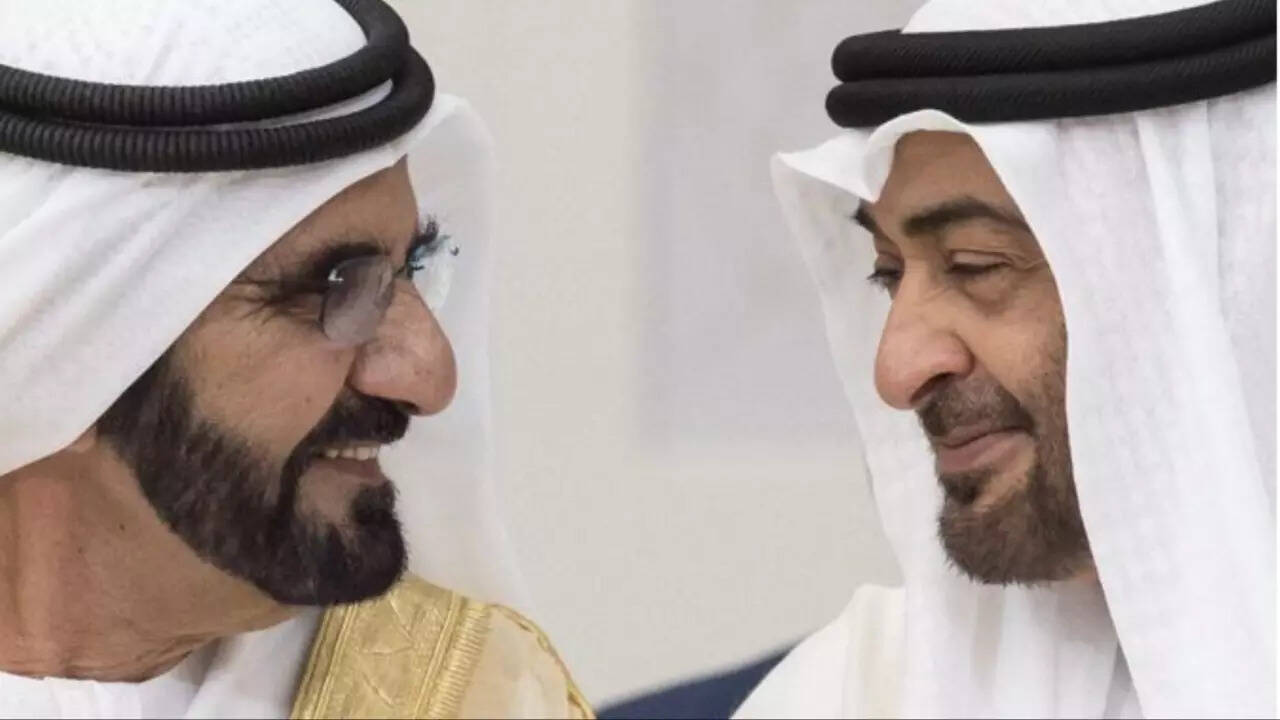
- Visual Symbolism: Often accompanied by high-definition imagery of the two leaders together, the poem leverages visual literacy to communicate power dynamics where the President is centered and the Vice President is the active supporter.
Strategic Implications for Global Observers
For international consultants and investors, the "viral poem" should be read as a white paper on the UAE's political risk profile. It indicates a zero-tolerance policy for public dissent within the top-tier leadership and a commitment to the current trajectory of centralized, rapid-growth governance.
The Continuity Variable
The primary takeaway for the global market is predictability. In a region often characterized by volatility, the public display of mutual admiration between the Ruler of Dubai and the President of the UAE signals that the legal and economic frameworks governing the UAE's Free Zones and trade corridors are secure. There is no looming "policy pivot" on the horizon; the poem is a confirmation of the status quo.
The secondary takeaway is the personalization of institutional power. In the UAE, the institution is the individual leadership. The poem serves to remind stakeholders that the "Ease of Doing Business" in Dubai is directly linked to the "Stability of Governance" in Abu Dhabi.
The Limits of the Poetic Protocol
While effective, this method of communication has structural limitations. It relies heavily on the personal charisma and historical standing of the current leaders. The "Poetic Protocol" may face a transition crisis when a younger generation of leaders, who may be more Western-educated and less steeped in Nabati traditions, takes the helm.
Furthermore, the effectiveness of the "emotional poem" as a political tool is inversely proportional to the transparency of the state. In a system where traditional media is tightly controlled, these poems become the only visible indicators of leadership dynamics. This creates a reliance on symbolic interpretation rather than institutional transparency.
Strategic Forecast for UAE Leadership
The "emotional poem" is a tactical move within a larger strategic game of "National Resilience." As the UAE approaches its 2031 vision, expect to see an increase in these symbolic, cultural-political activations.
- Digital Integration: The transition of these poems into NFT or high-production video formats will further bridge the gap between traditional heritage and future-tech.
- Multilingual Adaptation: While the original is in Arabic, official translations into English and Mandarin are increasingly common, broadening the reach of the "stability narrative" to the UAE's key trade partners.
- Governance as Performance: The UAE will continue to pioneer a model where state communication is not just informative but performative, using emotional resonance to drive institutional stability.
For investors and global analysts, the most important metric to monitor is the frequency and intensity of these "unity" communications. A surge in such messaging often precedes major policy shifts or regional tensions, serving as a defensive perimeter for the national brand. The poem from Dubai to Abu Dhabi is the clearest signal yet that the UAE's dual-engine leadership model is operating at peak efficiency.
The next tactical phase for the UAE’s communication strategy will involve the systematic integration of these personal leadership narratives into the broader ESG (Environmental, Social, and Governance) frameworks of the nation’s major sovereign wealth funds. By aligning the "brotherhood" of the leadership with the "stewardship" of the national resources, the UAE will effectively insulate its long-term economic strategy from the volatility of individual political cycles.