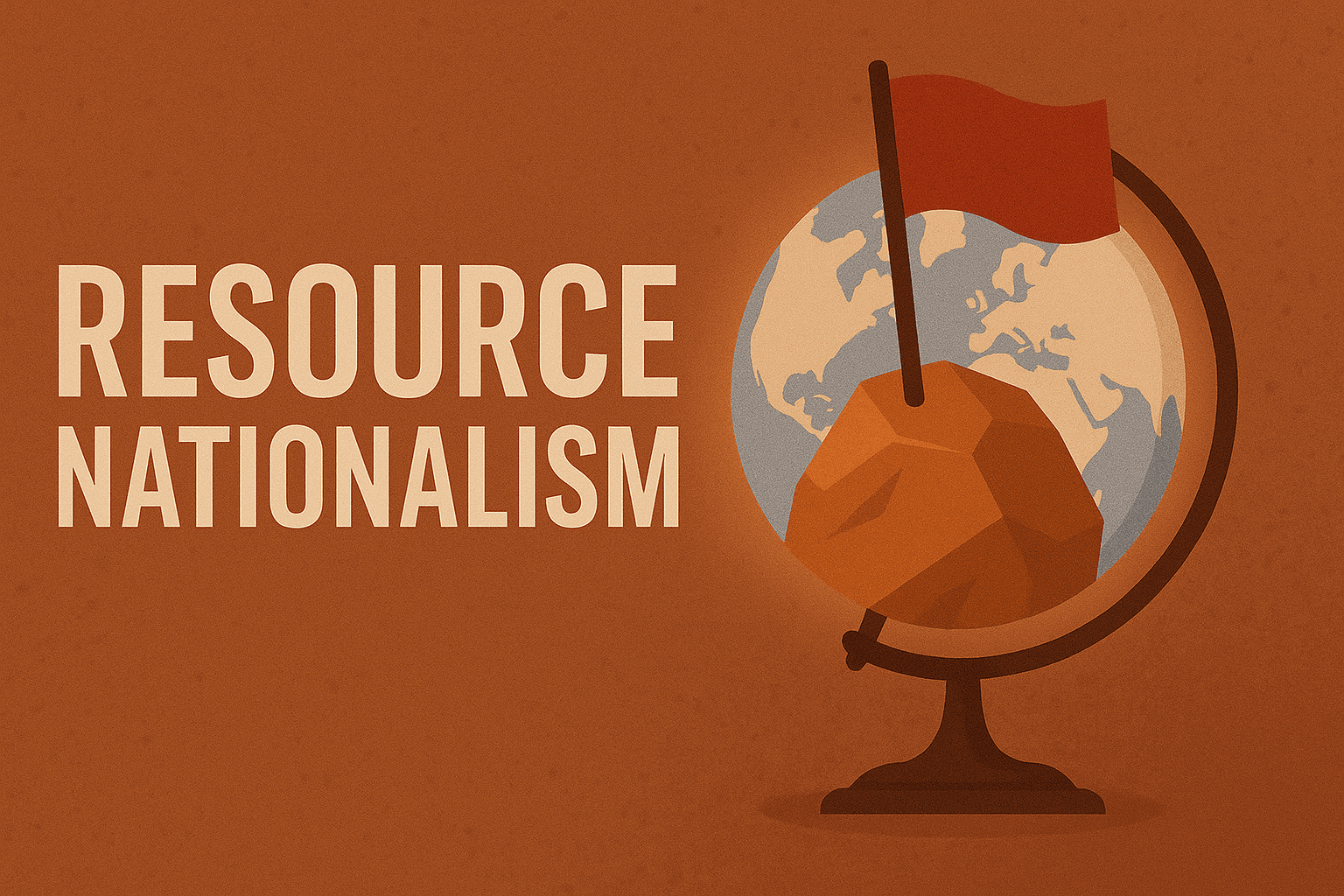
The transition from a fuel-intensive energy system to a material-intensive one has fundamentally altered the geopolitical risk profile of industrial economies. While a traditional fossil fuel crisis is a flow disruption—curtailable but reversible—a critical mineral shortage is a structural bottleneck that halts the production of the next generation of capital goods. Resource nationalism is no longer a localized phenomenon of the Global South; it has evolved into a sophisticated state-managed strategy of "de-risking" that prioritizes domestic security of supply over the cost-efficiencies of globalized trade.
The Triple Constraint of Mineral Sovereignty
The current rush to hoard critical minerals—specifically lithium, cobalt, nickel, rare earth elements (REEs), and graphite—is driven by three intersecting pressures that dictate state behavior. This "Triple Constraint" explains why governments are willing to subsidize inefficient domestic extraction despite lower-cost alternatives abroad.
- The Inventory Gap: The divergence between the Paris Agreement climate targets and the current projected mine output. For copper alone, the cumulative demand required to meet 2050 net-zero goals exceeds the total amount of copper produced in human history.
- Geographical Monopolies: The physical concentration of deposits. China processes approximately 85% of the world’s rare earths and 60% of its lithium. The Democratic Republic of Congo (DRC) accounts for over 70% of global cobalt production.
- The Value-Added Pivot: Exporting nations are transitioning from "diggers and shippers" to industrial hubs. By banning the export of raw ores (as seen in Indonesia’s nickel ban or Zimbabwe’s lithium restrictions), these states force downstream manufacturers to build refineries and factories within their borders.
The Cost Function of Decoupling
Building a "China-free" supply chain introduces a significant green premium. The capital expenditure (CapEx) required to build a new mine has increased by roughly 30% over the last decade due to declining ore grades and stricter Environmental, Social, and Governance (ESG) compliance.
When a state engages in resource hoarding or "friend-shoring," it intentionally accepts a higher cost of capital. Domestic mining in the United States or the European Union faces lengthy permitting cycles—often exceeding 10 to 15 years—and higher labor costs. This creates a divergence in the global market: a low-cost, high-carbon supply chain and a high-cost, certified "clean" supply chain.
Structural Mechanisms of Modern Resource Hoarding
Modern hoarding is rarely about physical stockpiles in warehouses; it is about the "contractual hoarding" of future production capacity.
Offtake Agreements as Statecraft
Western governments are increasingly acting as facilitators for private-sector offtake agreements. By providing loan guarantees through export credit agencies, states allow domestic automakers to secure 5- to 10-year supply contracts from mines that haven't even broken ground. This effectively "hoards" the production before it exists, locking out competitors who rely on spot market purchases.
The Rise of State-Owned Investment Vehicles
The re-emergence of state-backed entities—such as JOGMEC in Japan or the Mineral Resources Authority in various emerging economies—signals a shift away from pure market dynamics. These entities invest directly in foreign equity to ensure a "seat at the table" during board-level decisions regarding where the final product is shipped.
Strategic Stockpiling and Buffer Stocks
While the U.S. National Defense Stockpile has shrunk since the Cold War, there is a renewed push to define "economic security" as "national security." Governments are now identifying specific "points of failure" in the midstream—the refining and chemical processing stages—where a two-week disruption could freeze entire industrial sectors.
The Processing Bottleneck: A Hidden Monopoly
Most analysis focuses on mining, but the true leverage lies in the chemical conversion of ores into battery-grade or magnet-grade materials. Extraction is useless without the specific metallurgical expertise required to separate REEs.
- Chemical Complexity: Converting spodumene (lithium ore) into lithium hydroxide requires specialized reagents and high energy intensity.
- Waste Management: Rare earth processing generates significant radioactive byproducts (thorium and uranium). Western nations have historically outsourced this environmental burden, creating a massive intellectual property and infrastructure gap that cannot be closed by simply opening a new mine.
The Geopolitical Feedback Loop
Resource nationalism creates a self-reinforcing cycle. When Country A restricts exports to protect its domestic industry, Country B perceives a threat to its security and implements subsidies for its own domestic production. This leads to:
- Inventory Bloat: Companies carry higher "just-in-case" inventory, tying up working capital.
- Inflexible Supply Lines: Long-term bilateral deals reduce the liquidity of the global spot market, making prices more volatile for smaller players.
- Technological Divergence: To bypass hoarding, some nations may pivot to "less-critical" chemistries (e.g., Sodium-ion batteries or LFP instead of NCM), leading to a fragmented global technology landscape where different regions use fundamentally different hardware standards.
Strategic Allocation of Capital in the Age of Scarcity
For industrial strategists and institutional investors, the "hoarding" era requires a departure from traditional commodity trading models. The value is no longer in the resource itself, but in the integration of the value chain.
The winning strategy involves three specific maneuvers:
- Vertical Integration into Processing: Investing in midstream "hubs" that can accept feedstock from multiple "friendly" jurisdictions. The refinery is the choke point; the mine is merely the input.
- Synthetic Substitution: Allocating R&D specifically toward reducing the "criticality ratio"—the amount of a hoarded mineral required per unit of output. This includes moving toward cobalt-free cathodes or high-efficiency recycling systems that treat urban waste as a "domestic mine."
- Diplomatic Arbitrage: Navigating the "Free Trade Agreement" (FTA) requirements of the U.S. Inflation Reduction Act. Companies must source minerals from countries with specific trade statuses to qualify for subsidies, creating a premium for minerals from nations like Australia, Chile, and Canada.
The global mineral trade is transitioning from a commodity market to a strategic alliance market. Price discovery is becoming secondary to supply assurance. In this environment, the most "hoarded" asset is not the mineral itself, but the long-term, state-backed guarantee of physical delivery. Future industrial dominance will be measured by the length and security of a nation’s mineral "tail," rather than the size of its immediate financial reserves.
Identify and secure "orphaned" midstream assets in FTA-compliant jurisdictions. The current market undervalues refining capacity relative to extraction. Secure the conversion tech, and the miners will be forced to sell to you at a discount to access protected Western markets.