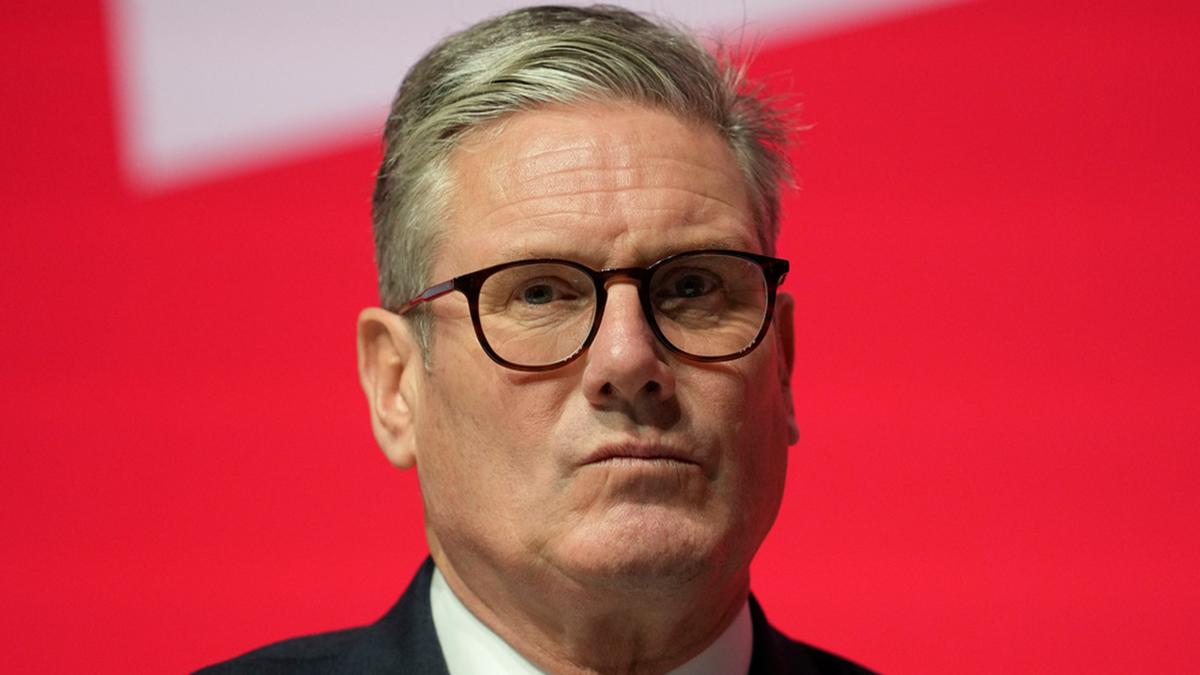
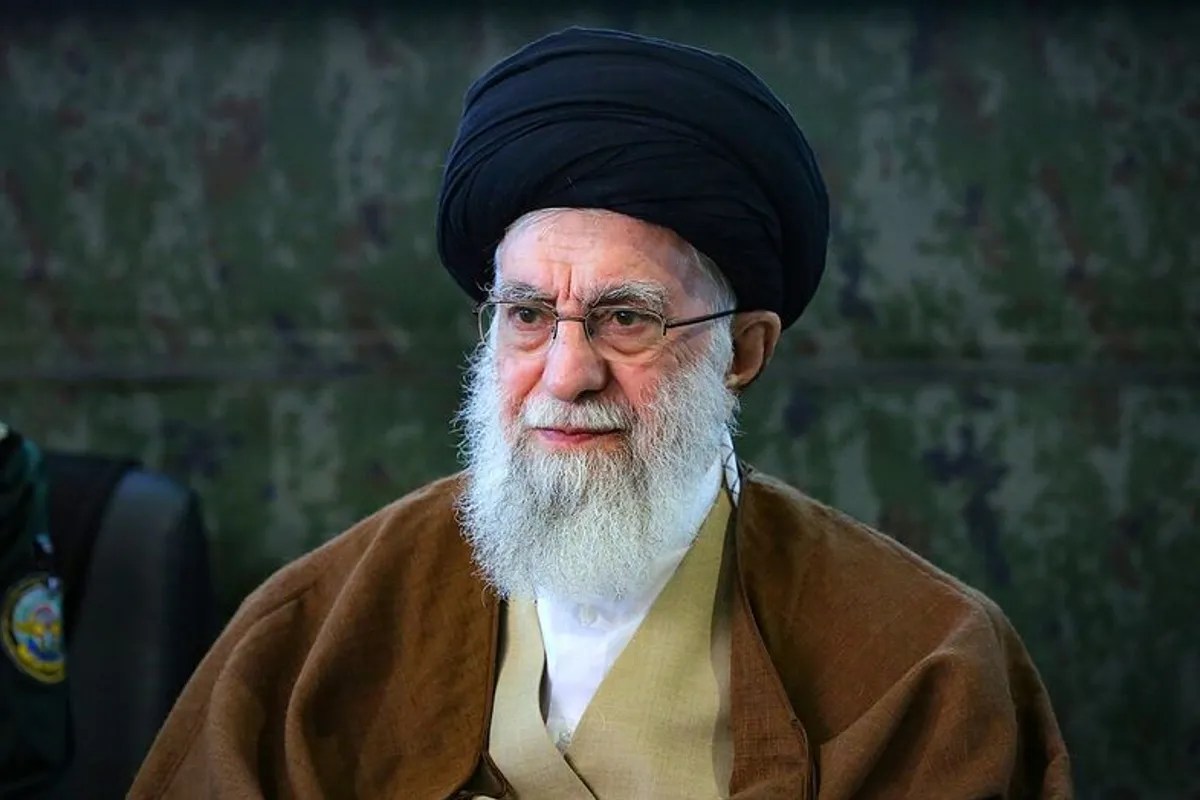
The stability of the Islamic Republic of Iran following the death of Supreme Leader Ali Khamenei depends not on a single personality, but on the successful synchronization of three distinct power vectors: the Assembly of Experts, the Islamic Revolutionary Guard Corps (IRGC), and the Office of the Supreme Leader (Beit-e Rahbari). Public discourse often focuses on individual candidates like Mojtaba Khamenei or Alireza A'rafi, yet this individual-centric view obscures the structural inertia of the Iranian state. The transition is a high-stakes stress test of the Velayat-e Faqih (Guardianship of the Jurist) system, where the objective is to maintain ideological continuity while preventing a kinetic fracture between the clerical elite and the military-industrial complex.
The Constitutional Mechanism of Succession
Article 107 of the Iranian Constitution mandates that the Assembly of Experts—a body of 88 clerics elected for eight-year terms—is solely responsible for electing the next Supreme Leader. However, the constitutional process masks a more complex informal selection mechanism. In the event of a vacancy, the state enters a "Transition Window" governed by Article 111, which creates a temporary leadership council consisting of the President, the head of the Judiciary, and one theologian from the Guardian Council.
This council possesses limited authority, acting as a caretaker entity to prevent a vacuum while the Assembly of Experts deliberates. The primary constraint here is the "Qualified Jurist" requirement. The successor must theoretically possess high-level religious credentials (Ijtihad) alongside political acumen. This creates a technical bottleneck: few high-ranking clerics possess both the revolutionary zeal required by the IRGC and the theological standing required to command the respect of the Qom seminary.
The IRGC as the Strategic Arbitrator
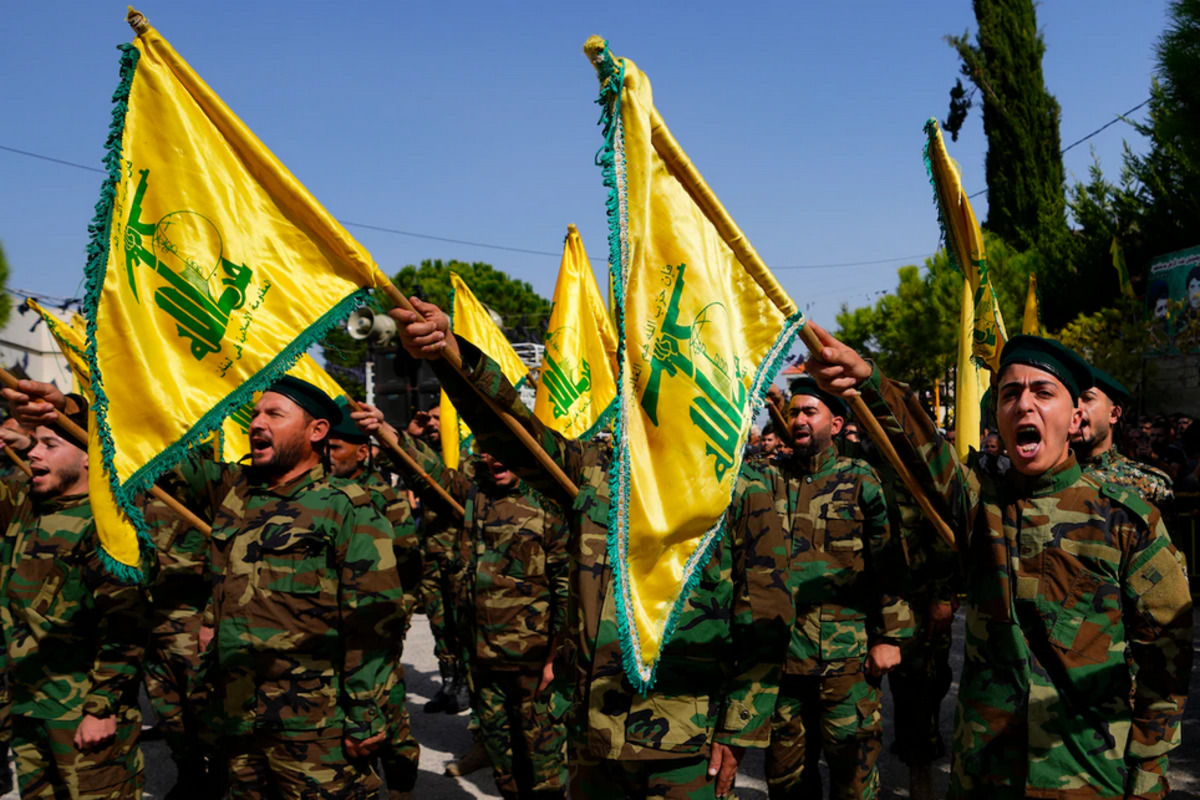
While the Assembly of Experts holds the de jure power, the IRGC holds the de facto veto. Over the last three decades, the IRGC has transitioned from a purely military organization into a massive economic conglomerate and internal security apparatus. It controls approximately 30% to 50% of the Iranian economy through various engineering firms (such as Khatam al-Anbiya) and bonyads (charitable foundations).
The IRGC’s objective in the succession process is "Institutional Preservation." They require a leader who will not negotiate away their economic dominance or their regional "Axis of Resistance" strategy. The relationship between the IRGC and the next Leader will likely shift from the current "Patron-Client" model under Khamenei to a "Co-Equal Partnership" or even a "Military-Clerical Directorate."
If the Assembly of Experts attempts to appoint a leader perceived as "weak" or "reformist," the IRGC maintains the operational capacity to influence the vote through the Intelligence Organization of the IRGC (SAS-IRGC). This creates a "Filtered Selection" process where the pool of candidates is pre-vetted by the security apparatus before a formal vote even occurs.
The Mojtaba Khamenei Paradox
The candidacy of Mojtaba Khamenei, the second son of the current Leader, represents the tension between dynastic stability and revolutionary legitimacy.
- The Argument for Mojtaba: He has spent two decades managing the Beit-e Rahbari, giving him intimate knowledge of the state’s internal intelligence and financial levers. He is believed to have deep ties to the IRGC leadership, specifically the Hossein Taeb faction.
- The Argument Against Mojtaba: The Islamic Revolution of 1979 was explicitly anti-monarchical. Elevating a son to succeed a father risks undermining the ideological foundation of the Republic, framing it as a neo-monarchy. This would alienate traditionalists within the clerical establishment who view the Velayat-e Faqih as a meritocratic (within the clergy) system.
The "Mojtaba Path" involves a trade-off: high immediate security and continuity at the cost of long-term ideological erosion.
Financial Sovereignty and the Role of Setad
The next Leader will inherit more than just political titles; they will inherit control over Setad Ejraiye Farmane Hazrate Emam (EIKO), an investment conglomerate worth an estimated $95 billion. This fund, along with the Astan Quds Razavi in Mashhad, provides the Supreme Leader with "Off-Budget Sovereignty."
This capital allows the Leader to bypass the formal parliament (Majlis) and fund parallel institutions, paramilitary groups, and social patronage networks. The transition of this financial portfolio is the most critical logistical challenge. A fragmented transition could lead to "Asset Stripping" by various factions within the IRGC or the bureaucracy, weakening the central executive's ability to quell internal dissent or manage the currency.
Identifying the Probability Triggers
The succession will likely follow one of three structural paths:
- The Consensus Candidate (High Probability): A senior but pliable cleric, such as Alireza A'rafi or Mohsen Araki, is selected. They serve as a front for a collective leadership council dominated by the IRGC and the Beit staff. This maintains the facade of clerical rule while shifting the decision-making center to the military.
- The Leadership Council (Medium Probability): If no single candidate can secure a majority in the Assembly of Experts, the constitution allows for a "Leadership Council." This would formalize a fractured power structure, leading to increased internal friction and a potential "paralysis of policy" regarding Western sanctions or regional proxies.
- The Security Takeover (Low Probability): In the event of widespread civil unrest during the transition, the IRGC may declare an emergency, sidelining the Assembly of Experts and establishing a military-led transitional government. This would effectively end the Velayat-e Faqih in its current form.
Structural Vulnerabilities in the Transition Window
The period between the announcement of Khamenei’s death and the swearing-in of a successor is a "Maximum Vulnerability Zone." Three specific risks converge during this timeframe:
- Currency Volatility: Historically, political uncertainty in Tehran leads to a rapid devaluation of the Rial as capital flight accelerates.
- Intelligence Blinds: The internal security apparatus (Ministry of Intelligence vs. SAS-IRGC) may turn their focus inward to secure their own positions, creating gaps that external actors or domestic protest movements could exploit.
- Communication Silos: The Beit-e Rahbari controls the official narrative. Any delay or contradiction in the announcement of death can lead to "Information Asymmetry," where rumors dictate market and social behavior before the state can react.
The "Cost of Friction" during this transition is not merely political; it is existential for the current elite. If the IRGC and the clerical establishment cannot reach a "Grand Bargain" within the first 72 hours of a vacancy, the probability of a systemic collapse or a violent internal purge increases exponentially.
The strategic priority for the Iranian establishment is the "Hardening of the Core." This involves the preemptive marginalization of any "Pragmatist" or "Reformist" elements within the Assembly of Experts. The 2024 elections for the Assembly already signaled this trend, as the Guardian Council disqualified moderate heavyweights like Hassan Rouhani. By purifying the voting body, the state has reduced the "Selection Variance," ensuring that any chosen successor will adhere to the current "Look to the East" and "Resistance" doctrines.
The ultimate metric of success for the transition is not the popularity of the new leader, but the speed of his installation. A rapid, uncontested appointment signals to the IRGC, the domestic population, and foreign adversaries that the structural "Deep State" remains intact. Any deviation from this timeline suggests a breakdown in the "Security-Clergy Alliance" that has sustained the Republic for 45 years. Organizations and state actors monitoring this event must prioritize the tracking of IRGC troop movements around Tehran and the communication frequency between Qom and the Beit as the primary lead indicators of transition stability.