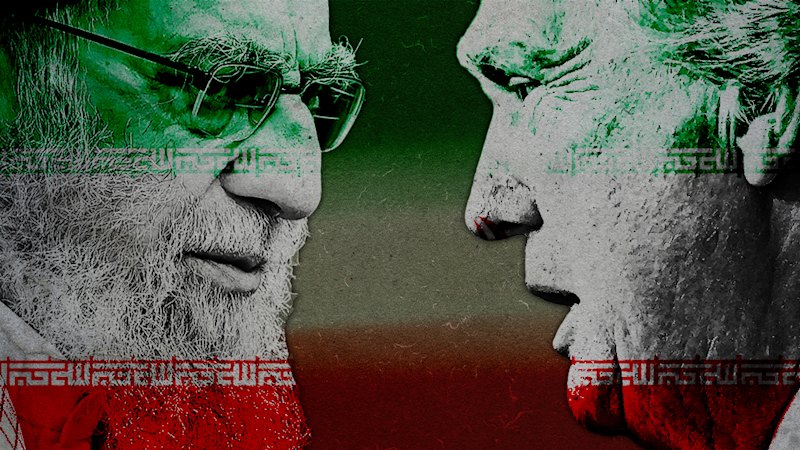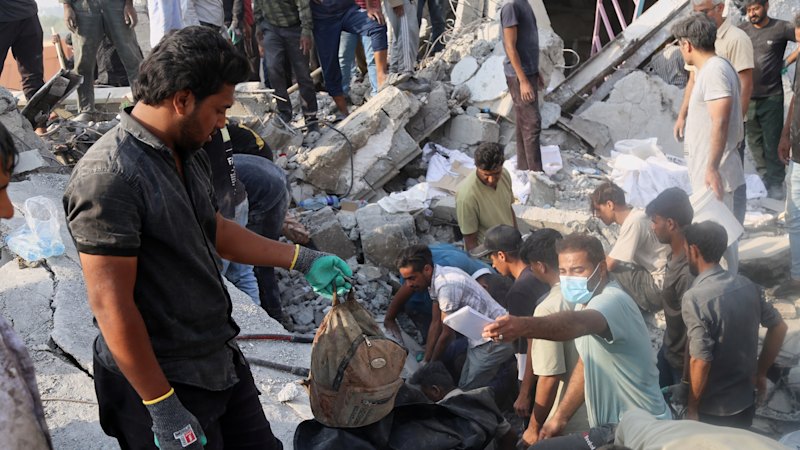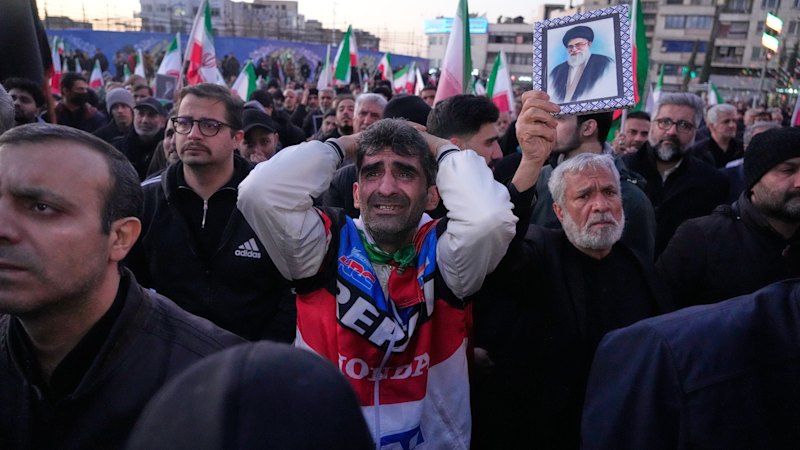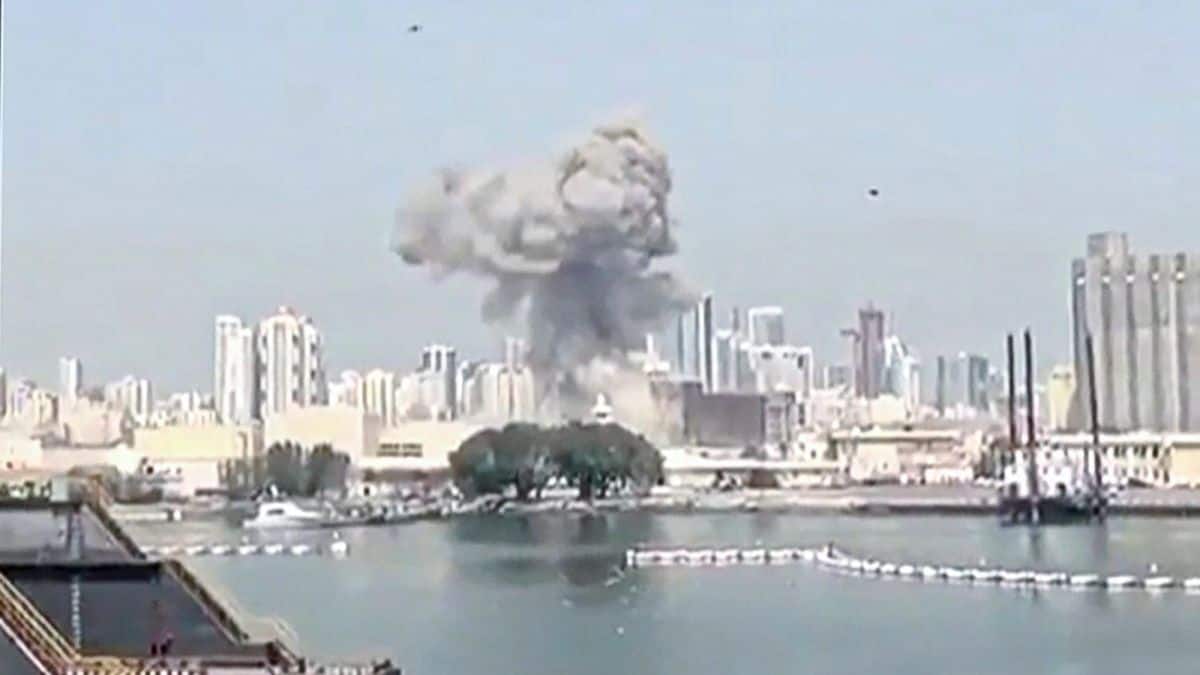
The current friction between the Israel-US alignment and the Islamic Republic of Iran is not a series of isolated kinetic events but a calibrated exercise in managing the Escalation Ladder. Traditional military doctrine assumes that superior firepower dictates the outcome of a conflict; however, the Middle Eastern theater operates on a logic of Strategic Depth and Proxy Dispersion. Iran’s ability to project power does not rely on its aging air force or conventional standing army. Instead, it functions through a three-pillared architecture of deterrence: missile saturation, maritime chokepoint control, and decentralized non-state actors.
To understand the current volatility, one must quantify the "Retaliation Calculus" used by Tehran. This is a mathematical trade-off between the necessity of maintaining internal legitimacy through a visible response and the existential risk of triggering a full-scale conventional war against a technologically superior adversary.
The Triad of Iranian Asymmetric Power
The Iranian defense posture is designed to exploit the geographic and economic vulnerabilities of its opponents. While the US and Israel possess qualitative advantages in stealth technology and precision-guided munitions (PGMs), Iran utilizes quantitative advantages in low-cost, high-impact systems.
1. The Missile and Loitering Munition Saturation Model
Iran possesses the largest ballistic and cruise missile inventory in the region. The operational goal is not necessarily the destruction of a specific hardened target, but the Economic Depletion of Intercept Capability.
- Cost Asymmetry: An Iranian-made Shahed-136 drone costs approximately $20,000 to $50,000 to produce. Intercepting that same drone requires a Tamir missile (Iron Dome) costing $50,000 or, more likely in a long-range scenario, a Patriot PAC-3 interceptor costing $3 million to $4 million.
- Saturation Thresholds: By launching "swarms" of low-cost assets alongside high-speed ballistic missiles, Iran forces defensive systems into a target-prioritization crisis. If the interceptor-to-threat ratio falls below a specific threshold, the probability of "leakers" (missiles that hit their target) increases exponentially.
2. Maritime Kinetic Levers: The Strait of Hormuz
Approximately 20% of the world’s liquid petroleum gas and oil passes through the Strait of Hormuz. Iran’s "Retaliation Option" includes the disruption of this chokepoint, which serves as a global economic kill-switch.
- Mine Warfare: Iran has invested heavily in sophisticated bottom-moored and directional mines that are difficult to detect with standard sonar.
- Fast Inshore Attack Craft (FIAC): These vessels utilize swarm tactics to overwhelm the Aegis Combat Systems of modern destroyers, which are optimized for blue-water engagements rather than brown-water, high-density environments.
3. The Proxy Multiplexer
The most potent tool in Tehran's inventory is the Axis of Resistance. This is a decentralized network of partners, including Hezbollah in Lebanon, various militias in Iraq and Syria, and the Houthis in Yemen.
- Plausible Deniability: By activating a proxy, Iran can inflict damage on US or Israeli interests without providing a casus belli for a direct strike on Iranian soil.
- Multi-Front Elasticity: This network creates a "ring of fire." If Israel strikes a target in Damascus, Hezbollah can escalate in the Galilee, while the Houthis can launch deep-strike munitions into the Red Sea. This forces the IDF to spread its intelligence, surveillance, and reconnaissance (ISR) assets across four distinct geographic fronts simultaneously.
The Logic of Reciprocal Escalation
Escalation is often viewed as a linear progression, but in the context of Iran-Israel relations, it is a Non-Linear Feedback Loop. Every strike follows a "Tit-for-Tat" logic intended to re-establish a "Status Quo Ante."
The Threshold of Open Warfare
The primary constraint on Iranian retaliation is the Threshold of Existential Risk. If Tehran’s response is too weak, it loses the "deterrence by punishment" credibility. If it is too strong—such as a direct hit on a major Israeli population center or a US carrier group—it triggers a conventional response that the Iranian state cannot survive.
The current "retaliation options" are therefore categorized by their Escalatory Weight:
- Cyber-Kinetic Offensives: Targeting critical infrastructure (water, electricity, or financial systems) within Israel or the US. This offers high impact with a lower probability of immediate physical counter-strikes.
- Targeted Attrition: Utilizing precision drones to strike high-value but non-human targets, such as offshore gas rigs or airbases, to demonstrate reach without causing mass casualties.
- Grey-Zone Sabotage: Unattributed attacks on commercial shipping or diplomatic facilities in third-party countries.
The Vulnerability of Integrated Defense
While the "Standard View" suggests that US-Israel defense integration is nearly impenetrable, a structural analysis reveals significant bottlenecks.
The Logistics of Interceptor Resupply
Modern air defense is limited by Magazine Depth. In a sustained, multi-week conflict, the consumption rate of interceptors would likely outpace the production capacity of the Western defense industrial base.
- The US currently faces a backlog in the production of SM-6 and Patriot missiles due to supply chain constraints in solid rocket motors and advanced semiconductors.
- Iran, conversely, utilizes "Basement Industrialization," relying on dual-use technology and simplified designs that can be mass-produced in decentralized facilities, making their supply chain harder to disrupt via air strikes.
The Intelligence Gap
Effective retaliation depends on the "OODA Loop" (Observe, Orient, Decide, Act). Iran’s shift toward mobile, TEL-based (Transporter Erector Launcher) missile systems makes pre-emptive strikes difficult. The "Scud Hunt" of the 1991 Gulf War proved that even with total air superiority, finding and destroying mobile launchers in rugged terrain is an operational nightmare. Iran’s mountainous geography provides natural "Hardened and Deeply Buried Targets" (HDBTs) that are immune to all but the largest bunker-buster munitions, such as the GBU-57 Massive Ordnance Penetrator (MOP).
Strategic Logic of the Houthis as a Force Multiplier
The involvement of the Houthis in the Red Sea represents a fundamental shift in the regional security architecture. This is not merely a localized conflict; it is the Weaponization of Global Logistics.
By forcing commercial shipping to reroute around the Cape of Good Hope, the Houthis—backed by Iranian intelligence and hardware—have increased the "Transit Cost Function" for the West. This creates inflationary pressure on the global economy, which acts as a secondary, indirect form of Iranian retaliation against the US and its allies.
- The Drone-to-Merchant Ratio: A single $20,000 drone can force a $200 million vessel to change course, illustrating the extreme efficiency of asymmetric maritime warfare.
- Intelligence Sharing: Reports indicate the presence of Iranian "spy ships" in the region providing real-time targeting data to Houthi batteries. This allows the proxies to bypass the need for their own sophisticated radar arrays, which would be easily targeted and destroyed.
The Nuclear Ambiguity Constraint
The shadow of Iran's nuclear program dictates the ceiling of any US or Israeli military action. If a strike on Iran is perceived as threatening the survival of the regime, Tehran has indicated it might pivot toward "breakout" capability.
- The 60% Enrichment Variable: Iran has already enriched uranium to 60% purity. Moving to 90% (weapons grade) is a technical hurdle that could be cleared in a matter of weeks, according to IAEA estimates.
- The Deterrence of Uncertainty: By maintaining a "threshold state" status, Iran ensures that the US and Israel must weigh every kinetic action against the risk of forcing Iran to finalize a nuclear deterrent. This creates a "Strategic Parity" that does not exist on the conventional battlefield but is very real at the diplomatic level.
Tactical Considerations for Regional Stability
The immediate danger is not a planned war, but Accidental Escalation resulting from a miscalculation of the opponent's "Red Lines."
If Israel chooses to strike Iranian soil directly, the response will likely bypass the "proxy buffer" and target Israeli infrastructure. The effectiveness of such a strike depends on:
- The Success of Electronic Warfare (EW): Can Israeli and US EW suites successfully "blind" the guidance systems of Iranian missiles mid-flight?
- The Role of Regional Arab States: Countries like Jordan, Saudi Arabia, and the UAE find themselves in a "Security Dilemma." Providing airspace for Israeli strikes or assisting in interceptions risks Iranian "retribution strikes" on their own oil infrastructure.
- The Russian-Chinese Factor: Iran’s deepening ties with Moscow and Beijing provide a diplomatic shield and potentially advanced EW or satellite intelligence, complicating the Western operational picture.
Strategic Forecast
The most probable path forward is a "High-Tension Equilibrium." Neither side can afford a total victory, as the costs of achieving it would be catastrophic. Instead, the conflict will migrate further into the "Grey Zone"—a space between peace and war characterized by cyber attacks, maritime sabotage, and targeted assassinations.
The Western strategy must shift from a "Search and Destroy" mentality to a "Resilience and Redundancy" model. This involves:
- Diversifying Supply Chains: Reducing reliance on the Strait of Hormuz through pipelines and alternative ports.
- Hardening Infrastructure: Moving beyond kinetic defense to "passive defense," ensuring that power grids and water systems can withstand cyber and drone-borne disruption.
- Diplomatic De-coupling: Attempting to peel away the "Axis of Resistance" components by offering localized incentives that outweigh the benefits of Iranian alignment—a difficult but necessary long-term maneuver.
The conflict has moved past the era of conventional military dominance. Success is no longer measured by the amount of territory held, but by the ability to maintain economic and political stability under the constant pressure of asymmetric attrition.
Monitor the deployment of Iranian "Behshad" class vessels in the Red Sea and the enrichment levels at the Fordow facility. These remain the primary indicators of an imminent shift in the escalation posture. If the "Proxy Buffer" is bypassed, the move toward direct kinetic engagement becomes a statistical certainty.