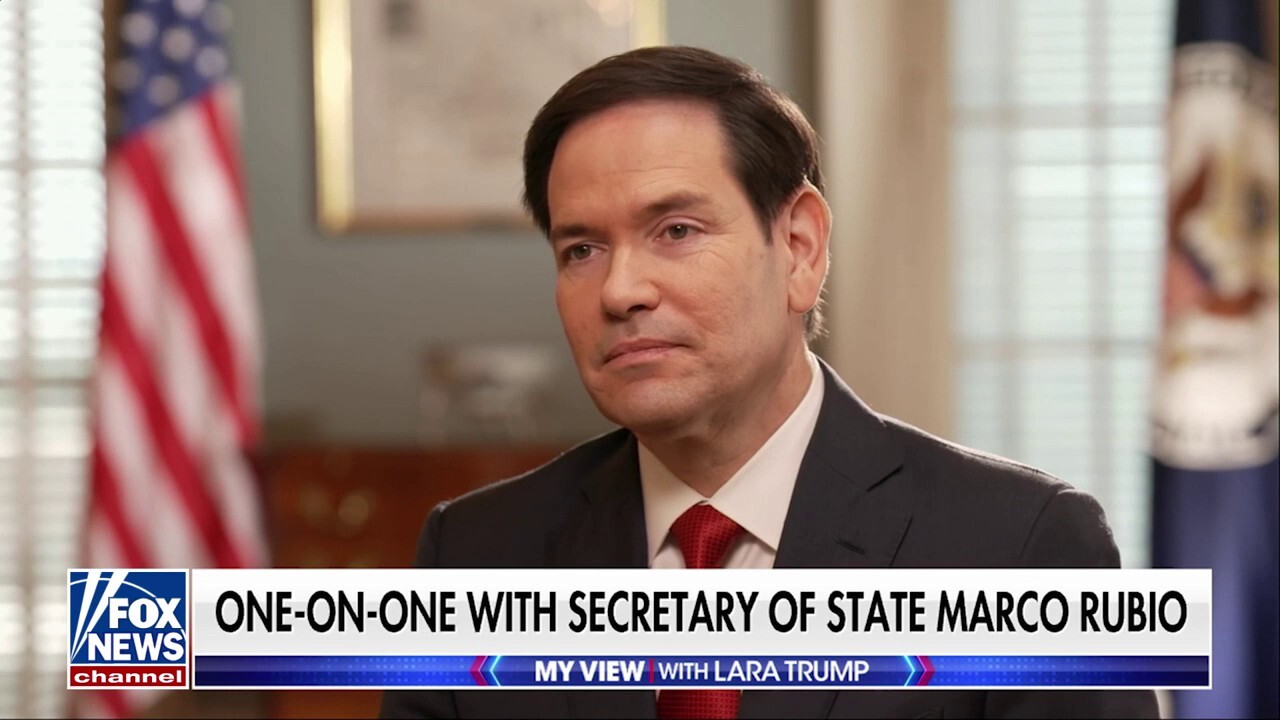
The beltway media is currently obsessed with a fairytale. They’ve painted a portrait of Marco Rubio as the "adult in the room," the steady hand on the tiller, the man who provides a "sober" counterbalance to the perceived chaos of modern populism. It’s a comforting narrative for people who miss the 1990s. It’s also completely wrong.
Calling Rubio the "only adult" isn’t a compliment to his leadership; it’s a confession of how low the bar for political maturity has fallen. Real maturity in statecraft isn’t about speaking in measured tones or nodding along to the consensus of the Council on Foreign Relations. True maturity is the ability to recognize when a system is broken and having the courage to dismantle it. By that metric, Rubio isn’t the adult—he’s the hall monitor of a collapsing school.
The Neoconservative Ghost in the Machine
The core of the "adult" argument rests on Rubio’s foreign policy credentials. Pundits love his fluency in the language of American hegemony. They see his hawkishness on China and Iran as a sign of "seriousness."
I’ve spent two decades watching these "serious" people burn trillions of dollars and thousands of lives on the altar of a liberal international order that no longer exists. To be an "adult" in 2026 requires more than just reciting 20th-century talking points about global leadership. It requires a cold, hard look at the math of empire.
When Rubio advocates for aggressive interventionism or the maintenance of sprawling global commitments without a plan to pay for them, he isn't being a statesman. He’s being an accountant for a bankrupt firm who refuses to look at the balance sheet.
The False Dichotomy of Stability
The "adult in the room" trope suggests that Rubio represents stability while his peers represent chaos. This is a fundamental misunderstanding of how political change actually happens.
In the world of risk management, we talk about "Antifragility." A system that is over-protected from small shocks eventually becomes so brittle that a single large shock destroys it. By playing the role of the institutionalist, Rubio is essentially trying to keep the lid on a boiling pot. He seeks to preserve institutions—the State Department, the intelligence community, the trade bureaucracy—exactly as they are.
But these institutions are the very things that failed to see the rise of China’s industrial dominance, failed to secure the border, and failed to protect the American middle class from the hollowed-out economy of the last thirty years.
- Stability is not the absence of noise.
- Stability is the presence of a functional feedback loop.
Rubio’s brand of "adult" leadership ignores the feedback. He treats the legitimate grievances of a disenfranchised electorate as a PR problem to be managed with better rhetoric, rather than a structural crisis to be solved with radical reform.
Why Quiet Competence is a Trap
There is a specific type of professional who loves Marco Rubio: the consultant. They love him because he is predictable. He follows the script. He understands the "process."
But if the process is producing failure, the person who follows it most efficiently is the most dangerous person in the building. I’ve seen this in the corporate world a hundred times. A legacy company is failing. The board hires a "steady hand" CEO who knows how to talk to analysts and keep the stock price flat for eighteen months while the R&D department rots and the competitors eat their lunch. They call him a "pro." Three years later, the company is in Chapter 11.
Rubio is that CEO. He is the guardian of the status quo at a moment when the status quo is the primary threat to national survival. His "maturity" is actually a form of intellectual rigidity. He is unable—or unwilling—to imagine an American role in the world that isn't defined by the post-WWII consensus.
The China Hawks Who Missed the Point
Let’s look at his signature issue: China. Rubio is often credited with being "early" on the China threat. While he was busy giving speeches about human rights and geopolitical "containment," the real war was being lost in the supply chains.
The "adults" in Washington spent decades allowing our industrial base to be stripped for parts because their economic models said it was "efficient." Rubio’s brand of hawkishness often stops at the water's edge. It’s heavy on sanctions and rhetoric but light on the brutal, internal economic shifts required to actually win a multi-decade industrial war.
You cannot out-compete a command economy like China’s while remaining wedded to the neoliberal trade dogmas that Rubio has spent his career defending. Real leadership would mean telling the donor class that their margins are going to take a hit so we can rebuild domestic steel, chips, and pharma. That’s an "adult" conversation Rubio rarely initiates with the necessary ferocity.
The Myth of the "Sober" Middle Ground
The competitor’s piece argues that Rubio is the bridge between the old guard and the new populism. This "bridge" is actually a dead end.
In politics, the middle ground is often just the place where ideas go to die. By trying to dress up populist concerns in the tuxedo of establishment rhetoric, Rubio effectively neuters them. He takes the energy for change and channels it back into the very committees and sub-committees where it can be safely ignored.
Consider the "People Also Ask" obsession with bipartisan consensus. People want to know why we can't just "get along." The brutal truth? Getting along is how we got $34 trillion in debt. Getting along is how we ended up with a wide-open border for a decade. Getting along is the hallmark of the "adults" who traded the country's future for a quiet life in Washington.
The Strategic Necessity of Friction
The "chaos" that Rubio’s defenders fear is actually the sound of a system trying to fix itself. Friction is necessary. Dissent is vital.
When you remove the "disruptors" from the room and leave only the "adults," you get the Bay of Pigs. You get the Iraq War. You get the 2008 financial crisis. These weren't caused by "children" or "radicals." They were engineered by the most "adult," credentialed, and "sober" people in the country.
If you want a leader who will tell you what you want to hear in a voice that sounds like a 10:00 PM news anchor, Rubio is your man. But if you realize that the house is on fire, you don't want the guy who is meticulously rearranging the furniture to make sure it looks professional for the neighbors.
The High Cost of Playing It Safe
The danger of the Rubio-style "adult" is the opportunity cost. Every year we spend pretending that the old institutions just need a "steady hand" is a year we lose in the race to reinvent the American economy and our place in the world.
- Risk Mitigation is not the same as Success.
- Politeness is not the same as Integrity.
- Process is not the same as Result.
We are told we need Rubio to prevent the "extremes" from taking over. But the extremes are only growing because the "center" has failed to deliver anything but managed decline. Rubio is the face of that managed decline. He is the man who will explain to you, with perfect poise and impeccable grammar, why we can't afford to be bold, why we must respect the "norms," and why we should wait for a better time to act.
The "adults" have had their turn. They’ve spent thirty years proving that they can’t see the forest for the trees, and they’ve built a forest of bureaucracy that is currently being consumed by a wildfire of reality.
Stop looking for the adult in the room. Start looking for the person who is willing to burn the room down to build something that actually works.
Don't wait for a permission slip from the establishment to admit the obvious: the hall monitor can't save the school.