The fluorescent lights of a Queensland Department of Transport office don’t usually inspire religious ecstasy. They are cold, flickering tubes that hum with the collective boredom of people waiting for number 42 to be called. It is a place of bureaucratic purgatory, where the air smells of industrial carpet cleaner and the stakes are usually nothing higher than a corrected birth date or a renewed registration.
Then came Phil.
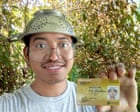
Phil didn’t walk in looking for a fight. He walked in looking for his identity. In his hand, he held a kitchen colander. Not a cheap plastic one, but a sturdy, stainless steel basin perforated with holes designed to drain pasta. He didn’t tuck it under his arm. He didn’t hide it in a bag. He placed it firmly on his head, the twin handles sticking out like metallic ears, and he stepped up to the camera.
To the clerk behind the desk, this was a prank. To the state of Queensland, it was a potential breach of security. But to Phil, it was an act of faith—or, at the very least, a very pointed question about where the government’s power to define "faith" actually ends.
The Gospel of the Al Dente
Phil is a Pastafarian. He belongs to the Church of the Flying Spaghetti Monster (FSM), a religion that began as a satirical protest against the teaching of intelligent design in American schools but has since fermented into something much more complex. Its adherents claim to worship a giant clump of tangled noodles and meatballs. They believe that pirates were the original peaceful explorers. And, most importantly for the Department of Transport, they believe that wearing a colander is a sacred requirement of their creed.
When the shutter clicked that day, Phil wasn’t just taking a photo. He was testing a boundary.
The Australian passport and licensing guidelines are surprisingly flexible, yet incredibly rigid. They allow for headgear worn for religious purposes, provided the face remains visible from the bottom of the chin to the top of the forehead and the edges of the face are not obscured. If a woman can wear a hijab or a man can wear a turban, Phil reasoned, why can’t he wear the vessel of the noodle?
The clerk disagreed. The supervisor disagreed. The entire apparatus of the state seemed to recoil at the sight of the steel crown. They saw a man with a kitchen appliance on his head. Phil saw a citizen exercising a right that is supposedly universal.
The Weight of a Kitchen Tool
We often think of religious freedom as something grand and ancient—cathedrals, incense, chanting in Latin, or the quiet dignity of a prayer mat. We afford these things respect because they have "longevity." We give them a pass in the halls of bureaucracy because they have been around long enough to be taken seriously.
But who decides when a joke becomes a belief?
Consider a hypothetical citizen named Sarah. Sarah wears a headscarf because she feels a deep, spiritual connection to her modesty and her community. When she goes to get her license, the law protects her. The state acknowledges that her internal world is valid enough to justify a deviation from the standard "no hats" rule.
Now look back at Phil. If Phil claims—with a straight face and a signed affidavit—that his internal world is governed by a Flying Spaghetti Monster, on what ground does the state stand to tell him he’s lying?
The moment a government official decides which gods are "real" and which are "satire," they are no longer just clerks. They are theologians. They are inquisitors. And that is a very dangerous job description for someone working at the DMV.
The Battle for the Plastic Card
The struggle wasn’t over in a day. It took months of back-and-forth, a testament to the sheer persistence of a man who refused to take his hat off. Phil’s argument was built on a foundation of "why not?" If the law is written to be inclusive, it must be inclusive of the absurd as well as the sublime.
The bureaucracy tried to lean on the "sincerity" test. This is a common tactic in legal battles involving the FSM. To get a religious exemption, one must prove their belief is "sincere." But how do you measure the weight of a soul? Do you count the number of times Phil has eaten linguine? Do you ask him to recite the "Noodle Prayer"?
The absurdity of the test proves the Pastafarian point: the state has no business measuring sincerity.
The standoff in Queensland became a microcosm of a much larger global debate. In New Zealand, Pastafarians have been granted the right to perform legal marriages. In parts of Europe, they’ve won the right to wear the colander in official IDs. Each time a "Pirate" wins a battle against a government department, a small crack appears in the idea that the state gets to define the sacred.
The Invisible Stakes of a Plastic Crown
It is easy to laugh at Phil. It is easy to see this as a waste of taxpayer time or the antics of a bored man with a penchant for stainless steel. But the stakes are higher than they appear.
We live in an era where identity is becoming the primary currency of social and legal life. We are told we can be whoever we want to be. We are told that our personal truths are paramount. Yet, the moment those personal truths collide with the rigid templates of a government database, the "holistic" acceptance we’re promised starts to crumble.
Phil’s colander is a mirror. It asks: Is your religion protected because it is true, or because it is popular?
If it’s because it’s true, the state is making a metaphysical claim it cannot prove. If it’s because it’s popular, then religious freedom isn't a right—it’s a popularity contest. And in a democracy, rights are supposed to protect the unpopular most of all.
The tension in that Queensland office wasn't about a photo. It was about the friction between an individual's sense of self and the state's need for order. The colander disrupted the "seamless" flow of the system. It was a glitch in the matrix of mid-level management.
The Final Snapshot
Eventually, the system blinked.
Phil got his license. He stands there in the digital archives of the Queensland government, forever immortalized with a colander perched atop his head. He looks calm. He looks like a man who knows something the rest of us are too afraid to admit.
He didn't win because the government suddenly started believing in the Flying Spaghetti Monster. He won because the government realized that to stop him, they would have to define what a "real" god looks like, and they weren't prepared to do that. They realized that if they barred the colander, they might accidentally create a precedent that could be used against a Sikh man's turban or a Jewish man's kippah.
The bureaucracy chose the path of least resistance. They let the "crazy" man have his way so they could keep the rest of the machinery running.
But in doing so, they validated the most important tenet of Pastafarianism: that the line between the sacred and the ridiculous is a lot thinner than we think.
We walk around every day with "colanders" of our own—beliefs, habits, and identities that seem perfectly normal to us but look like kitchenware to everyone else. We ask the world to respect our quirks, our pronouns, our diets, and our political leanings. We ask the world to look at our "hats" and see a crown.
Phil just had the courage to make his metallic.
When you look at your own driver’s license, you see a flat, two-dimensional representation of who the state thinks you are. You see a name, a date of birth, and a signature. It is a sterile document. But for one man in Queensland, that piece of plastic is a trophy. It is proof that for one brief, shining moment, the hum of the fluorescent lights was drowned out by the sound of a boiling pot of water, and the giant, invisible noodles of the universe reached down to touch a government camera.
The photo is grainy. The lighting is poor. But the stainless steel shines with the unmistakable glow of a point well-made.