The air in the narrow alleys of Mashhad in the 1940s tasted of dust and rosewater. A young boy named Ali walked these streets, his shoes worn thin, his stomach often familiar with the hollow ache of poverty. He was the son of a cleric, living in a house where books were more plentiful than meals. In these shadows, the foundation of a century was laid.
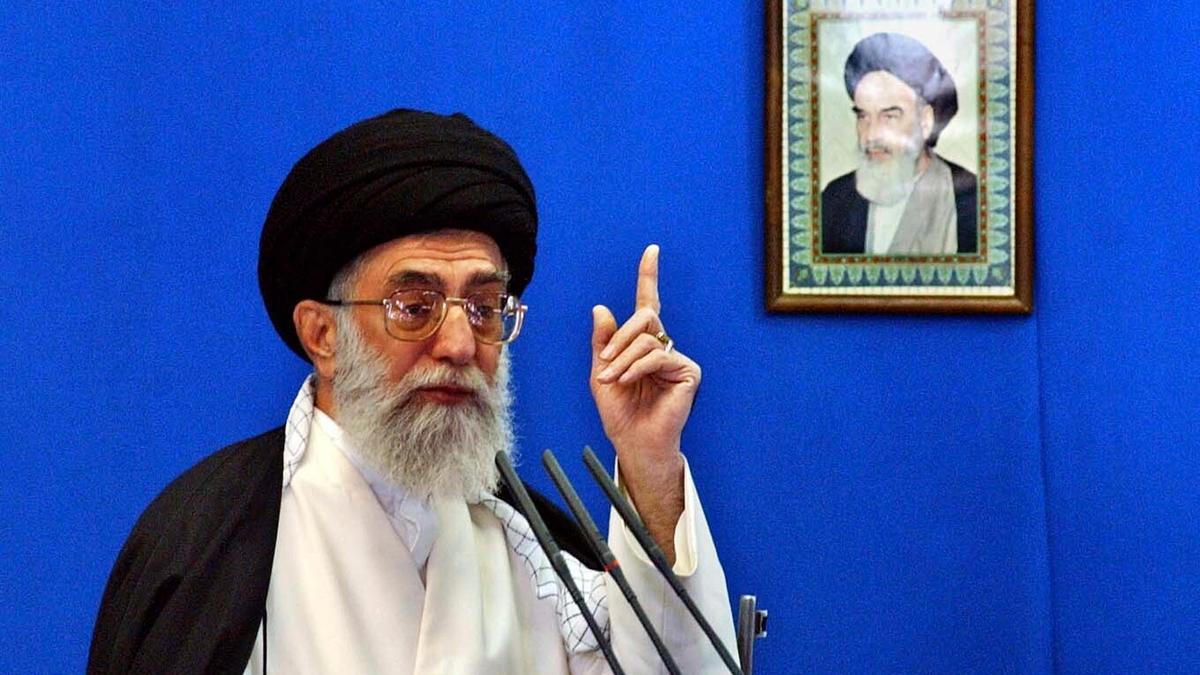
To understand the modern Middle East, you cannot simply look at maps or missile counts. You have to look at the eyes of that boy, who grew up to become Ayatollah Ali Khamenei. He is not just a politician. He is not merely a priest. He is the architect of a reality that defies Western logic, a man who has held the steering wheel of Iran for over three decades while the world outside shifted, crumbled, and rebuilt itself.
The world often mistakes silence for weakness. Khamenei is a master of the quiet. While his predecessor, the charismatic and explosive Grand Ayatollah Khomeini, was the storm that broke the monarchy, Khamenei has been the glass that holds the water.
The Cell and the Poem
Revolution is rarely born in palaces. It is forged in the damp corners of prison cells. During the 1960s and 70s, Khamenei was a frequent guest of the Shah’s secret police, the SAVAK. Imagine the isolation. The sound of a heavy iron door slamming shut, echoing through a corridor where hope goes to die.
But he didn't break. Instead, he studied. He translated social critiques from Arabic. He wrote poetry. This is the crucial detail most analysts skip: the man is a literati. He understands the power of a metaphor as much as the power of a fatwa. When he speaks to the Iranian public today, he isn't just delivering a policy brief; he is tapping into a deep, Persian cultural reservoir that spans millennia. He knows that to rule Iran, one must speak to its soul, not just its economy.
The Day the Earth Shifted
- A tape recorder sits on a desk in a mosque. It looks innocent. Then, it explodes.
Khamenei was the target. The blast shattered his right arm, leaving it permanently paralyzed—a physical manifestation of the sacrifices he demanded from his followers. He became a living martyr. In a culture that venerates the suffering of the Imams, this wasn't just a medical emergency. It was a coronation of sorts.
When Khomeini passed away in 1989, the "experts" predicted a collapse. They saw a divided clergy and a country exhausted by an eight-year war with Iraq. They didn't see the quiet man in the background. Khamenei wasn't even a "Grand Ayatollah" at the time; his religious credentials were questioned by the elite.
Think of it like a junior partner suddenly being named CEO of a Fortune 500 company during a hostile takeover. He had to learn to navigate the shark-infested waters of Tehran’s bureaucracy while convincing the religious establishment he had the spiritual authority to lead.
He did it through the "Office of the Supreme Leader." He didn't just inherit power; he built a shadow state.
The Invisible Web
How does one man maintain control over eighty million people through decades of sanctions, protests, and regional wars?
He built a web. At the center is the Islamic Revolutionary Guard Corps (IRGC). This isn't just a military wing. It is a conglomerate. It builds dams, runs telecommunications, and manages ports. By tying the military’s pockets to the survival of the regime, Khamenei ensured that a coup would be an act of financial suicide for the generals.
Then there are the Bonyads, the massive charitable trusts that control a huge chunk of Iran’s GDP. This is the invisible stake. If you are a young man in a rural village, your scholarship, your father’s pension, or the local hospital likely traces its funding back to an entity controlled by the Supreme Leader.
This isn't just governance. It’s a closed ecosystem.
The Great Game of Patience
The West operates on four-year election cycles. Khamenei operates on centuries.
When the United States entered Iraq in 2003, the conventional wisdom said Iran was next. Instead of panic, Tehran practiced strategic patience. They watched as their greatest enemy spent trillions of dollars and thousands of lives toppling their second-greatest enemy, Saddam Hussein.
Khamenei played the long game. He turned Iraq into a buffer state. He turned Syria into a strategic bridgehead. He turned the Houthi movement in Yemen into a regional player. This is the "Axis of Resistance," a term that sounds like a comic book slogan but functions as a sophisticated, multi-national insurance policy.
He understood a fundamental truth: you don't need to be the strongest kid on the playground if you can make it too expensive for anyone to hit you.
The Human Cost of the Vision
But a vision, no matter how grand, has a price. And that price is often paid in the currency of the everyday.
Consider a hypothetical student in Tehran today—let's call her Zahra. She is brilliant, fluent in three languages, and frustrated. She sees a world through her smartphone that she cannot touch. She sees the Rial lose its value while she sleeps. She sees the "Morality Police" on the street corner, a reminder that the revolutionary purity of 1979 is still being enforced in 2026.
Khamenei’s Iran is a land of contradictions. It has one of the most educated female populations in the region, yet legal barriers remain rigid. It has a world-class cinema and tech scene, yet the internet is a battlefield of filters.
The protests that have flared up—2009, 2017, 2019, 2022—are the friction points where the tectonic plates of Khamenei’s "Resistance Economy" rub against the aspirations of a globalized youth. To the Supreme Leader, these are not just protests; they are foreign-backed attempts to undo the sacred work of the revolution. He views compromise not as a tool of statesmanship, but as a crack in the dam. Once you let a little water through, the whole structure vanishes.
The Inner Circle of Loneliness
There is a profound isolation in being the "Shadow of God on Earth."
Khamenei lives a modest life. He is not known for the golden palaces of other regional dictators. His "wealth" is power, not luxury. This asceticism is his greatest weapon. It makes him immune to the typical critiques of corruption that topple regimes. How do you shame a man who eats simple meals and sleeps on a rug?
But this rigidity creates a vacuum. As the original revolutionaries age and pass away, the circle of people he trusts shrinks. He relies increasingly on a core group of hardliners and his own family. The question of succession hangs over Tehran like a heavy fog. Who follows the man who redefined the office?
The Last Guardian
History will likely judge Khamenei as one of the most effective and polarizing figures of the 21st century. He took a pariah state and turned it into a regional hegemon. He survived the pressure of the world's most powerful military and the most strangling economic sanctions in history.
But at what cost?
The Iran he leads is a fortress. It is strong, thick-walled, and heavily guarded. But a fortress is also a prison. From the inside, the view is limited to the battlements. From the outside, it is a monolith of stone and defiance.
As the sun sets over the Alborz Mountains, the lights of Tehran flicker on. Millions of people go about their lives—falling in love, worrying about rent, dreaming of something different. High above them, in a quiet compound, an old man with a paralyzed arm continues to write the story of a nation.
He is not just ruling a country. He is holding back a tide. He knows that tides are patient, but he believes he is more patient still.
The tragedy and the triumph of the Iranian revolution are both contained within his grip. It is a grip that has not loosened for thirty-five years, even as the world around it screamed for him to let go.
The iron lattice remains. The boy from Mashhad has stayed true to the shadows of his youth, building a world where the rosewater is always tempered by the dust of the struggle.