The map on the wall of a windowless briefing room doesn’t show people. It shows "assets." It shows "theater capabilities." It shows a series of interlocking circles representing the reach of medium-range ballistic missiles. But if you zoom in close enough, past the tactical symbology and the cold jargon of international relations, you find a twenty-year-old from Ohio named Miller.
Miller is currently sitting in a reinforced concrete housing unit in the Middle East. He is thinking about a girl back home or perhaps the specific, dusty taste of the air. He is not a geopolitical strategist. He is a data point in a high-stakes poker game played by men in suits thousands of miles away.
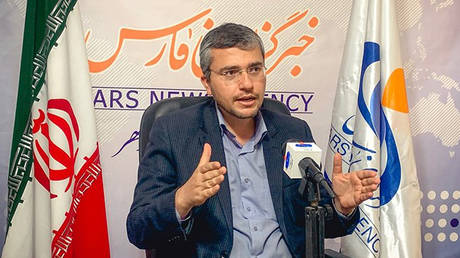
Recently, an Iranian lawmaker named Fada-Hossein Maleki sat before a microphone and leveled a warning that sounded less like a diplomatic overture and more like a eulogy. He spoke of "hell." He wasn't talking about a theological concept. He was talking about what happens to Miller if the thin, fraying thread of nuclear negotiations finally snaps.
Negotiations are often described as chess, but that is a lie. Chess is logical. Chess has fixed rules. This is more like a game of chicken played with school buses. On one side, the United States demands a return to the constraints of the 2015 nuclear deal. On the other, Iran insists that the pressure campaign—the economic strangulation that has turned their local currency into scrap paper—must end first.
Between them lies the red line. It is invisible, shifting, and lethal.
The Anatomy of an Ultimatum
When a member of the Iranian Parliament’s National Security and Foreign Policy Committee speaks about the "hellish" consequences for U.S. troops, they are leaning on a very specific type of leverage. It is the leverage of proximity. There are tens of thousands of American service members stationed within striking distance of Iran’s arsenal. They are in Iraq. They are in Kuwait. They are in Bahrain and the UAE.
Maleki’s rhetoric isn't just bluster for a domestic audience. It is a calculated reminder of the asymmetric reality. The United States can cripple an economy with a stroke of a pen in D.C., but Iran can change the local reality on the ground with the press of a button.
Consider the hypothetical, yet terrifyingly plausible, sequence of events. The talks in Vienna or Doha officially collapse. The "Plan B" that Washington officials often whisper about—a mix of increased sanctions and cyber-sabotage—is triggered. Tehran, feeling backed into a corner where the only way out is through, decides to demonstrate the cost of that pressure.
It starts with a drone. Not a massive, multimillion-dollar Reaper, but a swarm of small, inexpensive "suicide" UAVs. They move in a low, buzzing cloud that complicates radar signatures. They don't need to destroy an entire base. They just need to hit a fuel depot or a barracks.
In that moment, the abstract concept of "geopolitical tension" becomes the very concrete sound of a siren wailing in the desert night. It becomes the smell of burning JP-8 fuel. It becomes a letter sent to a mother in Ohio.
The Ghost of 2018
We have been here before. The current tension is a direct descendant of the 2018 decision to exit the Joint Comprehensive Plan of Action (JCPOA). That moment was framed as a "maximum pressure" campaign. The logic was simple: if you squeeze hard enough, the other side will eventually say "uncle."
But humans aren't oranges. When you squeeze a nation, they don't just provide juice; they harden.
The Iranian perspective, voiced by figures like Maleki, is rooted in a deep-seated sense of betrayal. They argue they kept their end of the bargain until the rug was pulled out from under them. Now, they view any concession as a risk of future abandonment. This isn't just about centrifuges and uranium enrichment levels. It is about the fundamental inability of two entities to trust that the other will exist in the same frame of mind four years from now.
Trust is the most expensive commodity in the world. Right now, the price is higher than either side is willing to pay.
The Invisible Stakes
Why should a person at a coffee shop in Seattle or a teacher in London care about a quote from an Iranian MP?
Because the world is a circulatory system. When a major artery in the Middle East is constricted, the pressure is felt everywhere. If the "hell" Maleki describes breaks loose, it isn't contained to a desert outpost.
- The Energy Shiver: A conflict in the Persian Gulf puts the Strait of Hormuz in the crosshairs. Twenty percent of the world's petroleum passes through that narrow neck of water. A single sunken tanker or a field of sea mines turns global shipping into a nightmare.
- The Proliferation Race: If the talks fail and Iran moves toward the "breakout" point—the moment they have enough fissile material for a weapon—the neighbors won't sit still. Saudi Arabia has already signaled they won't be the only ones on the block without a deterrent.
- The Shadow War: We often think of war as a declaration. Modern war is a series of "unattributed" events. It is a pipeline explosion in one country, a hospital’s servers being held for ransom in another, and a scientist’s car exploding in a third.
The "hell" is a slow burn before it becomes a wildfire.
The Human Cost of High Heels and Hard Seats
I once sat across from a veteran who had served in the Green Zone during a period of high tension. He didn't talk about the grand strategy of the Middle East. He talked about the sound of the "C-RAM"—the Counter Rocket, Artillery, and Mortar system. It’s a Gatling gun that shreds incoming projectiles in mid-air. He said it sounds like a giant zipper being undone across the sky.
"Whenever the news talked about a 'diplomatic breakdown,'" he told me, "we just slept in our boots."
That is the human element the headlines miss. When an MP makes a threat, a thousand Miller-type characters sleep in their boots. They stop calling home because the comms go dark for security. They wait.
The tragedy of the current stalemate is that both sides are operating on a logic that makes sense to them but is incomprehensible to the other. To the U.S., Iran is a destabilizing force that must be contained. To Iran, the U.S. is an imperial power that understands only the language of resistance.
Maleki’s "hell" is a warning that the language of resistance is being polished. He is saying that if the pen fails, the sword is already out of the scabbard.
The Fragile Window
There is a window for a deal, but it is closing like a heavy stone door. The technical expertise Iran has gained since 2018 cannot be "unlearned." You can't dismantle knowledge. Every day that passes without a signature on a document is a day where the "breakout" time shrinks.
The Iranian MP’s comments reflect a growing sentiment in Tehran that the West is distracted. With eyes on Eastern Europe and the Pacific, there is a belief that the U.S. cannot afford another "forever war" in the sand. This is a dangerous gamble. Miscalculation is the most common cause of catastrophe in human history. One commander on the ground misinterprets a movement, one drone goes off course, and the rhetoric becomes reality.
We are currently in the quiet before the zipper opens.
The negotiators will continue to meet in gilded rooms with mineral water and fine linens. They will argue over the phrasing of Annex II and the timeline of sanctions relief. They will use words like "compliance" and "verification."
But they should be thinking about the boots. They should be thinking about the twenty-year-old in the concrete hut who is currently the only thing standing between a failed paragraph and a regional inferno.
The hell Maleki describes isn't a threat to the people in the briefing rooms. They will be fine. They will write memoirs. The hell is reserved for the people who have to live in the interlocking circles on the map.
If the talks fail, the red lines on the map will start to bleed.
The siren in the desert doesn't care about the history of the 2015 deal. It only knows that the sky is falling, and there is nowhere left to hide.
Would you like me to analyze the specific military capabilities mentioned in these regional tensions or perhaps look into the economic impact of the Strait of Hormuz closing?