The moon is not a silver coin hung in the night sky. It is not the romantic backdrop for a poem or a serene light to guide the weary traveler. To those who have spent decades obsessing over its geography, it is a jagged, monochromatic graveyard of silence. It is sharp, abrasive, and utterly indifferent to the soft, warm bodies that yearn to stand upon it.
Elias sat in a clean room in Hawthorne, staring at a schematic for a lunar habitat that looked less like a home and more like a pressurized sardine can. He rubbed his eyes. The numbers on his screen projected a timeline that felt aggressive, perhaps even reckless: the year 2030. Within five years, if the current pace of American aerospace industry holds, humanity intends to move from merely visiting the moon to inhabiting it.
This is not a mission of exploration. It is a mission of permanence.
For the entirety of human history, we have been tethered to the blue marble. We grew under its atmosphere, drank its water, and fought our wars on its soil. But the math of survival is changing. The realization is dawning on engineers and architects that a species confined to a single point in the cosmos is one accident away from extinction. Whether that accident is a planetary impact, a climate collapse, or something else entirely, the answer has been the same for years: we must branch out.
We are shifting from being tourists to being residents.
Consider the reality of the lunar surface. It is a hostile environment. The regolith—the fine, gray dust covering the moon—is not like beach sand. It is crushed rock with edges as sharp as glass shards. It sticks to everything. It wears down seals, gums up machines, and shreds the lungs of anyone foolish enough to inhale it. Designing a lunar base is not just about building a house; it is about building a biological fortress.
The companies currently racing toward the 2030 deadline understand this intimately. They are not merely putting up tents. They are engineering self-contained cycles of oxygen, water, and power. They are working with modular structures that can be buried under meters of lunar soil to shield inhabitants from the brutal cosmic radiation that strips away DNA.
Elias looked at the projected life-support loop. He thought of his daughter. She would be a teenager in 2030. Would she look up at the moon and wonder who was having dinner in a pressurized dome under the Sea of Tranquility? Or would she simply accept it as a mundane fact of life, like the existence of a remote research station in Antarctica?
There is a profound, aching loneliness in the prospect of lunar habitation. The moon is a place where you cannot step outside for a breath of fresh air. You cannot hear the wind. You cannot feel the sun on your skin, only the heat of its radiation through a suit. It is a life defined by alarms, airlocks, and the constant, buzzing hum of ventilators.
Why would we choose this?
Because the alternative is stagnation.
The pressure to establish a presence on the moon is not solely driven by government mandates or the vanity of corporate titans. It is driven by the sheer, unyielding physics of space flight. The moon is the training ground. It is the gas station, the outpost, and the staging area for the next leap. Launching from Earth is expensive and dangerous; launching from the moon, with its lower gravity and lack of atmosphere, is efficient. It is the gateway to Mars, the asteroid belt, and whatever lies beyond.
Yet, the 2030 date looms. Skeptics point to the graveyard of missed deadlines in aerospace history. They point to the complexity of the Orion capsule, the delays in the Starship program, and the massive financial hurdles of maintaining a lunar supply chain. They are right to be skeptical. History is littered with ambitious timelines that crumpled under the weight of reality.
But there is a difference this time.
The capital flowing into these projects is no longer just government funding. It is private, aggressive, and impatient. When a government runs a program, it is subject to the whims of budget cycles and political shifts. When an industry decides that the lunar economy is worth mining—literally and figuratively—the calculus changes. We are seeing the rise of a new sector: lunar infrastructure. This includes power grids, mining operations for water ice, and landing pads that keep the abrasive dust from destroying incoming spacecraft.
The companies involved are not waiting for permission. They are prototyping, testing, and failing. Every failed test flight, every exploded rocket, is a data point. It is a correction. It is the cost of admission.
Elias walked out of the clean room and toward the canteen. He passed a monitor showing a high-resolution feed of the lunar south pole. The shadows were long and deep, hiding craters that haven't seen direct sunlight in billions of years. Within those dark, frigid depths lies the water ice we need to survive. It is the fuel for our future.
If we get this right, by 2030, a small team of humans could be spending their shifts in these lightless caverns, harvesting the building blocks of a new economy. They will be the first of a new kind of human: the lunar settler. They will be the ones who adapt, whose bodies will slowly adjust to the lower gravity, whose circadian rhythms will be dictated by the long lunar night rather than the rotation of the Earth.
They will be the ones who experience a different kind of sky.
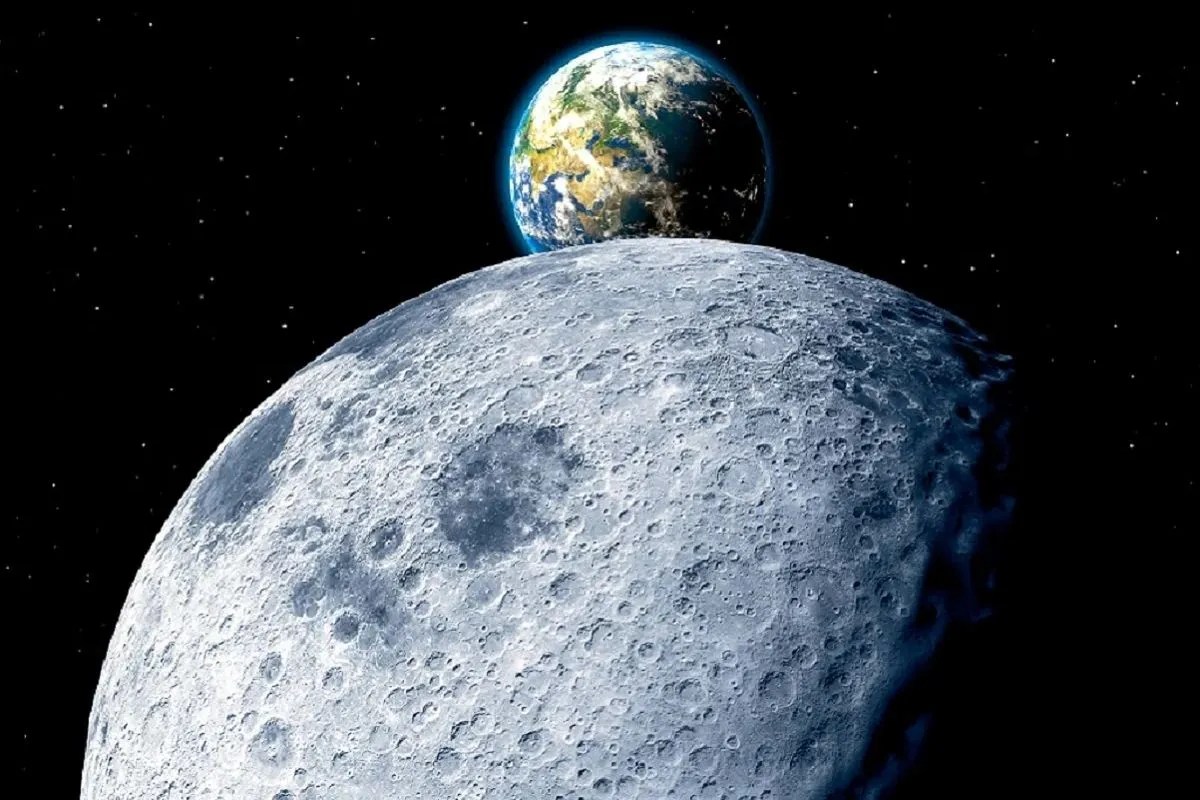
Imagine standing on the gray plains of the moon, looking up. The sky is a deep, endless black, even in the middle of the "day." And there, hanging in the void, is the Earth. It is a swirl of sapphire, turquoise, and white. It is the only place in the universe known to contain the sound of a human voice, the smell of rain, the taste of a ripe peach.
From that distance, the borders drawn on maps vanish. The petty grievances, the national rivalries, the economic disputes—they all disappear into the blue haze. The Earth looks fragile. It looks like what it is: a lifeboat.
The people who live on the moon in 2030 will likely be technicians, scientists, and engineers. But they will carry a perspective that the rest of us on the ground can only imagine. They will know the cost of every breath. They will know the exact weight of a kilogram of water. They will understand, with a clarity that borders on the spiritual, that humanity is not just a terrestrial species.
Critics argue that we have enough problems here on Earth. They ask why we are spending billions to put people on a desolate rock when there is poverty, hunger, and division at home. It is a valid question, rooted in a deep, justifiable desire for us to fix our own house before we build another.
But human progress has never been linear, and it has never been a choice between one or the other. We do not stop curing diseases because we are still fighting wars. We do not stop building libraries because we are still building prisons. We do both.
The expansion into space is not a flight from our problems. It is an expansion of our capacity to solve them. The technology developed to recycle water on a moon base will be used to bring clean water to arid regions on Earth. The radiation shielding technology will protect cancer patients. The energy management systems will transform our power grids.
We are not leaving Earth behind. We are extending its reach.
Elias reached the glass doors and looked out at the twilight. The sky was turning a soft, bruised purple. A plane crossed the horizon, a tiny spark of man-made light against the darkening blue. It felt archaic. A metal tube burning fossil fuel to travel between two points on the same crust.
He thought about the lunar missions of the past. The heroes who planted flags and collected rocks. They were brave, but they were visitors. They had a return ticket. The mission for 2030 is different. It is about staying. It is about the uncomfortable, gritty, essential work of existence.
It is about the moment when the last shuttle leaves the moon, and the people left behind realize they are not going home. They are home.
The silence of the moon is not empty. It is waiting. It has been waiting for four billion years for someone to come and endure its harshness, to learn its secrets, and to turn a gray, barren wasteland into a place where a child could one day be born.
That child, whenever they come, will never know the feeling of wind on their face or the smell of wet grass. They will know the hum of the air recycler, the weight of a suit, and the sight of the blue marble hanging in the black like a fragile, glowing ornament. They will be the true beginning.
Until then, we work. We draft the schematics. We build the heat shields. We push the rocket engines to the limit of their endurance. We make the mistakes that will one day be footnotes in a history book written on a different world.
The deadline of 2030 is not a finish line. It is a starting block.
As the sun dipped below the horizon, Elias looked up. The moon was rising, a pale ghost in the daylight. It was no longer a distant mystery. It was a destination. It was an address. It was the next step in a long, difficult walk that began in the caves of Africa and will continue into the dark, glittering expanse of the stars.
We are not meant to stay in the harbor. We were built for the storm.
There is a finality in the horizon, a sense that we have stretched our reach as far as it can go. But the horizon is a lie. It is only the point where our vision fails. Beyond it, there is always more. There is always the potential for another step, another breath, another story.
And as the night deepened, the moon burned brighter, a silent beacon calling us to come and stay. We will go. Not because it is easy, but because the Earth is too small for the scope of our ambition. We will go because, beneath the dust and the radiation, there is the quiet, insistent urge to see what lies on the other side of the dark.
And when we finally stand there, looking back at the tiny, brilliant blue dot that nurtured us, we will finally understand that we were never meant to be a single-planet species. We were meant to be wanderers.
The long road is almost at an end. The journey is just beginning.