The heat in Selma, Alabama, does not just sit on your skin. It heavy-presses against your chest, thick with the memory of humidity and red dirt. On a Tuesday morning in late autumn, an eighty-two-year-old woman named Ernestine stepped off her porch, her good orthopedic shoes clicking softly against the pavement. She carried a small canvas tote bag. Inside was a bottle of water, a folded camp stool, and a worn plastic sleeve containing her voter registration card.
Ernestine had walked this path before. Sixty-one years earlier, she stood on the John Lewis Voting Rights Bridge—then just called the Edmund Pettus Bridge—while the air filled with tear gas and the thud of nightsticks. She still walks with a slight hitch in her left hip, courtesy of a deputy’s boot in 1965. She paid for her right to stand in a polling line with blood.
But when she arrived at her usual precinct, the church doors were locked. A small, photocopied sign taped to the glass delivered the news: Polling location moved. Please report to the county complex.
The county complex was nine miles away. Ernestine does not own a car. The county has no public transit.
This is how a right vanishes. It does not happen with a dramatic theatrical flourish or a sweeping public declaration. It happens quietly, in the bureaucratic shade, through a series of relocated church basements, purged voter rolls, and slashed early voting hours. To the casual observer, it looks like administrative streamlining. To the people on the ground, it feels like history reversing its wheels.
The Invisible Shield
To understand how Ernestine found herself stranded on a sidewalk, we have to look back to a room in Washington, D.C., in the summer of 2013. That was the moment the legal architecture protecting millions of voters was dismantled.
For nearly half a century, the Voting Rights Act of 1965 operated as a federal shield. The core of its power lay in Section 5, a mechanism known as "preclearance." Think of it as a strict building inspector for democracy. If a state or county with a documented history of racial discrimination wanted to alter its voting laws—whether changing a district line, moving a polling place, or altering identification requirements—it had to prove to the federal government that the change would not harm minority voters.
The burden of proof was on the state. The default setting was protection.
Then came the Supreme Court’s decision in Shelby County v. Holder. In a 5-4 ruling, the court effectively struck down the formula used to determine which areas required this oversight. The majority argued that the test was outdated, a relic of a bygone era. They reasoned that because minority turnout had increased, the blatant racism of the Jim Crow era was a ghost of the past. The inspector was dismissed from the job site. The shield was lowered.
What followed was a cascade. Within hours of the decision, Texas officials announced they would implement a strict voter identification law that had previously been blocked by federal courts. North Carolina moved forward with a sweeping omnibus bill that cut early voting, eliminated same-day registration, and banned out-of-precinct voting.
The legal justification was that these laws applied to everyone equally. But equality in text does not mean equality in effect.
Consider a simple analogy. Imagine two runners entering a marathon. One runner is given state-of-the-art shoes and a clear, paved track. The other runner is forced to navigate a path littered with loose gravel, steep inclines, and sudden detours. Technically, the rules of the race are identical: both must cross the same finish line. But the terrain makes the outcome a foregone conclusion.
The Arithmetic of Exclusion
When preclearance died, the burden of proof flipped. It was no longer up to the state to prove a new voting law was fair. Now, it was up to everyday citizens, local organizers, and underfunded civil rights groups to prove a law was discriminatory.
Proving discrimination in a court of law takes time. It takes millions of dollars. Most importantly, it takes place after the damage has already been done.
If a discriminatory voting law is passed six months before an election, an regular citizen cannot simply press pause on democracy. The election happens under the contested rules. The representatives are chosen. The policies are enacted. By the time a federal court rules three years later that the law indeed violated the Constitution, the political reality has already shifted. You cannot un-ring a bell, and you cannot un-cast a ballot that was never allowed into the box.
The impact of this shift is visible in the arithmetic of modern elections. Since the Shelby decision, thousands of polling places have been closed across the country, heavily concentrated in communities of color and rural areas.
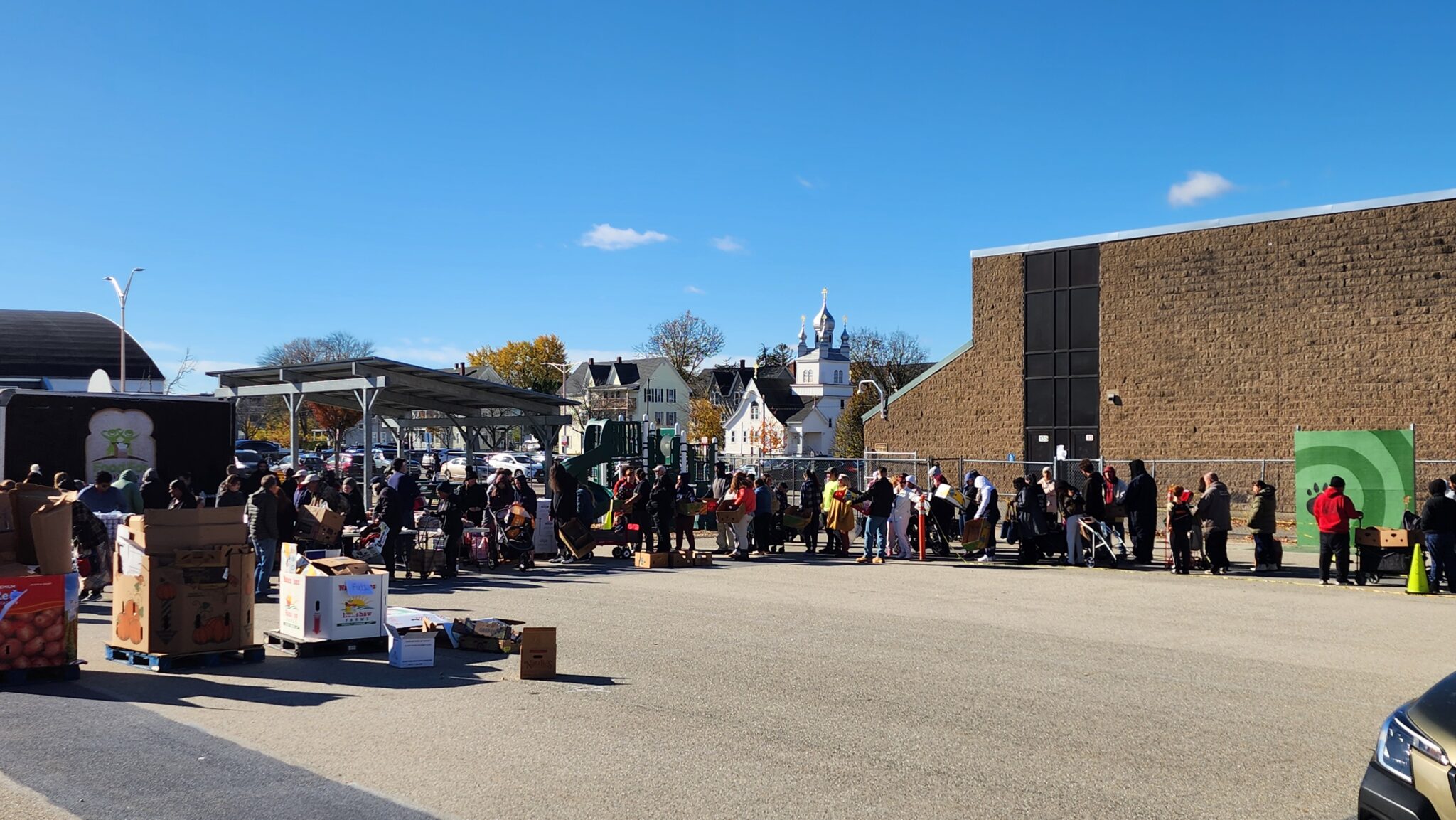
In Georgia, laws were passed making it a misdemeanor to distribute water or food to voters waiting in line. On its face, the state argued this prevented "line electioneering." But look closer at the reality of urban polling places. In affluent, suburban neighborhoods, voting is often a ten-minute errand. In underfunded, urban precincts, lines routinely stretch around blocks, requiring waits of four, six, or eight hours.
To ban a volunteer from handing a bottle of water to an elderly woman standing for six hours in the southern heat is not a measure to ensure election integrity. It is an endurance test. It turns an exercise in citizenship into an ordeal of physical stamina.
The Living History
We often treat the civil rights movement as a chapter in a textbook, illustrated with grainy black-and-white photographs of people who feel distant, almost mythological. We speak of John Lewis, Martin Luther King Jr., and Fannie Lou Hamer as characters in a finished story.
But the people who bled for the right to vote are still here. They watch the evening news from their living rooms, and they recognize the patterns. They know that you do not need a literacy test or a poll tax to keep someone from voting. You just need to make the process inconvenient enough that a working parent, a student with two jobs, or an elderly citizen gives up.
Let us look at another hypothetical citizen to see how these barriers intersect in daily life. Marcus is a twenty-four-year-old mechanic living in a mid-sized city in a state that recently eliminated weekend early voting and restricted mail-in ballots. He works hourly shifts, from seven in the morning until six at night. He does not get paid time off to vote.
Under the old rules, Marcus could have cast his ballot on a Sunday afternoon after church. Now, his only option is Tuesday. He arrives at his precinct at 6:15 PM. The line snakes out the door and down the alleyway. The poll workers announce that the machines are malfunctioning, slowing the process to a crawl.
Marcus stands there for an hour. His phone buzzes; his childcare provider reminds him that she charges an extra dollar for every minute he is late past seven. He looks at the line ahead of him. He calculates the cost. He steps out of the queue and walks back to his car.
Did anyone block Marcus from the ballot box with a nightstick? No. Was his right to vote effectively stripped away? Absolutely.
This is the modern face of disenfranchisement. It operates through the friction of everyday life. It leverages poverty, inflexible work schedules, and lack of transportation against the democratic process. It turns the franchise into a luxury good available primarily to those with time and resources to spare.
The Logic of the Pivot
Defenders of these restrictive measures argue that they are essential to protect the security of the ballot. They speak of "voter confidence" and the need to prevent fraud.
Yet, when pushed to provide evidence of widespread, systemic voter impersonation, the data dissolves. Study after study conducted by non-partisan institutions, universities, and government agencies reveals that in-person voter fraud is vanishingly rare. You are statistically more likely to be struck by lightning than to encounter an instance of someone pretending to be another voter at a polling station.
The discrepancy between the stated problem and the legislative solution reveals a different motivation entirely. When the rules of the game are altered to make participation harder for specific segments of the population—young people, low-income workers, and racial minorities—the intent cannot be hidden behind a veil of administrative caution.
The dynamic is cyclical. When a group of citizens manages to overcome existing hurdles and turn out in historic numbers, the legislative response is often to build the hurdles higher before the next cycle. It is a shifting finish line.
The veterans of the 1960s movement see this clearly because they remember the arguments used against them decades ago. In the 1950s, segregationist governors did not always say they wanted to deny Black people their rights because of their skin color; they argued for "states' rights," "constitutional integrity," and "local control." The language has mutated, but the objective remains consistent: to determine who belongs in the circle of power and who remains outside it.
The Ripple in the Water
The erosion of voting access does not stop at the edge of minority communities. It ripples outward, degrading the quality of governance for everyone.
When a politician realizes that their seat is secured not by appealing to a broad, representative coalition of their constituents, but by curating a specific, restricted electorate, their behavior changes. They no longer need to compromise. They do not need to address the systemic failures of local infrastructure, the rising costs of healthcare, or the decline of public schools. They only need to satisfy the narrow slice of the population that retains easy access to the ballot.
The result is a government that is insulated from the consequences of its own decisions. It is an echo chamber built on a foundation of structural exclusion.
The narrative offered by critics of civil rights expansion often suggests that the system is self-correcting. They point to high turnout figures in recent elections as proof that the laws are not suppressing votes. But this interpretation confuses resistance with permission.
When people wait in line for hours, brave inclement weather, and navigate confusing legal mazes to cast their ballots, they are not demonstrating that the system works. They are demonstrating how desperate they are to survive despite it. High turnout is often a symptom of deep anxiety, an emergency response by a community that feels the ground shifting beneath its feet.
The Weight of the Walk
Back in Selma, Ernestine did not give up. She sat on her camp stool for an hour, thinking. She called her grandson, who called a friend with a pickup truck. It took two hours of coordination, but eventually, she made it to the county complex. She stood in another line, signed her name, and slid her ballot into the machine.
She won that day. But her victory was a matter of luck, family support, and sheer stubbornness. It should not require an act of heroism to participate in a democracy.
The true cost of the voting restrictions implemented over the last decade is measured in the people who did not have a grandson with a truck. It is measured in the voices that were silenced because the obstacle course was just one hurdle too high.
The danger we face is not a sudden, cataclysmic collapse of our institutions. It is the steady, quiet normalized decay of our expectations. It is the acceptance of a reality where the length of your waiting line depends on the zip code you inhabit, and where the security of your rights depends on the whims of a shifting legal doctrine.
We are left with an uncomfortable truth that requires no summary or neat resolution. The architecture of a free society is surprisingly fragile. It requires constant maintenance, and it can be dismantled far faster than it was built. As the shadows lengthen over polling precincts across the nation, the question is no longer whether history is repeating itself, but whether we have the collective will to change the script.