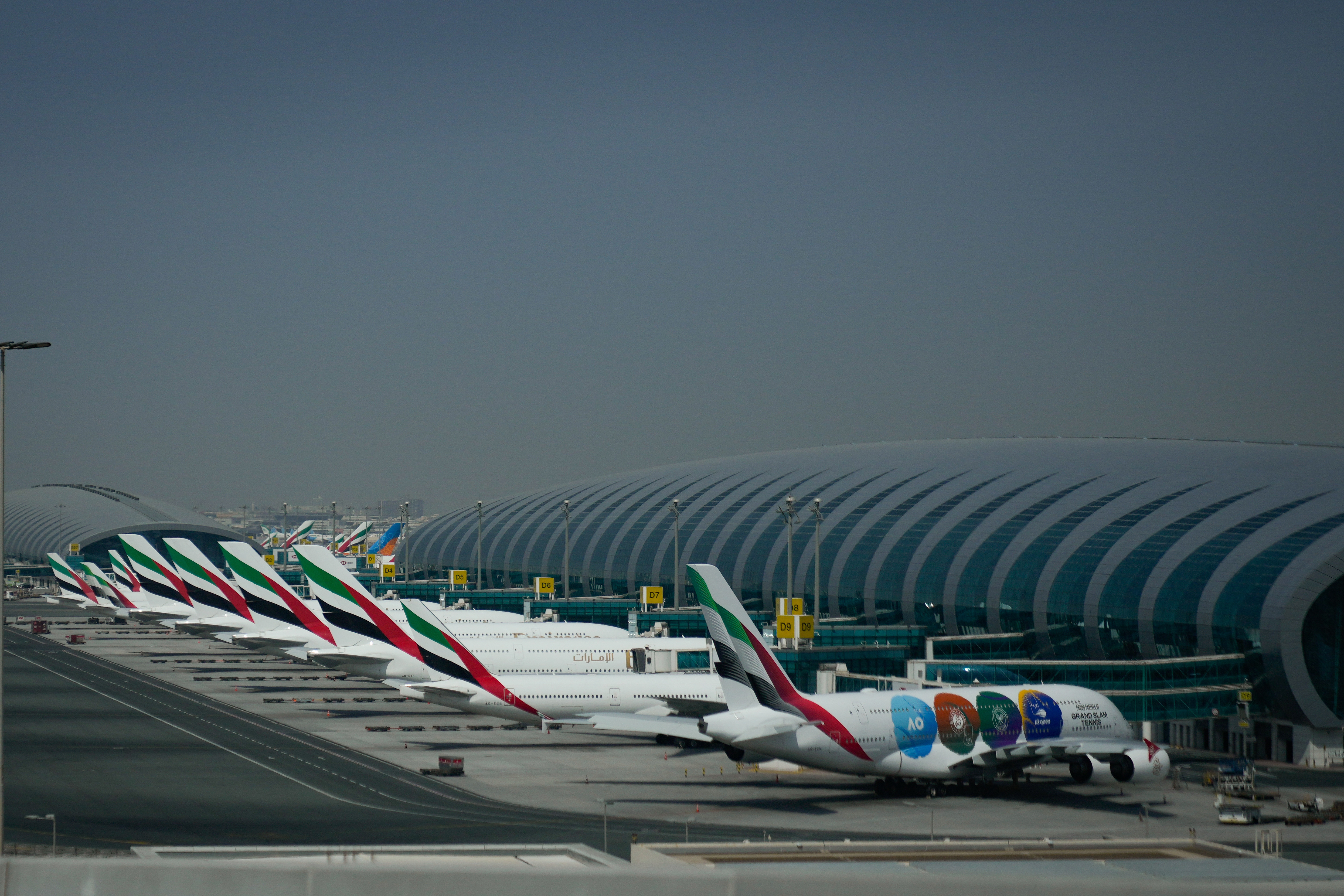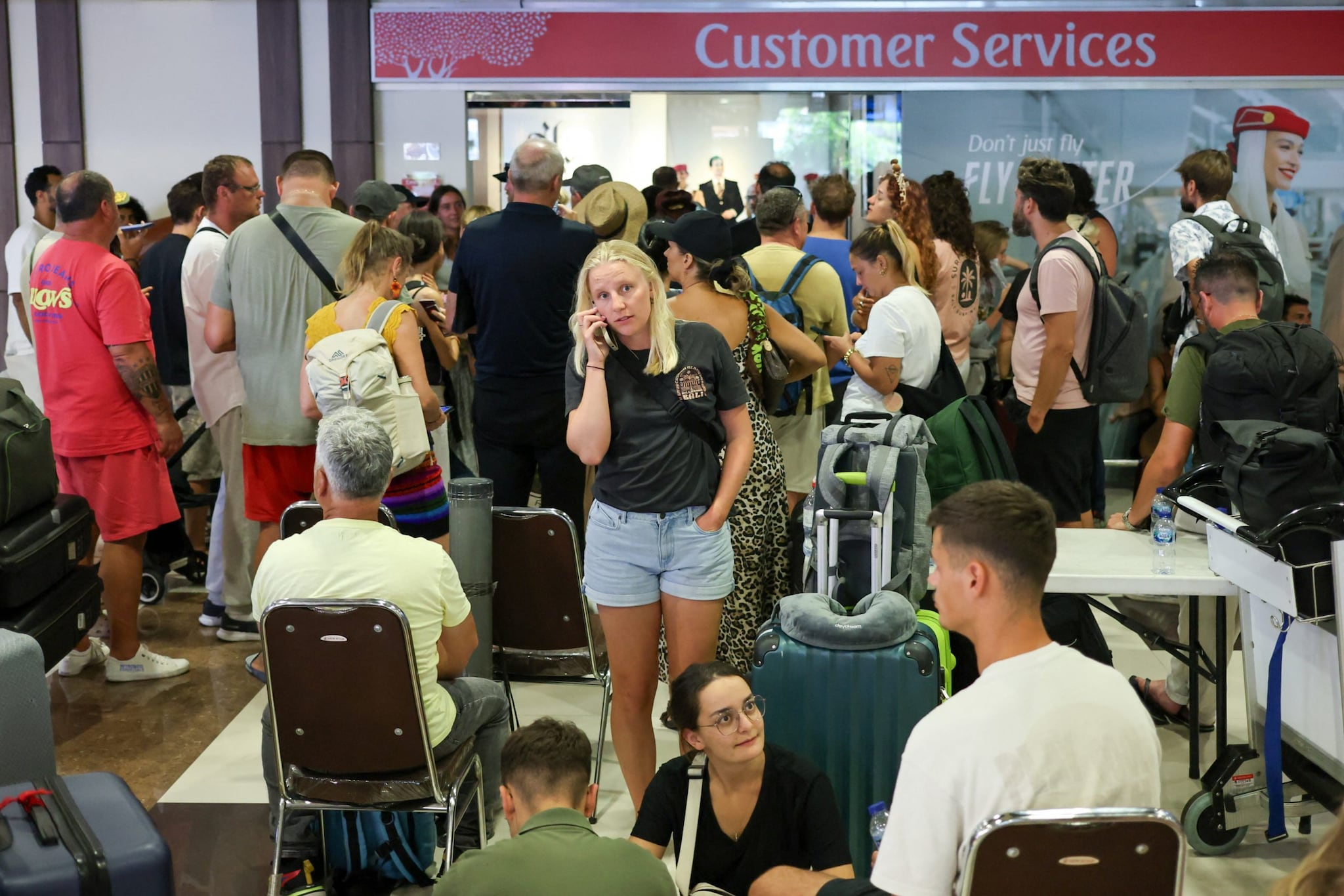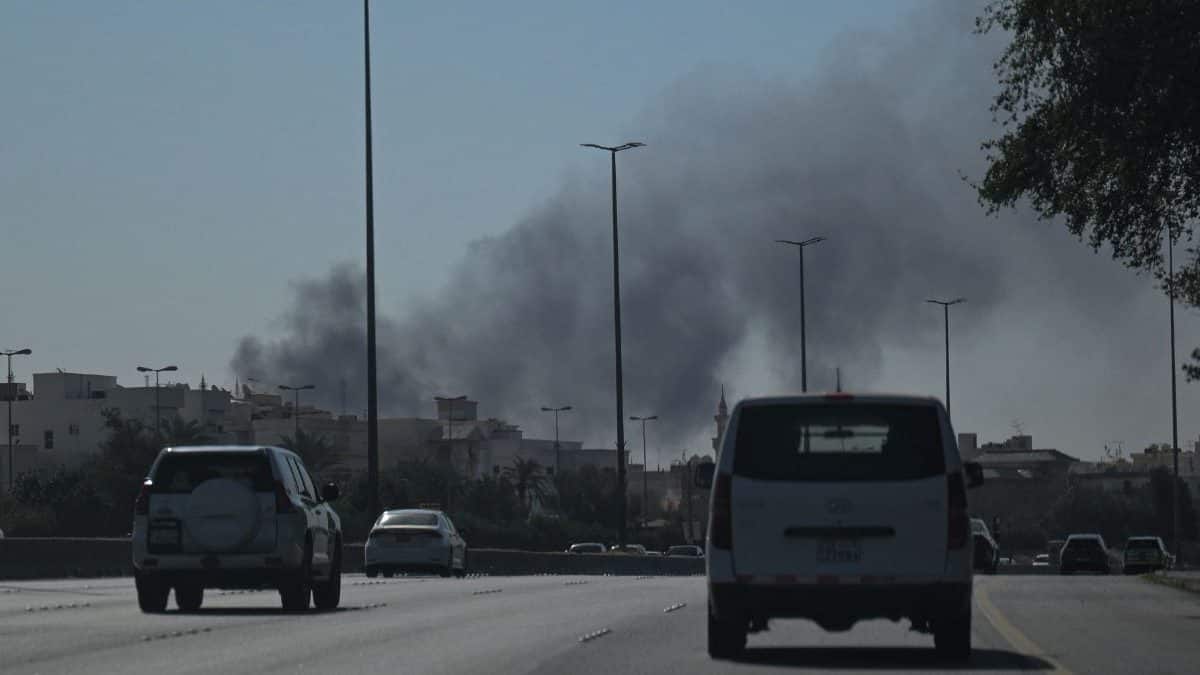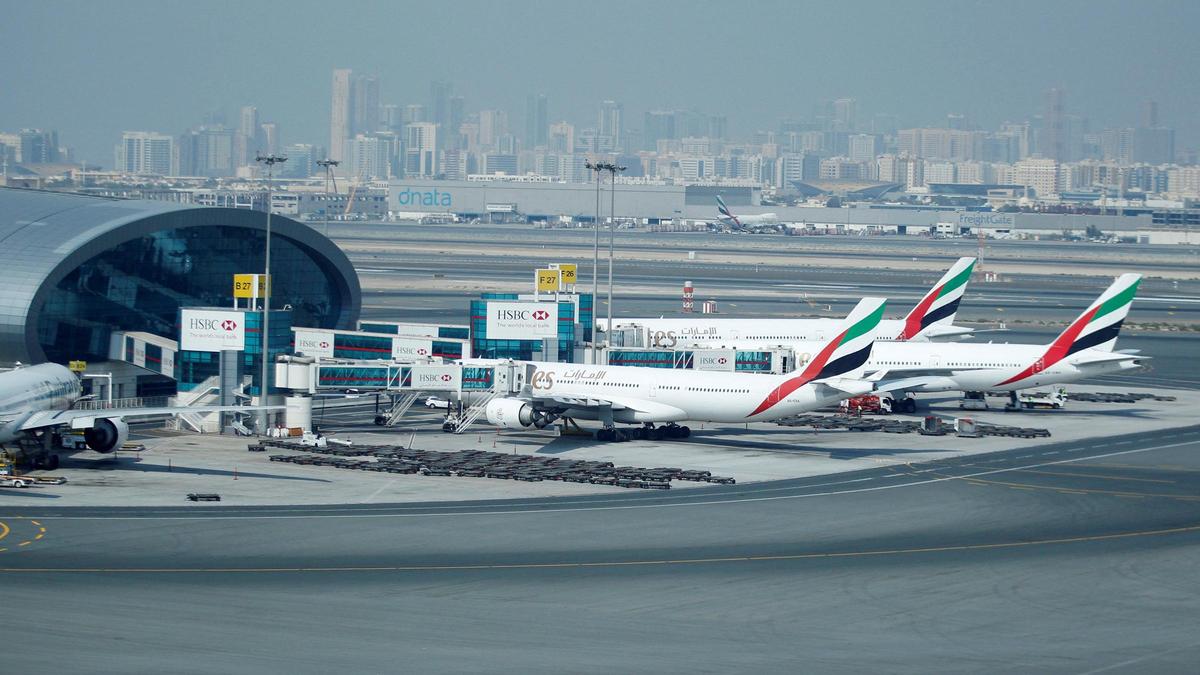
The air inside Terminal 3 at Dubai International usually smells of expensive oud and roasted coffee. It is the scent of ambition. But today, the air is heavy with something else: the metallic tang of recycled oxygen and the sharp, acidic sweat of three hundred people who are all looking at the same flight board with the same desperate prayer.
On the screen, the word Delayed glows in a mocking amber. Beneath it, for several other routes, the word is Cancelled.
A woman sits on her suitcase near Gate B21, clutching a passport with a white-knuckled grip. She isn't a diplomat. She isn't a geopolitical analyst. She is a software engineer named Mariam, and she just wants to get her mother to Sharjah before the sky over Isfahan turns a different color. To the world, the escalating friction between Iran and Israel is a series of moves on a digital map. To Mariam, it is the sound of a jet engine—the only sound that promises safety.
The geography of West Asia has always been a delicate architecture of flight paths. These are the invisible highways of the modern world. When you fly from London to Singapore, or Dubai to Tehran, you are traversing a grid of "corridors" that rely entirely on the assumption that the ground below will remain quiet. When that assumption shatters, the corridors slam shut.
The Calculus of the Closed Sky
Airlines do not make decisions based on ideology. They make them based on insurance premiums and the cold physics of fuel. When the tension between Israel and Iran spiked following the strikes in Damascus and the subsequent retaliations, the risk profile of the entire region shifted in a heartbeat.
Suddenly, a routine flight from the UAE to Iran isn't just a commute; it is a liability. Carriers like FlyDubai and Air Arabia find themselves operating in a gray zone. They are the lifelines for thousands of expatriates and families caught in the middle, yet they must navigate a workspace where the "ceiling" is filled with the potential for ballistic trajectories.
Consider the logistics. If a carrier decides to fly, they must often reroute. Rerouting requires more fuel. More fuel means less cargo or fewer passengers. It means higher costs in a season where everyone is already stretched thin. Yet, for a brief window this week, limited flights began to flicker back to life. These aren't "vacation" flights. They are extraction pulses.
The governments involved are playing a high-stakes game of musical chairs. They want their citizens out, but they cannot send enough planes to empty a city. So they negotiate. They look for windows of "de-escalation"—a word that sounds clinical until you realize it means "the thirty-minute gap where no one is currently firing a missile."
The Human Weight of a Boarding Pass
We often talk about "geopolitical instability" as if it is a weather pattern. We forget that instability has a face.
In the terminal, a man named Omar is trying to explain to his seven-year-old son why they can’t go home yet. Omar works in construction in Abu Dhabi. His family is back in a suburb of Tehran. He has the money for a ticket, but money is a useless currency when the airspace is a "No-Go" zone. He watches the news on his phone—scrolling through Telegram channels and official government feeds—trying to find a truth that doesn't exist yet.
The "P People Also Ask" section of the human brain during a crisis is a frantic loop:
Is it safe to fly over the Persian Gulf? Will the UAE cancel all flights to Israel? What happens if I’m stuck in transit?
The answers are rarely satisfying. Safety is a moving target. While limited flights have resumed, they operate under a "Tactical Wait." This means the pilot is in the cockpit, the passengers are buckled in, and everyone is waiting for a final green light from air traffic control that says the path is clear of "unidentified objects."
The technical reality is that modern anti-aircraft systems are terrifyingly efficient and occasionally, tragically, indiscriminate. Airlines remember the ghosts of past flights—MH17, PS752. These aren't just flight numbers; they are scars on the industry. No CEO wants to be the one who guessed wrong about a "limited engagement."
The Invisible Stakes
Why does this matter to someone sitting in an office in New York or a cafe in Paris? Because the Middle East is the world’s transit hub. If the "Great Pivot" of Dubai, Doha, and Abu Dhabi stops spinning, the global supply chain doesn't just slow down—it stutters.
But beyond the economics lies the psychological toll. For the people of West Asia, the sky has always been a source of heat and light. Now, it is a source of surveillance and potential fire. When a flight takes off from Dubai headed for Tehran during a period of "limited operations," it carries more than just people. It carries the desperate hope that civilian life can still exist in the gaps between military ambitions.
The governments are seeking to "extract" citizens. It’s a harsh, industrial word. You extract oil. You extract teeth. To extract a human being is to acknowledge that the environment they are in has become toxic.
Mariam finally hears her flight number called. It’s a low-cost carrier, the kind that usually smells of floor wax and cheap pretzels. Today, it feels like a chariot. She stands up, her knees shaking slightly. She looks at the other people in the lounge—the businessmen who have lost their swagger, the mothers who have stopped crying and started planning, the students whose education is now a secondary concern to their survival.
The plane taxies. The cabin lights dim. This is the moment of peak tension. As the wheels leave the tarmac, there is a collective, audible exhale. For the next two hours, they will be suspended in a tube of pressurized aluminum, crossing a border that on the ground is a flashpoint of history, but from 30,000 feet is just a dark expanse of sand and sea.
They are the lucky ones. They are the ones who made it onto the "limited" list.
Behind them, the terminal remains full. The board flickers again. Delayed. The amber glow reflects in the eyes of those still waiting, those for whom the sky is still closed, and for whom "tomorrow" is not a date on a calendar, but a destination they aren't sure they can reach.
The silence in the terminal after a flight departs is the loudest sound in the world. It is the sound of those left behind, staring at a horizon that refuses to promise anything but the night.