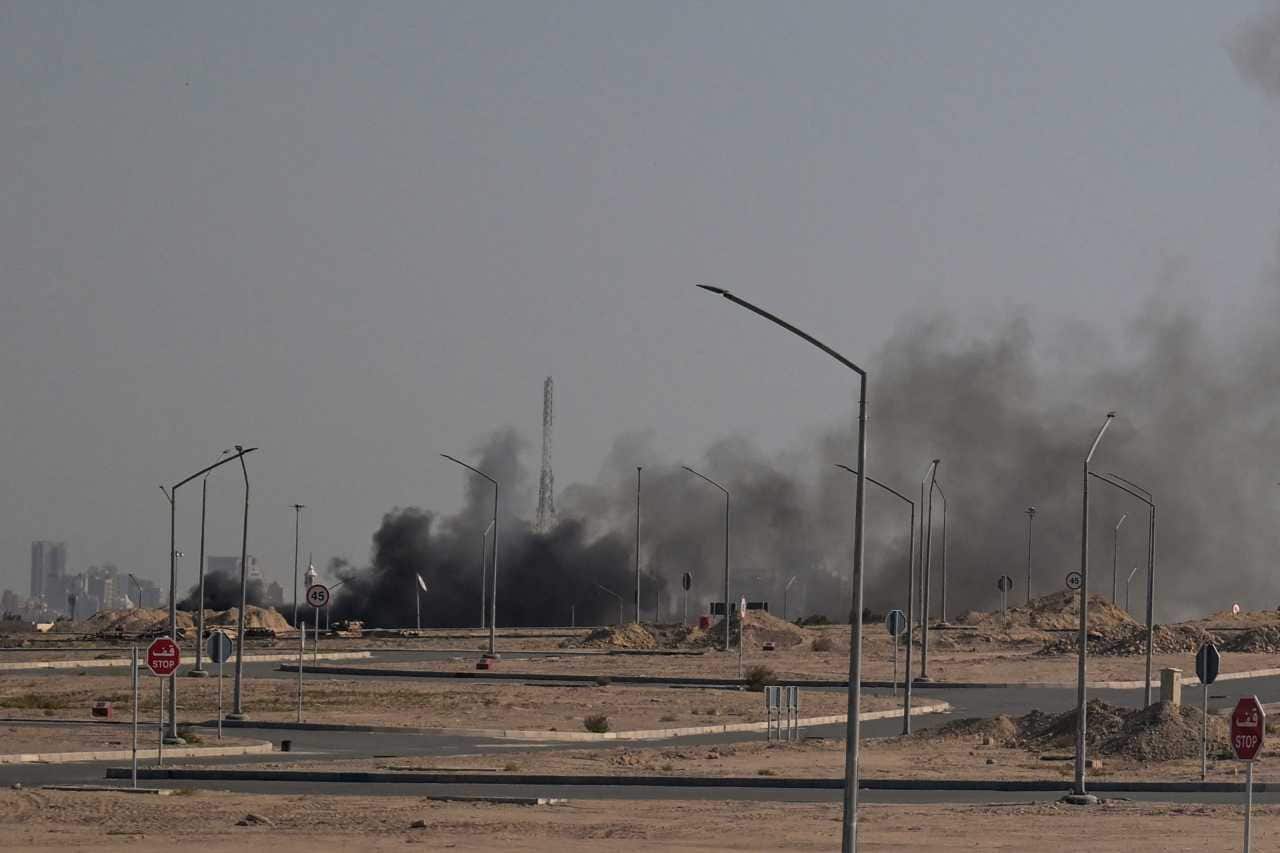
The recent confirmation by the Kuwaiti Ministry of Defense regarding the loss of U.S.-manufactured fighter assets is not merely a localized aviation incident; it represents a quantifiable degradation of the Kuwait Air Force (KAF) operational readiness and a disruption of the regional power-projection equilibrium. Analyzing this event requires a shift away from sensationalist reporting toward a structural assessment of fleet sustainment, pilot safety protocols, and the specific technical vulnerabilities inherent in high-performance Western airframes operating in extreme desert environments. The immediate fiscal impact is secondary to the long-term readiness gap created by the removal of these hulls from the KAF’s active inventory.
The Three Pillars of Kinetic Attrition
To understand why these losses occurred, we must categorize the risk factors into a three-part framework: Environmental Stress, Operational Tempo (OPTEMPO), and Technical Life-Cycle Management.
- Environmental Thermal Loading: The Persian Gulf presents one of the most hostile operating environments for high-performance turbines. High ambient temperatures decrease air density, which forces engines to run hotter to maintain thrust-to-weight ratios. This accelerates the thermal fatigue of turbine blades and increases the probability of mid-air compressor stalls or catastrophic engine failure.
- Particulate Ingestion: Constant exposure to fine-grain silica (sand) acts as a persistent abrasive on engine internals and sensitive avionics cooling systems. Even with advanced filtration, the microscopic bypass of particulates leads to "glassing" on hot-section components, a phenomenon where sand melts and reforms as a ceramic coating, choking airflow and inducing surge events.
- Operational Density: Kuwait’s relatively small geographical footprint necessitates high-intensity training within restricted corridors. This creates a dense electromagnetic and kinetic environment where the margin for pilot error or mechanical deviation is razor-thin.
Mechanical Failure Modes vs. Human Factor Integration
While the specific tail numbers and technical causes remain subject to internal investigation, the cause-and-effect relationship in modern fighter losses usually stems from a breakdown in the Integrated Weapon System (IWS). A fighter jet is not a single machine but a network of subsystems.
The failure of a single hydraulic actuator or a digital flight control computer (FLCC) can initiate a "cascading failure" where the aircraft’s fly-by-wire system can no longer interpret pilot inputs. In a rigorous analytical model, we look at the Mean Time Between Failure (MTBF) for critical flight components. If the KAF's maintenance cycle lagged behind the increased wear-and-tear of recent regional exercises, the probability of an "unrecoverable departure from controlled flight" increases exponentially.
The human factor must be quantified through Cognitive Load Theory. If pilots are managing aging F/A-18 Legacy Hornets while transitioning to newer platforms like the F/A-18E/F Super Hornet or the Eurofighter Typhoon, the "cross-decking" of skills can lead to muscle memory errors during emergency procedures. The loss of an airframe is often the final link in a chain of minor technical discrepancies and split-second decision-making delays.
The Strategic Readiness Gap and Replacement Calculus
The loss of these jets creates an immediate "Capability Hole." In defense economics, this is measured by the Sustained Sortie Generation Rate (SSGR). When a fleet of, for example, 30 aircraft loses three units, the remaining 27 must fly more frequently to meet the same national security requirements.
This creates a negative feedback loop:
- Higher utilization rates for the remaining airframes.
- Shortened intervals between Phase Inspections.
- Increased "cannibalization" (removing parts from grounded jets to keep others flying).
- Accelerated fleet-wide fatigue, leading to further losses.
Kuwait is currently in the midst of a multi-billion dollar modernization program, introducing the Boeing F/A-18E/F Super Hornet and the Leonardo Eurofighter Typhoon. The loss of legacy jets accelerates the need for this transition but also complicates it. Training resources must now be diverted to cover the gap, potentially slowing the integration of the newer, more capable platforms.
The Geopolitical Cost Function
Kuwait’s defense strategy relies heavily on interoperability with U.S. Central Command (CENTCOM). The KAF serves as a critical node in the regional "Integrated Air and Missile Defense" (IAMD) architecture.
The loss of these assets impacts two specific strategic metrics:
- Point Defense Capacity: The ability to intercept low-altitude threats or cruise missiles targeting critical infrastructure like the Al-Zour refinery.
- Coalition Contribution: Kuwait’s weight in joint exercises and its ability to act as a "force multiplier" for Western allies in the region.
The "Cost of Replacement" is not just the sticker price of a new jet—which, for a modern 4.5 generation fighter, exceeds $80 million per unit before considering sensors and weapons—but the "Opportunity Cost" of the five to seven years required to train a pilot to "Instructor Pilot" (IP) proficiency level. Losing an airframe is a loss of hardware; losing a pilot or the time invested in that airframe’s operational history is a loss of institutional knowledge.
Logistical Bottlenecks in the Supply Chain
A significant factor often missed in surface-level reporting is the Global Defense Supply Chain. Kuwait’s reliance on U.S. Foreign Military Sales (FMS) means that replacement parts and technical refreshes are subject to the same bottlenecks affecting the U.S. Navy and Air Force.
If the confirmed losses are due to aging components, the KAF faces a difficult choice:
- Invest in Life Extension Programs (LEP): Spending millions to keep 30-year-old airframes flight-worthy.
- Accelerated Retirement: Decommissioning the legacy fleet early, which leaves a temporary window of vulnerability until the full complement of new fighters is operational.
The data suggests that the "Bathtub Curve" of reliability is in effect here. In this model, failure rates are high during the early "burn-in" phase of a new aircraft and again during the "wear-out" phase at the end of its service life. The KAF legacy fleet is firmly in the wear-out phase, where the cost-per-flight-hour rises as reliability plummets.
Structural Recommendation for Fleet Preservation
To mitigate further attrition, the Kuwaiti Ministry of Defense must implement a Condition-Based Maintenance (CBM+) protocol. This moves away from scheduled maintenance toward predictive analytics, using onboard sensors to monitor the health of the airframe in real-time.
The immediate strategic play is a three-pronged reset:
- Operational Pause and Fleet-Wide Stress Testing: A mandatory inspection of all engine hot-sections and flight control surfaces to identify systemic fatigue.
- Simulated Emergency Procedure (SEP) Recertification: Increasing pilot hours in high-fidelity simulators to ensure that the transition between legacy and modern flight laws is seamless and that emergency responses are instinctive.
- Contractual Acceleration: Leveraging the recent losses as a justification to expedite the delivery of the remaining Super Hornet and Typhoon orders, reducing the reliance on the degraded legacy fleet.
The KAF must accept that the "Legacy Hornet" era is functionally over. Attempting to maintain high OPTEMPO on these platforms is no longer a matter of fiscal management but a risk to pilot lives and national prestige. The move toward a consolidated, modern fleet must be treated as a high-priority national security imperative, moving beyond the procurement phase into an aggressive operational integration phase. Success will be measured not by the arrival of new jets, but by the stabilization of the attrition rate and the restoration of a credible, 24/7 air defense posture.