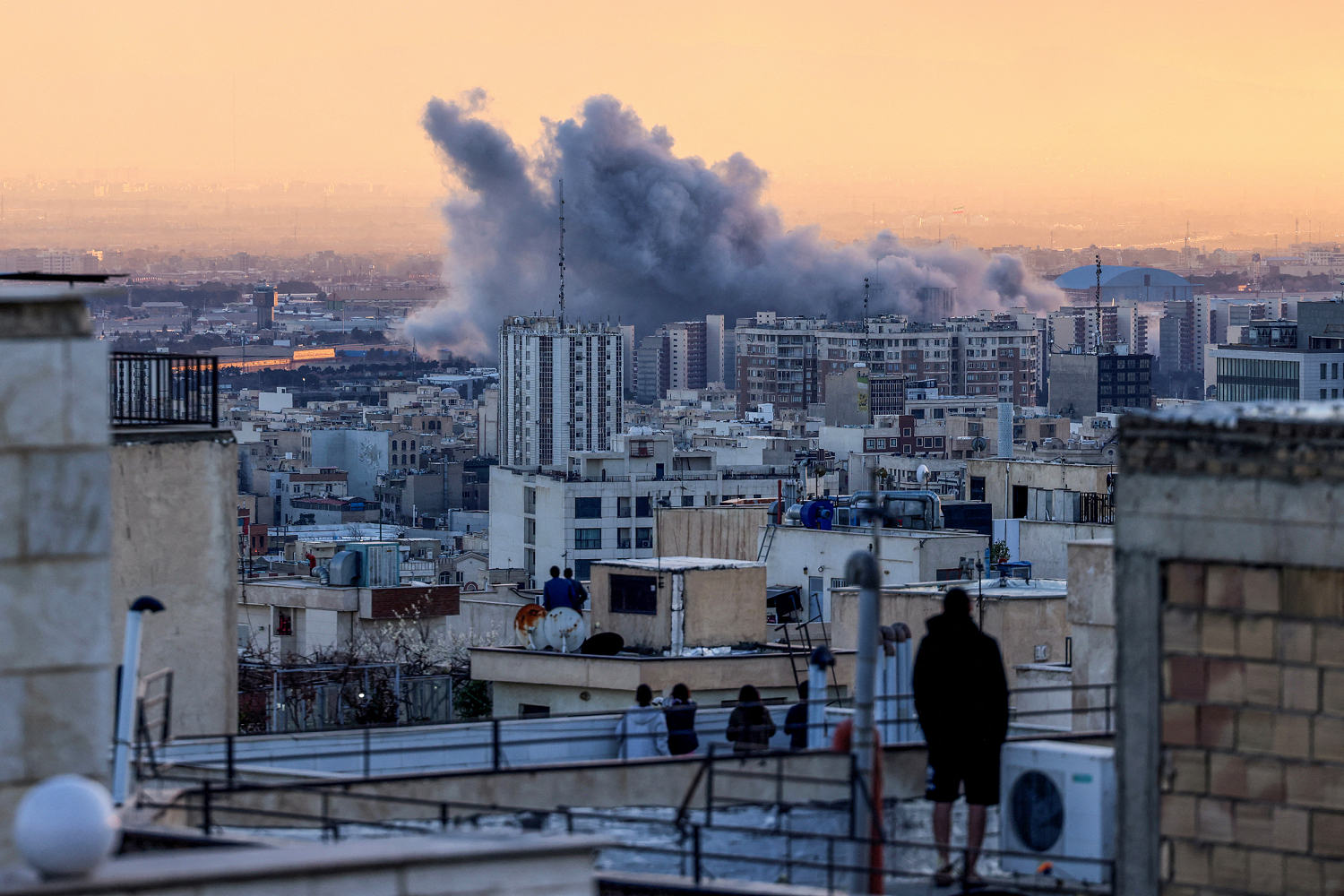
The tactical logic whispering through the halls of the West Wing is as seductive as it is dangerous. With the supreme leader dead and the Islamic Revolutionary Guard Corps (IRGC) reeling from the precision of Operation Epic Fury, the Trump administration is looking for a hammer to shatter the remaining glass. That hammer, according to high-level intelligence sources and recent diplomatic cables, is a rejuvenated, armed-to-the-teeth coalition of Iranian Kurdish opposition groups.
By funneling advanced weaponry and CIA-backed logistics to the Coalition of Political Forces of Iranian Kurdistan (CPFIK), Washington intends to force Tehran into a brutal choice. Either the regime pulls its remaining elite units away from the crumbling central government to defend the western border, or it loses control of the mountainous Kurdish heartland entirely. This is not just a policy shift; it is a calculated bet that ethnic fragmentation will succeed where forty years of sanctions failed.
The New Arsenal of the Peshmerga
The nature of the support currently under discussion in Erbil and D.C. goes far beyond the small arms and vintage RPGs of previous decades. Sources familiar with the planning indicate that the CIA is evaluating the deployment of man-portable air-defense systems (MANPADS) and sophisticated anti-tank guided missiles (ATGMS) to Kurdish units.
The goal is to neutralize the IRGC’s one remaining advantage on the ground: its fleet of aging but lethal T-72 tanks and attack helicopters. If Kurdish fighters can hold the mountain passes of West Azerbaijan and Kurdistan provinces, they create a "liberated zone" that serves as a beacon for the broader Iranian protest movement. It is a strategy of geographic infection—using a secure periphery to rot the center.
A History of Broken Promises
For the veteran analyst, the current enthusiasm in the White House feels like a haunting refrain. The Kurds have been the West’s most reliable, and most discarded, ally for a century. From the betrayal after the 1975 Algiers Agreement to the abrupt 2019 withdrawal from northern Syria, the precedent is clear. Washington uses Kurdish blood to buy regional leverage, only to sell that leverage back to the highest bidder when the geopolitical winds shift.
This time, the stakes are higher because the target is more desperate. Tehran is already retaliating. Ballistic missile strikes have already hammered the headquarters of the Democratic Party of Iranian Kurdistan (PDKI) and the Kurdistan Freedom Party (PAK) near Koya. The regime knows that if the Kurds successfully establish a bridgehead, the multiethnic fabric of Iran—including the Baluch in the east and the Azeris in the north—could begin to unravel.
The Technology of Insurgency
What makes 2026 different from previous Kurdish uprisings is the digital dimension. The Trump administration is reportedly considering the deployment of "Starlink-in-a-suitcase" kits to Kurdish commanders. These portable satellite terminals provide high-bandwidth, jam-resistant communication, allowing disparate Peshmerga units to coordinate strikes in real-time without relying on compromised Iranian cellular networks.
Furthermore, the introduction of commercial-off-the-shelf (COTS) loitering munitions—commonly known as suicide drones—gives the Kurdish opposition a "poor man's air force." By pairing these with American intelligence-sharing, the CPFIK can target IRGC command bunkers and supply lines with a level of precision that was previously the sole domain of nation-states.
The Turkish Veto
No plan involving the Kurds can ignore the shadow of Ankara. President Erdogan has spent years fighting the PKK, and he views any empowerment of Iranian Kurds—specifically the PJAK, which shares an ideological lineage with the PKK—as an existential threat to Turkish security.
Trump has reportedly offered assurances to Turkey that any weaponry provided would be strictly inventoried and directed only toward Iranian targets. History suggests such "assurances" rarely survive the chaos of a hot war. If Turkish intelligence perceives that PJAK is using American-supplied hardware to bolster its influence along the Turkish-Iranian-Iraqi tri-border, Ankara may launch its own "security incursion," potentially bringing two NATO allies into a direct, messy confrontation on the edges of the Iranian collapse.
The Ghost of Civil War
While the administration frames this as a liberation movement, critics within the State Department warn of the "Balkanization" of Iran. Arming ethnic minorities is a shortcut to regime destabilization, but it rarely leads to a stable, democratic successor state. If the Kurdish regions break away, it could trigger a series of ethnic cleansings and territorial disputes that make the Syrian civil war look like a border skirmish.
The Iranian people are generally unarmed. The security services, even in their current degraded state, remain a professional killing machine. By arming the Kurds, the U.S. might be handing the regime the exact propaganda it needs to rally nationalist sentiment. Tehran is already painting the opposition not as freedom fighters, but as foreign-backed separatists intent on dismembering the nation.
Tactical Success or Strategic Suicide
The decision to arm the Kurds is a move of supreme tactical aggression. It forces the IRGC to fight a two-front war: one against the invisible missiles from the sky and another against the very visible fighters in the mountains. But without a clear political roadmap for what happens "the day after" the regime falls, Washington is once again building a house on shifting sands.
The Peshmerga are ready. They have the experience, the will, and now, potentially, the hardware. They are waiting for the final green light from a White House that thrives on disruption but often struggles with the aftermath.
If the weapons flow, the mountains will roar. Whether that roar signals the birth of a new Iran or the start of a decades-long regional tragedy depends entirely on whether Washington has finally learned that an ally is more than just a temporary tool.
The Kurds are no longer interested in being the world's most convenient proxy. They want a state, or at the very least, a permanent seat at the table. If the U.S. isn't prepared to give them that, it shouldn't be surprised when the weapons it provides today are used to settle different scores tomorrow.
Would you like me to analyze the specific types of anti-tank weaponry currently being considered for transfer to the Kurdish coalition?