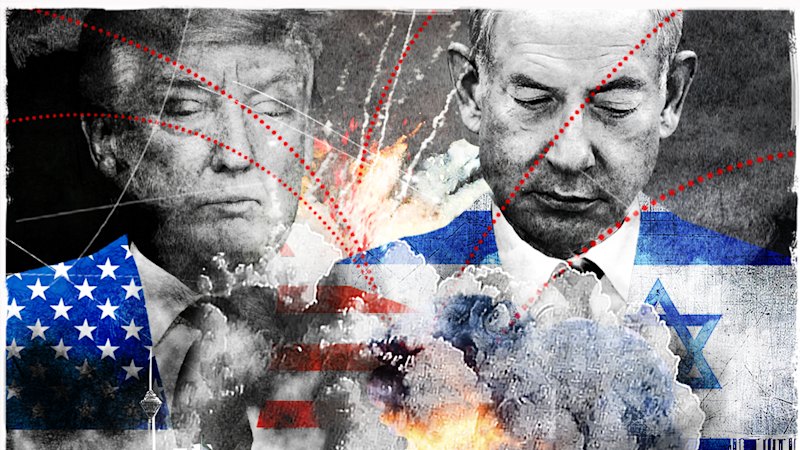
The headlines are screaming about a "widening war." They are wrong. What we are witnessing isn't the sudden collapse of Middle Eastern stability or a slide into an uncontrolled abyss. It is the arrival of a highly calibrated, permanent state of high-friction equilibrium. The media paints a picture of a "spark" hitting a "powder keg," but that metaphor is sixty years out of date. Today, the region is a series of interconnected pressure valves. Every strike from Israel, every retaliatory drone from the Axis of Resistance, and every U.S. carrier deployment is a calculated move in a game that has no intention of ending.
We have moved past the era of "peace vs. war." We are now in the era of Perpetual Kinetic Friction.
The Fallacy of the Escalation Ladder
Standard geopolitical analysis relies on the "escalation ladder," a concept popularized by Herman Kahn during the Cold War. The idea is simple: Step A leads to Step B, which leads to Step C (total war). But in the current conflict between Israel, the U.S., and Iran’s network, the ladder has been replaced by a treadmill.
Parties are running at full speed, hitting each other with ballistic missiles and precision strikes, yet the geography of the conflict remains remarkably static. Why? Because every player involved has a vested interest in the process of conflict rather than its resolution.
Israel’s tactical objective is "mowing the grass"—a term they use to describe the periodic degradation of enemy capabilities. Iran’s objective is "forward defense"—using proxies to keep the fight away from its own borders. The U.S. objective is "containment through presence." None of these strategies aim for a "win" in the traditional sense. They aim for the management of an ongoing threat. When you hear pundits talk about "restoring deterrence," they are selling you a fantasy. Deterrence isn't a light switch; it’s a subscription service that requires monthly payments in the form of blood and hardware.
The Myth of Iranian "Irrationality"
The most dangerous misconception in the current discourse is that Tehran is a chaotic actor driven by religious fervor. This view is intellectually lazy and strategically disastrous. If you want to understand the Middle East, you have to stop looking at it through the lens of a crusade and start looking at it as a boardroom.
Iran is perhaps the most cold-bloodedly rational actor in the theater. They have mastered the art of "Strategic Patience." They understand a fundamental truth that the West keeps forgetting: You don't need a superior Air Force if you have superior geography and a cheaper cost-per-kill.
Consider the math. An Iranian-made Shahed-136 drone costs roughly $20,000 to $50,000. An interceptor missile from a Patriot battery or a sea-based Aegis system costs between $2 million and $4 million.
$$Cost Ratio = \frac{Interceptor Cost}{Drone Cost} \approx \frac{2,000,000}{20,000} = 100:1$$
Iran isn't trying to win a dogfight; they are trying to bankrupt the Western defense industrial base. Every time the U.S. "pounds" a proxy site, they are often hitting cheap, replaceable infrastructure with munitions that take eighteen months to manufacture. The "widening war" is actually a massive transfer of wealth and resources from high-tech Western stockpiles into the sand, and Iran is more than happy to provide the targets.
The Buffer State Deception
We are told that Lebanon, Syria, and Yemen are "victims" of this widening war. That is a half-truth. In reality, these are no longer sovereign states in the Westphalian sense. They are "buffer zones" where the great powers of the region conduct their kinetic business so they don't have to do it at home.
I’ve spent enough time analyzing supply chains and logistics in conflict zones to tell you that these territories are now integrated into a "War Economy" that sustains the very militias we claim to be fighting. When the U.S. strikes a Houthi launch site, they aren't just hitting a rebel group; they are hitting a node in a sophisticated, multi-national logistics network that includes front companies in Dubai, shipping lanes in the Red Sea, and tech transfers from the Caspian.
The "outbreak" of war in these regions isn't a failure of diplomacy. It is the successful outsourcing of violence. By keeping the kinetic activity localized in the Levant and the Red Sea, the primary actors—Washington and Tehran—ensure that the oil still flows (mostly) and the global markets don't completely melt down. It’s a cynical, brutal, and highly effective way to manage a rivalry.
Stop Asking if it Will Spread
The most common question I get is: "Will this spread to a direct war between the U.S. and Iran?"
This is the wrong question. It assumes that "direct war" is something that happens on a specific date with a formal declaration. In the 21st century, war is a spectrum, not a binary. We are already in a direct war. When U.S. intelligence provides the coordinates for a strike that kills an IRGC commander, that is direct war. When Iranian cyber units hit Western infrastructure, that is direct war.
The reason it doesn't "spread" to the point of total mobilization is that both sides have done the math on the "Day After" scenario.
- The Strait of Hormuz Trap: If Iran is pushed to the brink, they close the Strait. Global oil prices don't just go up; they teleport. No U.S. President—Republican or Democrat—can survive $15-a-gallon gas.
- The Proxy Paradox: If the U.S. decapitates the Iranian regime, they inherit the management of a fractured, radicalized Shia crescent spanning four countries. We saw how well that worked in Iraq. Hint: It didn't.
- Israel’s Internal Clock: Israel's economy is built on tech and foreign investment. It cannot sustain a total mobilization of its reservists for years on end. They need the war to be intense but contained.
The Business of Chaos
While the "lazy consensus" mourns the loss of peace, the defense sector is experiencing a renaissance. This isn't just about stocks going up; it’s about a fundamental shift in how we value security. We are moving away from the "Peace Dividend" era of the 1990s and into the "Fortress Era."
If you are waiting for a diplomatic breakthrough or a "Grand Bargain," you are going to be waiting a long time. The current friction is too profitable—politically and economically—for the people in charge. It allows leaders on all sides to point to an external "existential threat" to distract from internal failings. It justifies massive defense budgets. It provides a real-world testing ground for autonomous weapons and AI-driven targeting.
The Brutal Reality of "Stability"
You want actionable advice? Stop looking for the exit ramp. There isn't one.
For businesses and investors, the "Middle East Risk" shouldn't be a temporary line item in your quarterly report. It should be the baseline. The "widening war" is actually the new perimeter of the global system. The volatility is the feature, not the bug.
We are not watching the world fall apart. We are watching a new, more violent world being assembled in real-time. It’s a world where "winning" is replaced by "outlasting," and where the most successful players are the ones who can tolerate the most friction for the longest period.
The U.S. and Israel will keep hitting. Iran and its allies will keep hitting back. The news will keep using words like "unprecedented" and "on the brink." And tomorrow, the sun will rise over a region that is exactly as broken, and exactly as stable, as it was the day before.
The war hasn't widened. It's just finally found its rhythm.
Accept the friction or get out of the way.