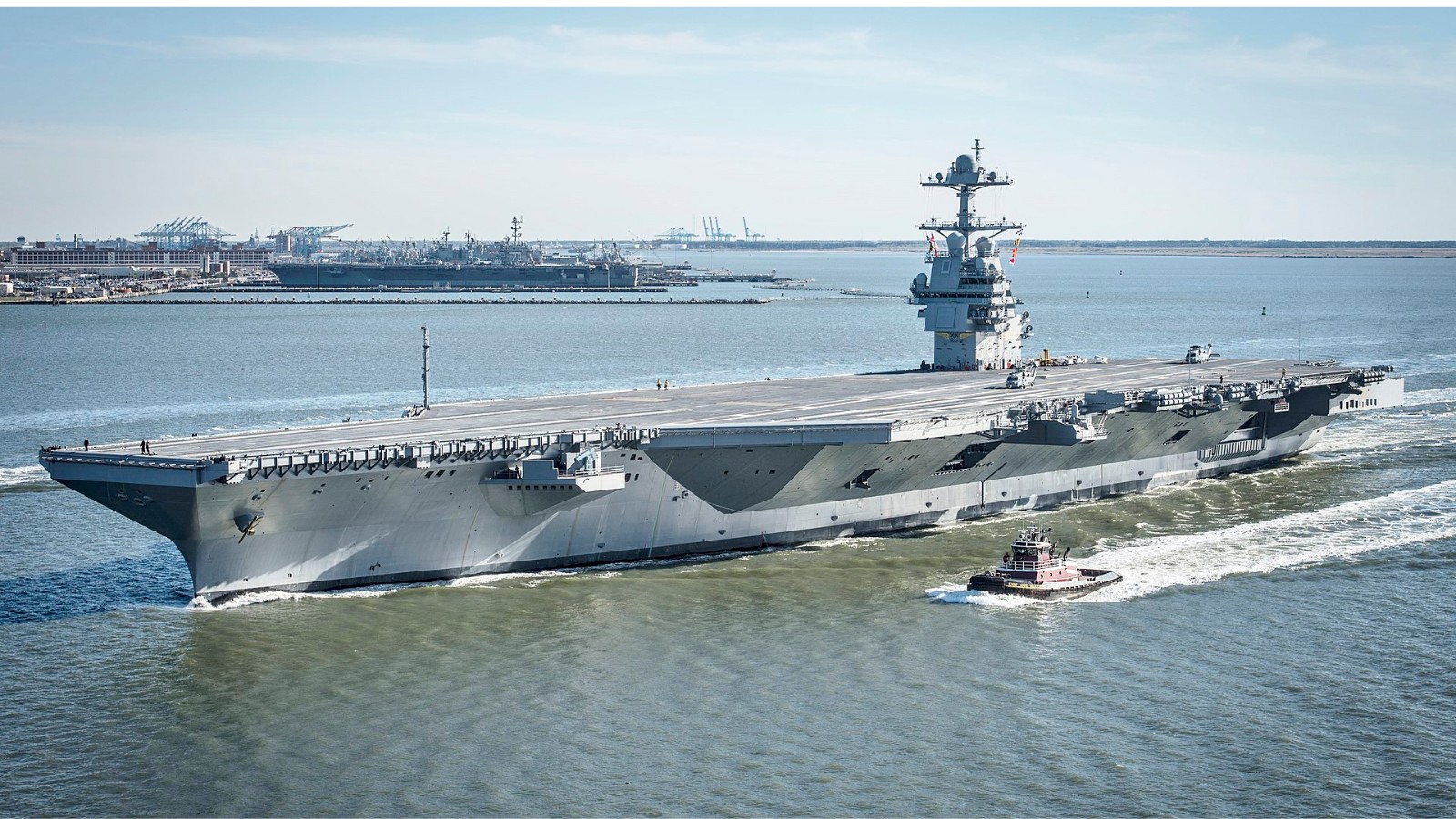
The foreign policy establishment is obsessed with the "symbolic strike." They talk about "sending a message" or "restoring deterrence" as if geopolitics were a high-stakes game of Gmail. They argue that a surgical strike on Iranian soil—perhaps hitting a drone facility or a command node—serves as a necessary calibration of power.
They are wrong.
In modern warfare, symbolism is a luxury for the weak. When the United States considers a kinetic action against a regional power like Iran, treating it as a communicative tool is a recipe for catastrophic miscalculation. The "lazy consensus" suggests that limited strikes can contain a conflict. In reality, they almost always act as an accelerant for the very asymmetric escalation they seek to prevent.
The Myth of the Surgical Message
Pundits love the term "surgical." It implies precision, cleanliness, and a lack of collateral consequences. In the context of Iran, there is no such thing as a surgical strike. Every kinetic action is an entry into a complex feedback loop.
When you strike a target in Iran, you aren't just hitting a building. You are testing a regime's domestic survival. The Iranian leadership does not view a "symbolic" strike on their sovereignty through the lens of Western diplomatic signaling. They view it as a binary: either they respond and maintain internal legitimacy, or they remain silent and invite a coup or a revolution.
If the goal is "deterrence," a limited strike achieves the opposite. It provides the IRGC (Islamic Revolutionary Guard Corps) with the domestic mandate to activate its entire "Axis of Resistance." We’ve seen this play out. Following the 2020 strike on Qasem Soleimani, the consensus was that Iran was "put in its place." The reality? It triggered a multi-year intensification of drone technology transfers and a hardening of proxy networks that now stretch from the Bab al-Mandab Strait to the Mediterranean.
Deterrence is Dead; Long Live Entrenchment
The fundamental misunderstanding in Washington is the belief that Iran operates on a Western cost-benefit analysis. We think: "If we destroy $500 million of their hardware, they will stop." They think: "If we lose $500 million of hardware, we will make the Americans spend $5 billion in fuel and ship maintenance to defend a trade route we can disrupt with a $20,000 Shahed drone."
This is the Asymmetric Deficit.
- Cost Disparity: A single interceptor missile fired from a U.S. destroyer costs roughly $2 million. The drone it knocks down costs less than a used Honda Civic.
- Political Will: The U.S. operates on an election cycle. Tehran operates on a civilizational timeline.
- Geography: You cannot "symbolically" bomb away the fact that Iran sits on the world's most vital energy artery.
I’ve watched planners burn through billions trying to "message" their way out of a geography problem. You don't solve a geographical reality with a Tomahawk missile. You only irritate it.
The False Promise of "Limited" Escalation
The competitor's view often leans on the idea that escalation can be controlled, like a thermostat. This is a dangerous hallucination. Escalation is a slide, not a ladder. Once the first "symbolic" kinetic action is taken, the initiative passes entirely to the adversary.
Imagine a scenario where a U.S. strike hits a missile depot near Isfahan. The "symbolic" intent is to show resolve. The Iranian response isn't a return strike on a U.S. base—which would be predictable. Instead, they "accidentally" lose control of a sea mine in the Strait of Hormuz. Global oil prices jump 15% in four hours. Insurance premiums for tankers skyrocket. Suddenly, the "symbolic" strike has caused a global inflationary shock that hits every voter in the American Midwest.
Who won that exchange? Not the side that "sent the message."
The Technology Trap
We are currently witnessing the democratization of precision strike capabilities. For decades, only the U.S. could project power with "symbolic" accuracy. That era ended five years ago.
Iran's drone program is not a collection of toys; it is a decentralized, modular manufacturing powerhouse. A "symbolic" strike on a factory does nothing when the blueprints are distributed and the components are dual-use electronics available on the open market. We are trying to use 20th-century "Big Wing" diplomacy against a 21st-century "Swarm" reality.
The obsession with hitting physical targets ignores the fact that Iran’s primary weapon is its strategic depth through proxies. You cannot bomb a relationship. You cannot kineticize your way out of the fact that Hezbollah has 150,000 rockets pointed at a key regional ally.
The Cognitive Dissonance of "Restoring the Status Quo"
People ask: "What's the alternative? Do we just let them do whatever they want?"
This question is flawed because it assumes the "status quo" is something that can be restored. The Middle East of 2026 is not the Middle East of 2003. The regional powers—Saudi Arabia, the UAE, Qatar—are no longer interested in being the stage for an American-Iranian shadow war. They are hedging. They are joining BRICS. They are signing deals in Beijing.
A "symbolic" U.S. strike today doesn't just provoke Iran; it alienates our remaining allies who don't want to deal with the fallout. They see American kinetic action not as leadership, but as an unpredictable variable that disrupts their own economic diversification plans.
The Brutal Reality of Regional Hegemony
If the United States wants to actually change Iran’s behavior, it has to stop thinking about "strikes" and start thinking about atrition.
- Stop the Hardware Fixation: Hitting a radar site is a temporary fix.
- Aggressive Cyber Interdiction: This isn't about "symbolism"; it's about making the regime's banking and internal security systems non-functional without firing a shot.
- Accepting the Cost: If you want to stop Iran, you have to be willing to engage in a full-scale regional realignment that includes uncomfortable concessions to other actors.
Most leaders aren't willing to do that. So they settle for the "symbolic strike"—the foreign policy equivalent of a "thoughts and prayers" tweet. It looks good on the news, it satisfies the hawks for 48 hours, and it leaves the underlying strategic disaster exactly where it was, but with more fire.
The Failure of Signal Intelligence
We often assume we know how Tehran will perceive a strike. Our intelligence communities are excellent at counting missiles but mediocre at weighing pride. A strike that we view as "calibrated" might be seen by them as "existential." When you play with "symbolic" violence, you are betting the global economy on your ability to read the mind of a Supreme Leader.
That is not a strategy. That is a gamble.
The "insider" consensus is that we need to "do something." But in the theater of the Middle East, "doing something" for the sake of appearances is usually the fastest way to lose the plot. If you aren't prepared for the third, fourth, and fifth order consequences—including the closure of the Strait and the activation of sleeper cells in Europe—then your "symbolic strike" is just a high-budget temper tantrum.
Stop asking if a strike is "symbolic." Start asking if it's decisive. If it isn't decisive—and against a country of 88 million people with a mountainous terrain and a decentralized military, it almost never is—then you are just punching a beehive and wondering why you're getting stung.
The era of "Sending a Message" is over. In the new landscape, if you aren't prepared to finish the fight, don't start the conversation.