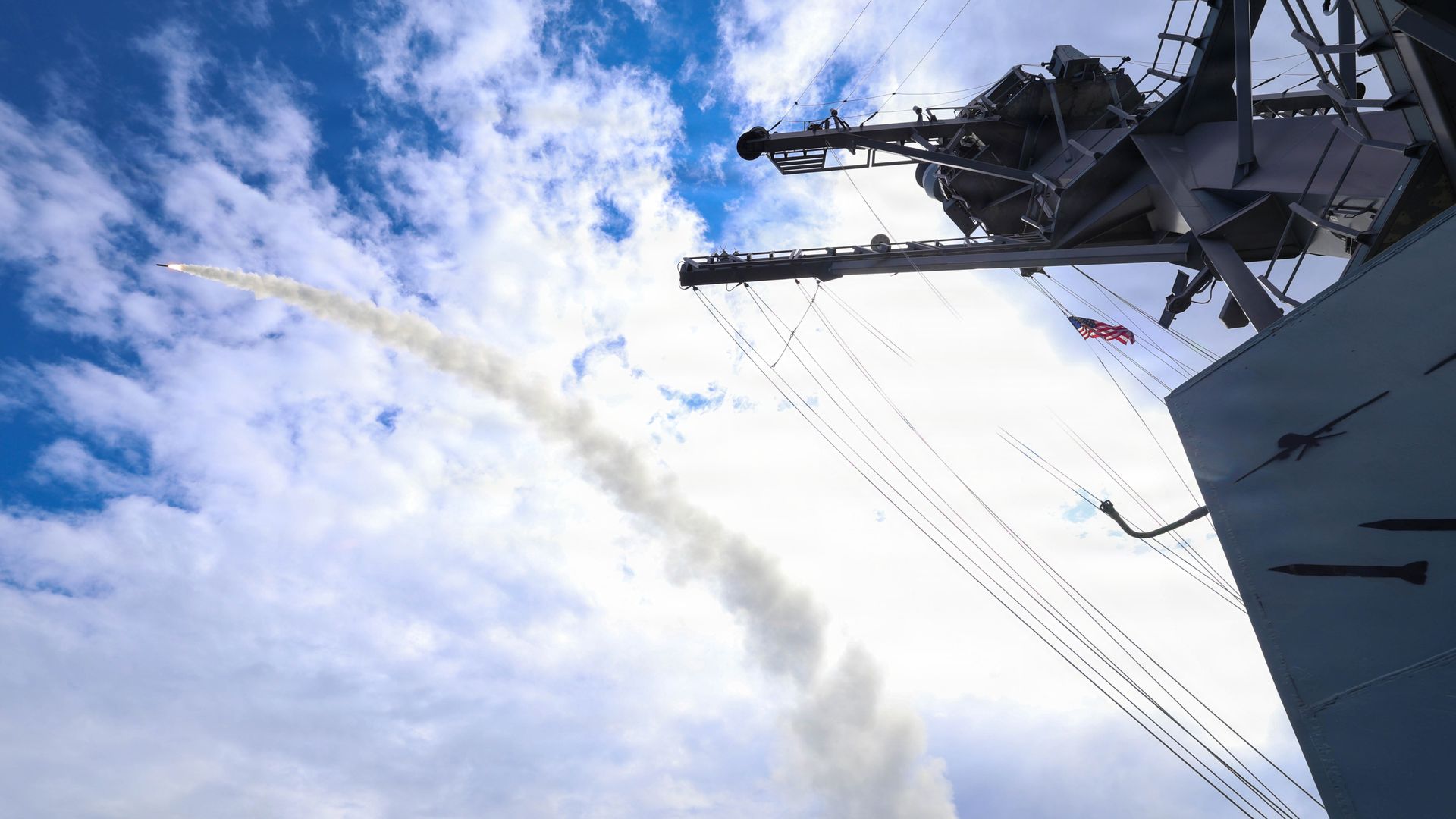
The United States is currently navigating a period of "Kinetic Insolvency," where the rate of munitions consumption in active theater support vastly outpaces the domestic capacity for replenishment. While political discourse focuses on the dollar value of aid packages, the actual strategic constraint is the physical throughput of the defense industrial base (DIB). This discrepancy creates a transparency of weakness that adversarial states use to calibrate their own escalatory timelines. Understanding this crisis requires moving beyond headlines to analyze the three structural pillars of munitions procurement: Lead-time Latency, Component Monocultures, and The Surge Capacity Paradox.
The Physics of the Supply Chain: Why Capital Cannot Buy Time
A common fallacy in defense analysis is the assumption that increased funding translates immediately to increased output. In munitions production, the relationship between capital and product is non-linear and governed by rigid physical constraints. If you found value in this piece, you should look at: this related article.
- Chemical Synthesis Bottlenecks: Modern explosives like IMX-101 (Insensitive Munitions Explosives) or traditional TNT require specialized chemical precursors. The U.S. has transitioned much of its foundational chemical processing to a handful of aging facilities, such as the Holston Army Ammunition Plant. If a primary distillation column or a specific synthesis vat fails, the entire production line for 155mm shells or GMLRS (Guided Multiple Launch Rocket Systems) halts, regardless of the billions of dollars allocated by Congress.
- Machine Tool Specialization: Producing a precision-guided munition is not an assembly-line process similar to automotive manufacturing. It requires high-precision CNC (Computer Numerical Control) machines and specialized "flow-forming" equipment for rocket motor cases. These machines have lead times of 12 to 24 months. You cannot "rush" the creation of a machine that must maintain tolerances of a fraction of a millimeter while shaping high-strength steel.
- The Solid Rocket Motor (SRM) Constraint: Nearly every tactical missile, from the Javelin to the Patriot (PAC-3), relies on SRMs. The domestic market for these motors has consolidated into a near-duopoly. When demand spikes across multiple weapon systems simultaneously, these providers face a "scheduling collision" where they must choose which national priority to fulfill first.
The Three Pillars of Attrition
To quantify the current deficit, we must categorize the drain on the stockpile into three distinct operational pressures.
Pillar I: Proxy Consumption Rates
In high-intensity conventional warfare, munitions are consumed at "World War II" scales, but manufactured at "Cold War" boutique speeds. A single month of high-intensity artillery usage in Eastern Europe can exceed the total annual production of the entire U.S. industrial base. This creates a Negative Inventory Delta, where the national reserve is being cannibalized to sustain foreign theater requirements. For another angle on this story, refer to the recent update from TIME.
Pillar II: Deterrence Decay
The primary function of a munition stockpile is not its use, but its existence. Strategic competitors—specifically China in the Indo-Pacific—calculate their windows of opportunity based on the U.S. Navy’s magazine depth. If the U.S. exhausts its supply of Long Range Anti-Ship Missiles (LRASMs) or Standard Missile 6 (SM-6) interceptors in secondary theaters, the cost-benefit analysis for an adversary shifting toward a "fait accompli" invasion changes in their favor.
Pillar III: The Technical Debt of Obsolescence
As the U.S. drains its "Tier 1" stocks (the newest, most capable versions of a missile), it is forced to backfill with "Tier 2" or "Tier 3" legacy systems. These older systems often have lower Pk (Probability of Kill) ratios, meaning more units must be fired to achieve the same tactical effect, further accelerating the rate of depletion.
The Cost Function of Modern Precision
The shift from "dumb" iron bombs to Precision Guided Munitions (PGMs) was intended to reduce the number of sorties required to destroy a target. While this was effective for counter-insurgency operations, it has created a dangerous dependency in large-scale combat operations (LSCO).
The cost function of a single modern interceptor, such as those used to defend shipping in the Red Sea, often exceeds the cost of the threat it neutralizes by a factor of 10 or 100. This is Economic Attrition. When an AEGIS destroyer fires a $2 million missile to down a $20,000 loitering munition, the defender is losing the long-term war of industrial endurance. The adversary does not need to hit the ship; they only need to make the ship "empty." An empty destroyer, no matter how technologically advanced, is a multi-billion dollar liability.
Component Monocultures and Single Points of Failure
The fragility of the DIB is exacerbated by a lack of "Horizontal Redundancy." In the quest for efficiency and lower costs during the post-Cold War "peace dividend," the Department of Defense allowed the supply chain to narrow into single-source dependencies.
- Microelectronics: Many guidance systems rely on Field Programmable Gate Arrays (FPGAs) or specific microchips that, while designed in the U.S., rely on a globalized supply chain for packaging and testing. A disruption in the South China Sea would simultaneously increase the demand for missiles and cut off the components needed to build them.
- Energetics: The United States no longer produces several key energetic compounds domestically in sufficient quantities. Reliance on "friendly" but distant nations for the raw materials used in propellants creates a geographic vulnerability. If sea lanes are contested, the "just-in-time" delivery model for explosives collapses.
- Rare Earth Elements (REEs): From the permanent magnets in fin-actuators to the sensors in infrared seekers, REEs are the "connective tissue" of modern weaponry. The current market dominance of China in the processing of these elements allows them to exert "Pre-Kinetic Sabotage" by throttling exports before a single shot is fired.
The Surge Capacity Paradox
The U.S. military-industrial strategy currently rests on a paradox: It maintains a "warm" base that is optimized for low-volume, high-margin production, yet its strategic planning assumes the ability to "surge" to high-volume output during a crisis.
In a commercial software environment, scaling involves adding server instances. In munitions manufacturing, scaling requires hiring and vetting thousands of specialized technicians, clearing them for security protocols, and training them in volatile chemical handling. This human capital bottleneck is perhaps the most difficult to resolve. You cannot "crunch" the training of a master welder or a precision machinist into a three-week program without compromising the safety and reliability of the weapon.
Furthermore, the "Bullwhip Effect" plagues the DIB. When the Pentagon places a massive order for 155mm shells, the Tier 1 prime contractors ramp up. However, the Tier 3 and Tier 4 suppliers (who provide the fuses, the primers, and the gaskets) may not receive the capital or the long-term guarantees needed to expand their own facilities. This results in a "hollow surge" where the shell casings are ready, but the fuses are delayed by 18 months.
The Strategic Calculus of Adversaries
Enemies are not just noticing the "burning" of ammo; they are cataloging the Reconstitution Rate. By observing how long it takes the U.S. to replace specific classes of weapons—such as the Stinger MANPADS, which hadn't been in mass production for years—adversaries gain a precise map of American "Industrial Blind Spots."
This leads to a strategy of Saturation Targeting. If an adversary knows the U.S. only produces X number of high-end interceptors per year, they can design an attack involving X+1 targets. The goal is to force the U.S. into a "Choice of Evils":
- Exhaust the domestic reserve to win a regional skirmish, leaving the homeland or other theaters undefended.
- Withhold the munitions, accepting a tactical defeat to preserve strategic readiness.
Redefining the Industrial Base as a Weapon System
To exit the Kinetic Deficit, the DIB must be treated not as a collection of private vendors, but as a functional weapon system in its own right. This requires a transition from "Efficiency-Based Procurement" to "Resiliency-Based Procurement."
Implementation of Multi-Year Procurement (MYP)
Historically, the DoD bought munitions on a year-to-year basis. This prevented small suppliers from investing in facility expansion. Shifting to five-year or ten-year firm-fixed-price contracts provides the "Demand Signal" necessary for private capital to flow into the defense sector.
Modular Open Systems Architecture (MOSA) for Munitions
We must break the "Vendor Lock" where a specific missile can only use a specific seeker from a specific company. By standardizing the interfaces within the munition itself, the DoD could swap in different components based on what is available in the supply chain, creating a "hot-swappable" industrial model.
Strategic Buffer Stocking of Precursors
The government must maintain a "Strategic Energetics Reserve" similar to the Strategic Petroleum Reserve. This involves stockpiling the raw chemicals, specialized metals, and microchips that have the longest lead times, allowing the assembly lines to keep moving even if the primary supply chain is severed.
The current trajectory indicates that the U.S. is prioritizing the sophistication of its munitions at the expense of their volume. In a peer-to-peer conflict, quantity has a quality of its own. The inability to mass-produce precision is a self-correcting problem: eventually, you simply run out of precision and are forced back to more primitive, less effective means of warfare.
The immediate strategic requirement is the "Cold Start" re-industrialization of the energetics and casting sectors. Without a domestic, high-volume capacity to synthesize propellants and forge casings, the most advanced guidance software in the world is merely a sophisticated paperweight. The focus must shift from "How much does it cost?" to "How many can we build per month under fire?" This shift in metric is the only way to restore the credibility of the American deterrent.
The final strategic play is not a gradual increase in funding, but a radical "Force Mobilization" of the supply chain. This involves invoking the Defense Production Act not just for end-items, but for the sub-tier components—the resins, the specialized steels, and the chemical precursors—that currently constitute the true "choke points" of American power. We must overbuild capacity now to ensure we never have to use it. Failure to do so invites the very conflict the stockpiles were meant to prevent.