The debate regarding United States "boots on the ground" in Iran is frequently framed through the lens of political will or moral justification, yet these variables are secondary to the immutable physical and logistical constraints of the Iranian theater. A ground invasion of the Islamic Republic of Iran represents a distinct category of military impossibility compared to previous 21st-century engagements in Iraq or Afghanistan. To understand the likelihood of intervention, one must move beyond the rhetoric of "regime change" and analyze the three structural pillars that dictate the feasibility of such a campaign: geographic friction, the density of asymmetric defensive systems, and the catastrophic failure of the regional logistics hub model.
The Geographic Tax: Topography as a Force Multiplier
Iran is a natural fortress. Unlike the flat, desert plains of Iraq that facilitated rapid armored maneuvers during Operation Iraqi Freedom, Iran’s geography is dominated by the Zagros Mountains to the west and the Alborz to the north. This terrain imposes a massive "geographic tax" on any invading force, significantly degrading the efficacy of traditional combined-arms operations. Also making waves lately: Finland Is Not Keeping Calm And The West Is Misreading The Silence.
The central plateau is surrounded by rugged peaks that reach altitudes exceeding 12,000 feet. For a ground force to reach Tehran or the industrial centers of the interior, it would be forced into narrow mountain passes—choke points that negate the US advantage in satellite surveillance and long-range precision fires. In these corridors, the tactical advantage shifts to the defender. Man-portable air-defense systems (MANPADS) and anti-tank guided missiles (ATGMs) become exponentially more effective when utilized from elevated, concealed positions against a confined climbing force.
Furthermore, the scale of the theater is often underestimated. Iran is approximately 1.6 million square kilometers, nearly four times the size of Iraq and twice the size of Turkey. Occupation would require a troop-to-population ratio that exceeds the current total active-duty capacity of the US Army and Marine Corps combined. If we apply the standard counter-insurgency (COIN) ratio of 20 security personnel per 1,000 inhabitants, an occupation of Iran’s 88 million people would require a force of roughly 1.7 million—a logistical and political impossibility in the modern era. Additional insights into this topic are detailed by The Washington Post.
The Anti-Access Area-Denial (A2/AD) Matrix
The US military relies on "sanctuary"—the ability to build up forces in a safe rear area (like Kuwait or Qatar) before launching an offensive. Iran’s military doctrine is specifically designed to eliminate this sanctuary through a layered A2/AD strategy. This system is not intended to win a conventional war, but to make the cost of entry prohibitively high.
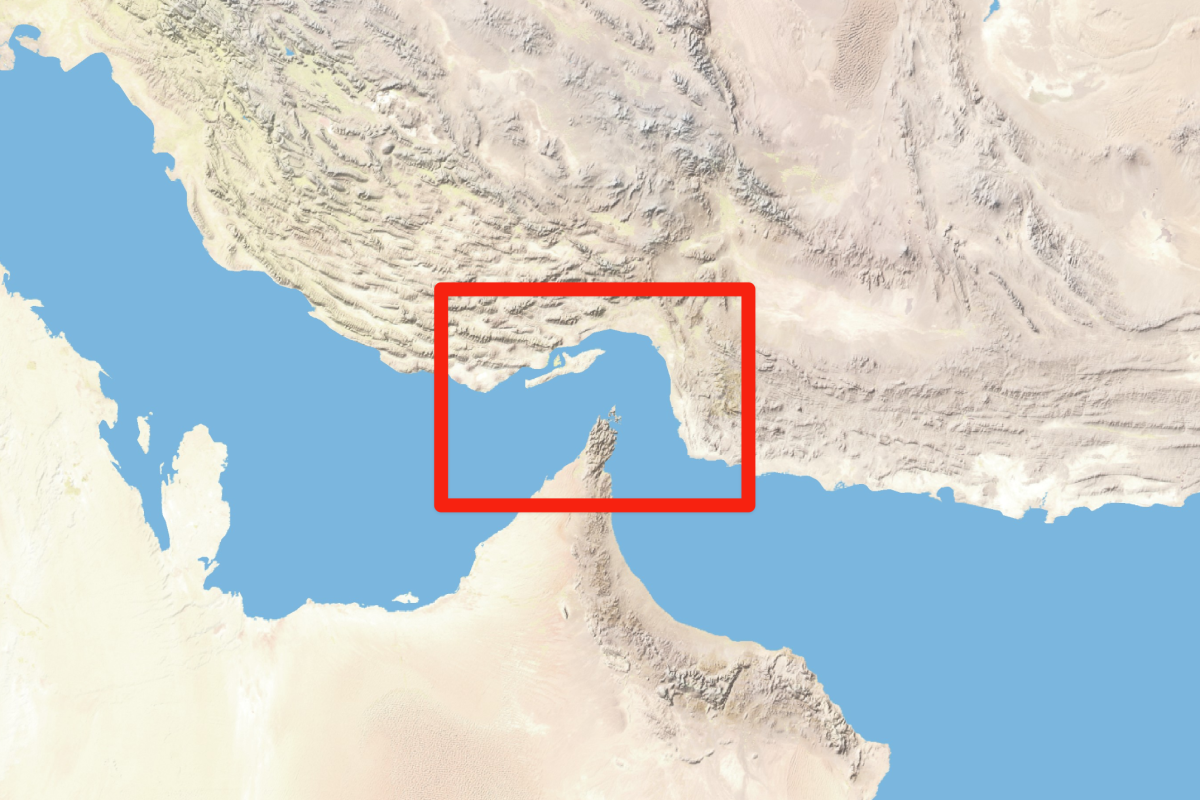
- The Littoral Dead Zone: The Persian Gulf is a narrow, shallow waterway. Iran has invested heavily in "swarming" tactics involving hundreds of fast-attack craft armed with short-range missiles and naval mines. In a high-intensity conflict, the Strait of Hormuz becomes a graveyard for large surface combatants. The US would be forced to operate its Carrier Strike Groups from the Arabian Sea, significantly increasing the flight distance for sorties and reducing the "time on station" for close air support.
- Missile Volumetric Saturation: Iran possesses the largest ballistic and cruise missile arsenal in the Middle East. Any attempt to stage a ground force in neighboring countries would face immediate, high-volume strikes. The objective of these strikes is not necessarily to destroy the invading force entirely, but to disrupt the "Iron Mountain" of logistics—fuel depots, ammunition dumps, and runways—required to sustain a ground campaign.
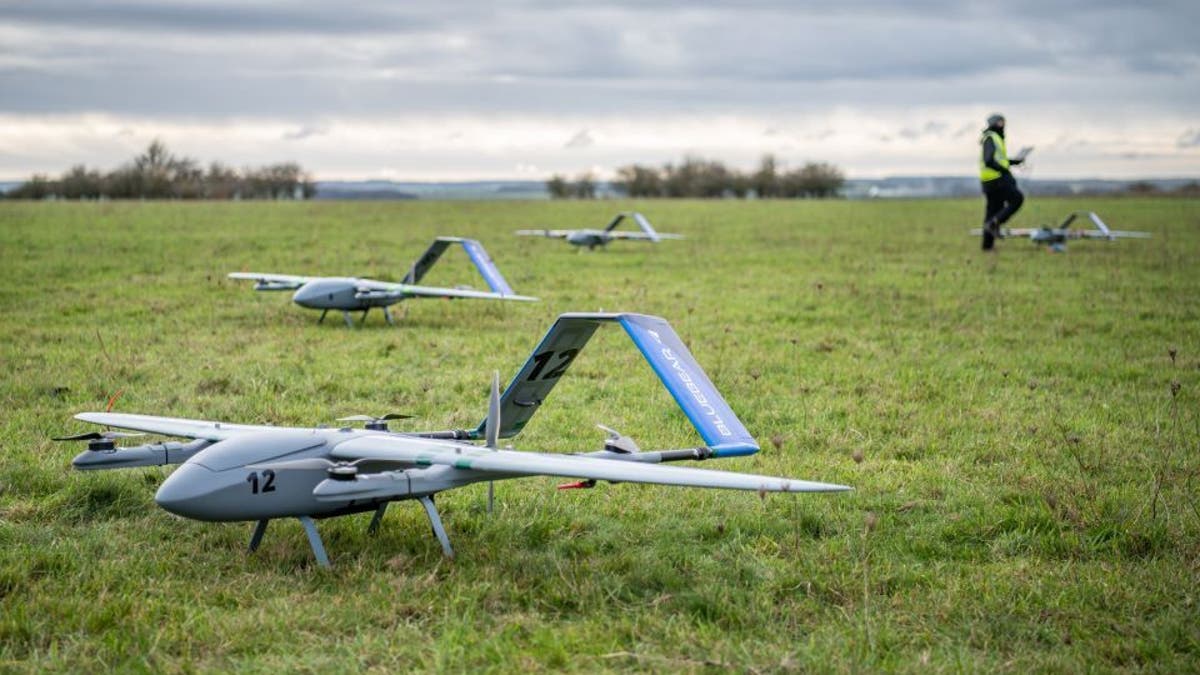
- The Drone-Electronic Warfare Feedback Loop: The proliferation of Iranian loitering munitions (Shahed-series) creates a persistent threat to ground sensors and communication nodes. By integrating these with indigenous electronic warfare (EW) suites, Iran can degrade the GPS-dependency of US precision munitions, forcing a return to "dumb" ordnance and significantly increasing the risk of collateral damage and mission failure.
The Failure of the Regional Proxy Architecture
A ground invasion requires local partners to provide both legitimacy and logistical depth. In the current geopolitical environment, the US faces a "diminishing returns" scenario with regional allies.
The Arab states of the Persian Gulf, while historically wary of Iranian influence, have pivoted toward a policy of de-escalation and economic diversification (e.g., Saudi Arabia’s Vision 2030). These nations recognize that any US-led ground war would turn their own territory into a primary target for Iranian retaliation. The destruction of desalination plants, oil refineries, and power grids in the Gulf Cooperation Council (GCC) states would trigger a global economic depression. Consequently, the US cannot assume the availability of regional basing for a sustained ground campaign.
Without "front-line" states willing to host hundreds of thousands of troops, the US would be forced to conduct an amphibious or airborne entry. History demonstrates that such entries are rarely sustainable against a peer or near-peer adversary with a modern air defense network. The "Boots on the Ground" hypothesis fails because it lacks a viable "Step Zero": the secure assembly of forces.
The Attrition Function: Quantifying the Human and Economic Cost
We must categorize the cost of a ground engagement through a "Triple Attrition" model:
1. Kinetic Attrition
Unlike the insurgencies in Iraq and Afghanistan, a war in Iran would involve high-intensity, conventional combat against a disciplined military (the Artesh) and a highly motivated ideological force (the IRGC). The casualty rates in the first 30 days would likely exceed the total US losses from the entire two-decade "War on Terror." The Iranian military is trained for "passive defense," utilizing extensive underground facilities (UfOs) that are largely immune to standard aerial bombardment, requiring ground forces to clear them room-by-room.
2. Economic Attrition
The closure of the Strait of Hormuz, through which 20% of the world's oil and liquefied natural gas (LNG) passes, would cause an immediate and sustained spike in energy prices. The "war premium" on oil would likely push Brent crude toward $150-$200 per barrel. This would create a global recessionary feedback loop, undermining the domestic political support required to sustain a long-term military commitment.
3. Diplomatic Attrition
A ground invasion would solidify the "Resistance Axis" and likely draw in material support from Russia and China. For Beijing, an Iran tied down in a ground war with the US is a strategic asset; it drains American resources away from the Indo-Pacific theater. For Moscow, it provides a secondary front that distracts from Eastern Europe. The US would find itself in a multi-front "forever war" that lacks an exit strategy because there is no viable local governing body ready to replace the current clerical establishment without triggering a civil war.
The Cognitive Dissonance of Precision Strike vs. Occupation
There is a fundamental misunderstanding in public discourse regarding the difference between a "punitive strike" and a "ground invasion." While the US maintains the capability to conduct devastating aerial and missile strikes against Iranian nuclear sites or military infrastructure, these actions do not require—and in fact, are often undermined by—the presence of ground troops.
Ground forces are used to seize and hold territory. In Iran, holding territory offers no strategic advantage that outweighs the cost of the occupation. If the goal is to prevent nuclear proliferation, aerial interdiction is the primary tool. If the goal is regime change, history suggests that external ground intervention often triggers a "rally 'round the flag" effect, strengthening the very regime the intervention seeks to topple.
The Strategic Play: Integrated Deterrence over Kinetic Entry
The US military is currently transitioning away from the COIN-heavy focus of the 2000s toward "Integrated Deterrence." This strategy recognizes that the most effective way to counter Iranian influence is not through the physical occupation of its soil, but through the containment of its capabilities.
The focus has shifted to:
- Integrated Air and Missile Defense (IAMD): Linking the sensors and interceptors of regional allies to create a "shield" that neutralizes the Iranian missile threat.
- Maritime Interdiction: Using unmanned surface vessels (USVs) and AI-driven surveillance to monitor and disrupt IRGC activities in the Persian Gulf without risking large crews.
- Economic Statecraft: Utilizing the global financial system as a weapon of attrition that operates at a fraction of the cost of a brigade combat team.
The probability of the US putting "boots on the ground" in Iran remains near zero for the foreseeable future, not because of a lack of military power, but because the "physics of the theater" render the ground option a strategic liability. The US will likely continue to rely on a "Standoff Dominance" model—using long-range strike capabilities, cyber warfare, and regional alliances to contain Tehran while avoiding the catastrophic friction of the Iranian interior.
Any strategic planning that accounts for a ground invasion is essentially planning for a global systemic collapse; therefore, the only rational move for US policy is the refinement of asymmetric containment and the fortification of regional partners to ensure that the cost of Iranian aggression remains localized and manageable.
Would you like me to analyze the specific impact of Iranian loitering munitions on US naval doctrine in the Persian Gulf?