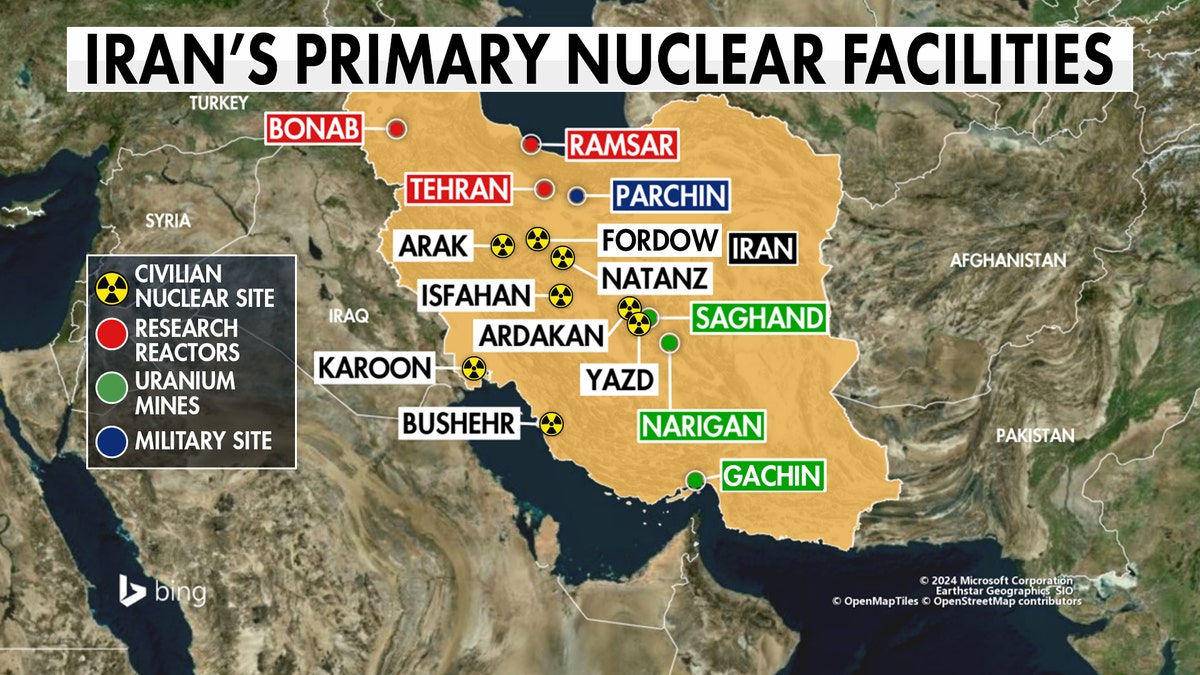
The escalation of direct kinetic engagement between Israel and Iran marks the transition from a "shadow war" governed by plausible deniability to a high-stakes signaling economy. When explosions resonated across Tehran, the primary objective was not immediate total destruction but the recalibration of a deterrence equation that had been destabilized by previous missile exchanges. This operation functions as a live demonstration of aerial supremacy, designed to strip away the perceived security of Iranian critical infrastructure while maintaining a threshold that prevents a full-scale regional conflagration.
The Architecture of Strategic Signaling
To analyze the efficacy of these strikes, one must look beyond the immediate noise of the explosions and categorize the mission into three distinct operational vectors:
- Suppression of Enemy Air Defense (SEAD): Before striking high-value targets, the offensive must neutralize the defensive grid. This includes the degradation of S-300 or local Bavar-373 systems. By blinded radar arrays, the attacker secures a "permissive environment" for subsequent waves, proving that Iranian airspace is technically vulnerable despite decades of investment in anti-access/area denial (A2/AD) capabilities.
- Target Discrimination: The selection of targets—military bases, drone production facilities, or missile assembly plants—serves as a curated message. Striking a Revolutionary Guard facility rather than a civilian power plant or a petroleum refinery signals a preference for military-to-military escalation rather than economic warfare.
- Logistical Interdiction: Disrupting the supply chain of the "Axis of Resistance" requires hitting the nodes where precision-guided munitions are manufactured or stored. This creates a temporal bottleneck, forcing the opponent to divert resources from offensive posture to internal reconstruction.
The Cost Function of Escalation
The decision to strike Tehran involves a complex cost-benefit analysis where the currency is not just financial, but "escalation capital." The friction in this scenario is defined by the following variables:
- The Proximity Factor: Striking the capital city carries a symbolic weight that strikes in peripheral provinces (like Isfahan or Khuzestan) do not. It challenges the "center of gravity" of the regime’s domestic authority.
- The Intelligence Gap: Success depends on the accuracy of human and signals intelligence. If a strike misses its mark or causes unintended collateral damage, the diplomatic cost increases exponentially, potentially alienating Western allies who provide the diplomatic "iron dome" at the UN Security Council.
- The Response Cycle: Every action creates a data point for the adversary. Iranian planners analyze the flight paths, electronic warfare signatures, and munition types used to refine their own defensive algorithms.
Operational Bottlenecks and Technical Constraints
The execution of long-range strikes from Israel to Iran—a distance exceeding 1,500 kilometers—introduces significant engineering and physical constraints. This is not a simple sortie; it is a masterclass in long-range logistical synchronization.
Aerial Refueling and Range Extension
Standard fighter jets, even the F-35I Adir, cannot reach Tehran and return with a full combat load without mid-air refueling. This creates a vulnerability window. Tanker aircraft are "soft targets" and must be protected by a dedicated fighter escort. The presence of these tankers in third-party airspace (such as Jordan or Saudi Arabia) creates a secondary diplomatic friction point. If those nations allow passage, they risk being seen as co-belligerents.
Electronic Warfare (EW) Displacement
The battlefield in the sky is invisible. Before a single bomb is dropped, the electromagnetic spectrum is flooded. Israeli EW suites must jam Iranian early-warning systems while ensuring their own communications remain resilient against GPS spoofing. The "noise-to-signal" ratio during the initial minutes of the strike determines the survival rate of the first wave. A failure here results in a loss of the element of surprise, transitioning the mission from a surgical strike to a high-loss dogfight.
Munition Penetration vs. Hardened Targets
Iran has spent years "going deep," burying its missile silos and nuclear facilities under layers of reinforced concrete and mountain rock. Standard Mk-84 bombs are insufficient. The use of "bunker busters" or specialized GBU-series munitions is required. However, the weight of these munitions further reduces the aircraft's range and maneuverability, creating a trade-off between "punch" and "survivability."
The Psychological Theater of the "Double Tap"
Military planners often use a "double tap" or multi-wave strategy to maximize psychological impact. The first wave creates chaos; the second wave exploits it. In the context of the Tehran strikes, the timing of the explosions—often in the early morning hours—is designed to overwhelm the decision-making cycle of the Iranian leadership.
When the IRGC command wakes up to a degraded air defense network and smoldering missile depots, they face a "trilemma":
- Retaliate immediately with a massive missile barrage, risking a second, even more devastating Israeli response.
- Downplay the damage to save face domestically, which signals weakness to the international community.
- Absorb the hit and pivot to asymmetric warfare via proxies (Hezbollah, Houthis), which maintains the conflict but does not address the core vulnerability of the Iranian mainland.
Structural Failures in Global Intelligence Monitoring
The reliance on open-source intelligence (OSINT) during these events often leads to a "fog of digital war." Social media videos of "explosions" are frequently misidentified anti-aircraft fire or secondary cook-offs from hit ammunition dumps. The analytical error made by most observers is focusing on the flash of the explosion rather than the function of the target.
For instance, hitting a drone assembly line in the Parachin complex is far more strategically significant than hitting a command-and-control center in downtown Tehran. The former removes a capability; the latter merely removes personnel who can be replaced. A data-driven analysis must prioritize the degradation of "hard assets" over symbolic "prestige targets."
Geopolitical Realignment and the "Abrahamic" Variable
The silence or measured responses from regional neighbors like the UAE or Bahrain indicate a shift in the Middle Eastern security architecture. These states are calculating the "Risk-Adjusted Return" of Israeli strength. If Israel can strike Tehran with impunity, it reinforces the value of the Abraham Accords as a security umbrella. Conversely, if Iran successfully intercepts a significant portion of the strike package, the perceived value of Israeli technology drops, potentially pushing Gulf states back toward a rapprochement with Tehran.
The "Cost of Inaction" for Israel reached a tipping point where the risk of a regional war was outweighed by the risk of appearing deterred. By striking the Iranian capital, Israel has effectively moved the "red line" from the Golan Heights to the streets of Tehran.
Anticipating the Kinetic Feedback Loop
The immediate aftermath will be characterized by a "deceptive lull." Iran traditionally favors a delayed, calibrated response. Their planners will likely assess the "damage delta"—the difference between what they expected to lose and what they actually lost—before selecting a response vector.
The most probable strategic play is a shift toward "Grey Zone" aggression. This involves:
- Cyber-attacks on Israeli civilian infrastructure (water, electricity).
- Targeting Israeli-linked maritime assets in the Indian Ocean.
- Increased precision-strike pressure from the Lebanese front to overstretch the Iron Dome.
The cycle of violence has moved from a series of isolated incidents into a continuous feedback loop. The "first-mover advantage" has been seized by Israel, but the "last-mover advantage"—the ability to end the exchange on one's own terms—remains contested. Strategic success will not be measured by the number of buildings destroyed in Tehran, but by whether the Iranian leadership perceives the cost of their next missile launch as prohibitively high.
The operational priority now shifts to "Damage Assessment and Rapid Re-engagement." Planners must utilize satellite imagery to confirm the destruction of the intended nodes and prepare a secondary strike package if the primary objectives were not met. The window for diplomacy has narrowed to a slit, and the language of the region has reverted to its most fundamental form: kinetic output.