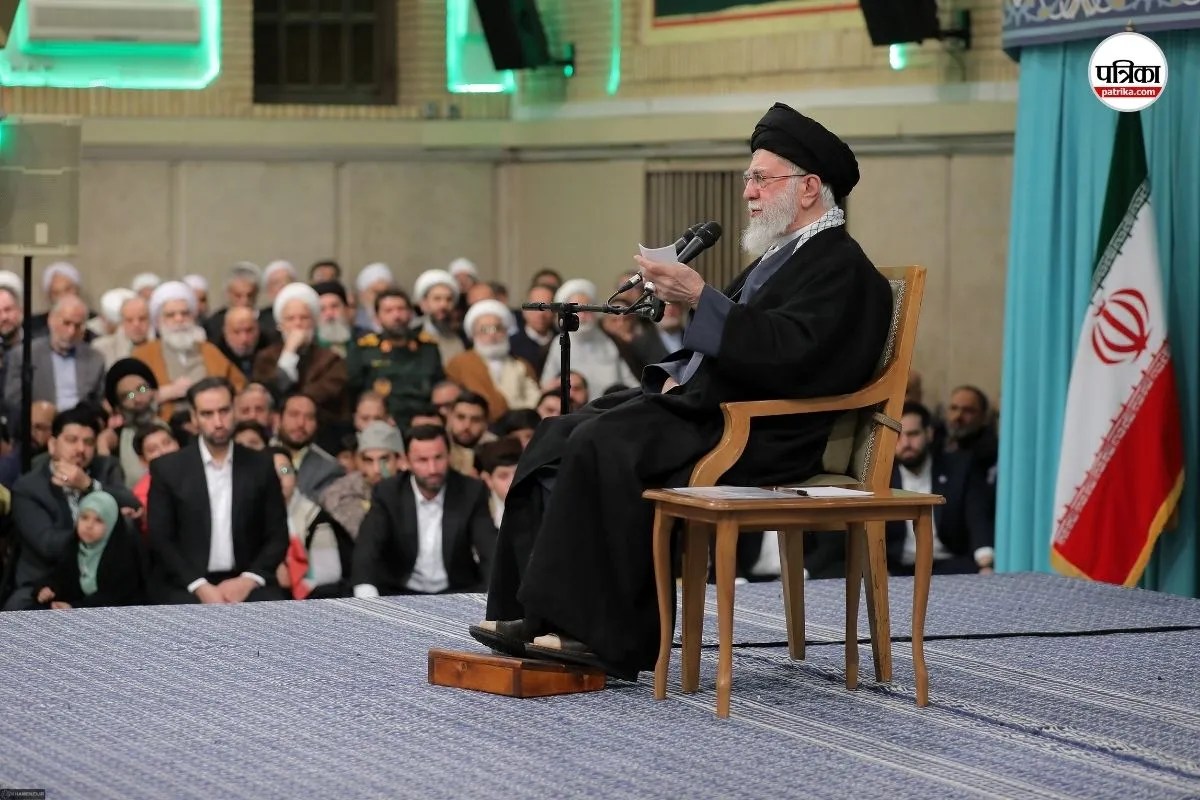
The global media is obsessed with a list of five names. They treat the Iranian succession like a Vatican conclave or a corporate boardroom shuffle. They whisper about Mojtaba Khamenei’s quiet influence or Ebrahim Raisi’s sudden exit from the mortal coil, as if swapping one cleric for another changes the trajectory of a four-decade-old revolutionary engine.
They are wrong. They are asking who sits in the chair when they should be asking who owns the room.
The "lazy consensus" suggests that the next Supreme Leader will be a choice between a hereditary line or a hardline loyalist. This narrative assumes the Office of the Supreme Leader (Velayat-e Faqih) operates in a vacuum of theological purity. It doesn’t. The obsession with "Who is next?" is a distraction from the reality: the Iranian state has already undergone a silent coup. The clergy is the face; the Islamic Revolutionary Guard Corps (IRGC) is the spine, the nervous system, and the bank account.
The Succession is a Shell Game
Speculating on names like Alireza Arafi or Hashem Hosseini Bushehri is an exercise in futility. These men are placeholders for a system that no longer requires a charismatic figurehead.
The Western press loves the "Father to Son" drama surrounding Mojtaba Khamenei. It’s a clean narrative. It fits the "Middle Eastern Despot" trope. But the Islamic Republic was founded on the explicit rejection of hereditary monarchy. Forcing Mojtaba into the role would trigger a legitimacy crisis that the system—specifically the Assembly of Experts—isn't prepared to defend to a cynical public.
More importantly, the IRGC doesn't want another Khomeini. They don't want a towering figure with genuine religious authority who can overrule their strategic and economic interests. They want a manager. They want a rubber stamp.
The Death of the Charismatic Cleric
We have to look at the math of institutional power. In 1979, the clerics held the guns and the gold. Today, the IRGC controls:
- The Khatam al-Anbiya construction conglomerate.
- The primary ballistic missile and drone programs.
- The shadow shipping networks that bypass sanctions.
- The internal security apparatus that actually keeps the streets quiet.
When Ali Khamenei eventually passes, the Assembly of Experts will meet in a room filled with the scent of rosewater and the weight of IRGC surveillance. Any candidate who isn't fundamentally aligned with the Guard's "Forward Defense" doctrine—which keeps wars in Lebanon, Yemen, and Iraq rather than Tehran—won't make it past the first round of tea.
The Fallacy of the Moderate Rise
There is a recurring hallucination among diplomats that a "moderate" successor might emerge from the shadows. This is a misunderstanding of how the Guardian Council has spent the last decade. They haven't just pruned the garden; they’ve salted the earth.
The 2024 elections proved that the regime is no longer interested in the "competitive authoritarianism" that gave the world Rafsanjani or Khatami. They have pivoted to a "purity" model. But purity is expensive. It breeds incompetence.
The real danger isn't a hardliner taking over; it's the total collapse of the "Republican" half of the Islamic Republic. When you remove the illusion of choice, you remove the pressure valve. The successor doesn't need to be a genius; he just needs to be the last man standing in a system that has purged everyone with an original thought.
Why the "Top 5 Names" Lists Are Junk
- Mojtaba Khamenei: Too much baggage. The "Aga" (Lord) label sticks to him. Elevating him confirms the revolution has become a monarchy with turbans.
- Alireza Arafi: A career bureaucrat of the seminary. He has the resume, but zero charisma and no base of power within the military.
- Mohammad-Ali Al-Hashem: (Now deceased, yet still appearing in outdated Western briefs). This highlights how slow the "expert" community is to update their spreadsheets.
- The Committee Option: Some suggest a council will lead. History shows that councils in Tehran are just arenas for slow-motion civil wars.
The IRGC’s "Kingmaker" Strategy
The IRGC is not a monolith, but it is a corporation with a flag. Its leadership knows that a weak Supreme Leader is better for business.
Imagine a scenario where the Assembly of Experts picks a low-profile, elderly cleric—a "Grey Suit" in a black cloak. This individual provides the necessary religious cover for the IRGC to continue its regional expansion. The world will focus on the new Leader’s fatwas, while the Guard continues to control the $100 billion shadow economy.
The conflict with Israel isn't being managed by the clerics in Qom. It’s being managed by the Quds Force. The succession is merely a branding exercise for the military-industrial complex that has swallowed the Iranian state whole.
Stop Asking "Who" and Start Asking "How"
If you want to understand the post-Khamenei era, stop looking at portraits of Ayatollahs. Look at the budget of the bonyads (charitable foundations). Look at the promotion cycles within the IRGC’s aerospace division.
The transition won't be a revolution; it will be a foreclosure. The clerical class has defaulted on its promise to the Iranian people, and the only entity with the liquidity to bail them out is the military.
The Brutal Reality of Iranian Power
The next "Leader" will be the most constrained man in the Middle East. He will inherit:
- An economy with 40% inflation.
- A demographic that views the hijab as a symbol of oppression, not piety.
- A water crisis that will displace millions within a decade.
- A regional "Axis of Resistance" that is increasingly expensive to maintain.
No single man, regardless of his lineage or his loyalty to Khamenei, can fix these structural fractures. The "5 Names" you see in the news are just contestants in a game where the rules were written by the men in olive drab uniforms standing behind the curtain.
The Misconception of Stability
Western analysts fear a "chaotic transition." They assume a clear successor ensures stability. In reality, a clear, hardline successor might be the fastest route to a domestic explosion. The Iranian public has shown they are no longer afraid of the morality police; they are, however, still wary of the Guard's snipers.
The succession isn't a moment of religious transition. It is the final stage of Iran's evolution from a theocracy to a praetorian state.
Stop waiting for a "New Khamenei." He doesn't exist. The era of the all-powerful cleric ended years ago; we are just waiting for the funeral to make it official.
Don't watch the podium. Watch the barracks.