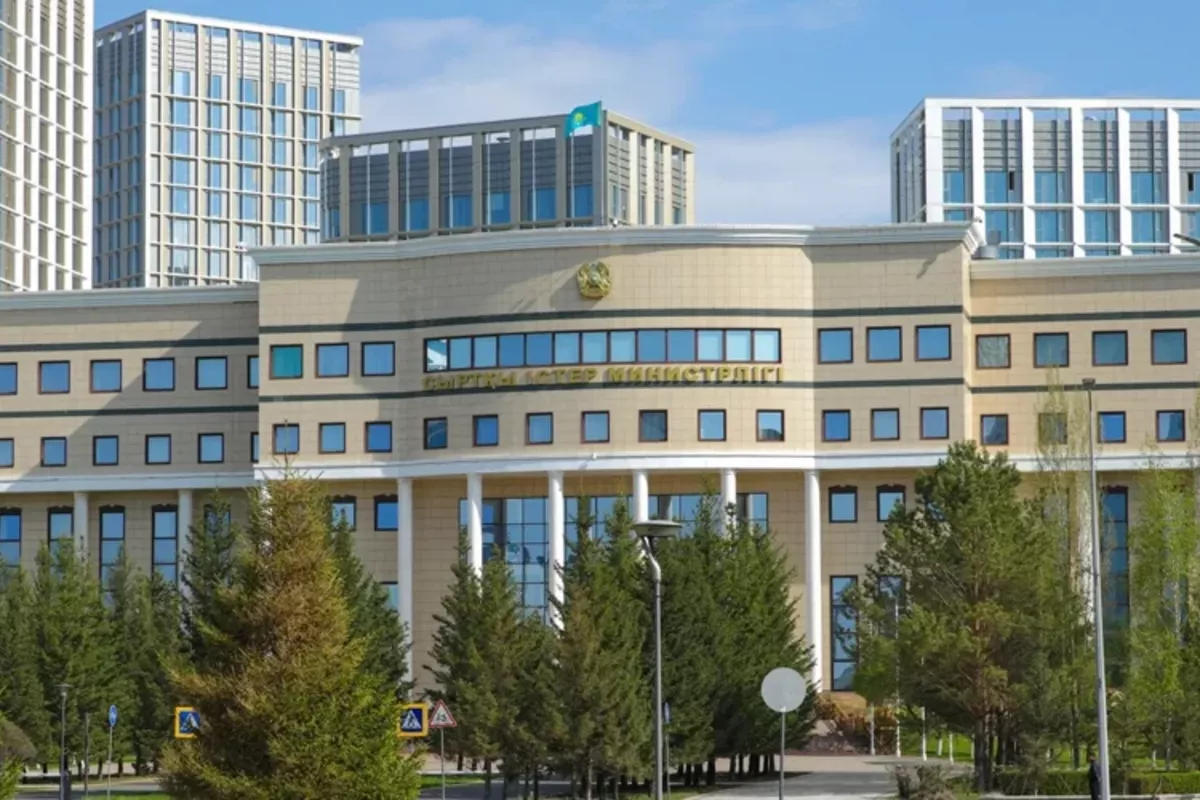
Astana is no longer content with being the silent giant of the steppe. While the world tracks every twitch of the oil markets or the latest diplomatic spat in Western capitals, Kazakhstan’s Foreign Minister, Murat Nurtleu, has been quietly stitching together a new web of influence across the Middle East. This isn't just about regional "dialogue" or the polite exchange of pleasantries often found in sanitized government press releases. It is a calculated move to insulate Kazakhstan from the volatility of its two massive neighbors, Russia and China, by securing deep-pocketed allies and alternative trade routes in the Gulf and Levant.
The recent flurry of high-level meetings between Kazakh officials and their counterparts from Saudi Arabia, the UAE, and Qatar signals a fundamental shift in Central Asian strategy. For decades, the logic was simple: export oil through Russian pipes and import manufactured goods from Chinese factories. That era is dying. The war in Ukraine and the subsequent sanctions on Moscow have turned the Northern Corridor into a geopolitical minefield. Now, Kazakhstan is looking south. By strengthening ties with Middle Eastern powers, Astana is attempting to transform itself from a landlocked buffer state into the indispensable middleman of Eurasia.
The Trans Caspian Pivot
At the heart of this diplomatic push is the Middle Corridor. This logistical artery aims to connect China to Europe by bypassing Russia entirely, crossing the Caspian Sea and moving through the Caucasus into Turkey. However, building the infrastructure for such a massive undertaking requires more than just political will; it requires staggering amounts of liquid capital. This is where the Gulf states enter the frame.
Saudi Arabia’s Public Investment Fund and various Emirati sovereign wealth funds have been scouting Kazakh infrastructure projects with increasing intensity. They aren't doing this out of the goodness of their hearts. The Middle East is looking to diversify its own food security and energy portfolios. Kazakhstan, with its vast agricultural potential and untapped mineral wealth, offers a perfect hedge. We are seeing a "capital-for-connectivity" swap. The Gulf provides the investment needed to modernize Kazakh ports and railways, and in return, they secure a stable partner in a region that is becoming the new center of gravity for global trade.
The skepticism remains, of course. Critics point out that the Middle Corridor’s capacity is currently a fraction of what the Russian rail lines can handle. They are right. But they miss the point of the long game. This isn't about what the route can do today. It is about where the power will sit in 2030. If Kazakhstan can successfully integrate its logistics with Middle Eastern finance, it breaks the historical monopoly that Moscow has held over Central Asian transit.
Food Security as a Diplomatic Lever
While oil usually dominates the headlines, wheat and meat are the real currencies of Kazakh-Middle Eastern relations. The Middle East is one of the most water-stressed regions on the planet. Its reliance on food imports is a glaring strategic vulnerability. Kazakhstan, conversely, sits on millions of hectares of arable land.
During recent ministerial talks, the "Islamic Food Security Organization," headquartered in Astana, was more than a footnote. It was a primary tool of influence. By positioning itself as the "breadbasket" for the Islamic world, Kazakhstan gains a level of soft power that oil alone cannot buy. When you provide the calories that keep a population fed, you aren't just a trading partner; you are a guarantor of national stability.
The Qatar Connection
Qatar has emerged as a particularly aggressive player in the Kazakh market. Recent agreements have seen Qatari firms moving into the Kazakh telecommunications and energy sectors. This isn't just a business deal. It is a signal to both Moscow and Washington that Astana has other options. By inviting Qatari investment into sensitive sectors like telecoms, Kazakhstan is diversifying its "security through investment" policy. The logic is that the more global stakeholders you have invested in your domestic stability, the less likely any one neighbor is to destabilize you.
The Nuclear Ambition
Kazakhstan is the world’s largest producer of uranium. As the Middle East—led by the UAE and Saudi Arabia—moves toward nuclear energy to power its massive desalination plants and future cities, the synergy is obvious. Astana wants to move up the value chain. They no longer want to just dig the ore out of the ground; they want to be part of the entire nuclear fuel cycle.
Discussions between Nurtleu and his regional peers have increasingly touched on technical cooperation in the nuclear field. If Kazakhstan can become the primary supplier and technical partner for the burgeoning Middle Eastern nuclear sector, it locks in decades of high-value economic cooperation. This would create a specialized trade bloc that is virtually impossible to disrupt. It moves the relationship from "buyer-seller" to "strategic interdependence."
The Multi Vector Strain
Maintaining this balance is an exhausting feat of diplomatic gymnastics. Kazakhstan must woo the Saudis without offending the Iranians, and partner with the Emiratis while keeping an eye on Turkish interests in the region. To the uninitiated, it looks like Astana is trying to be everything to everyone. To a veteran analyst, it looks like survival.
The risk of overextension is real. The Middle East is not a monolith, and getting caught in the middle of a regional rivalry could jeopardize the very stability Kazakhstan is trying to build. However, the alternative is worse. Staying tethered solely to the Russian or Chinese orbits means being a secondary character in someone else’s empire. Nurtleu’s mission is to ensure that when the history of the 21st-century Silk Road is written, Kazakhstan is the author, not just a setting.
Infrastructure and the Ghost of Bureaucracy
For all the talk of grand corridors and billion-dollar funds, the reality on the ground is often bogged down by the mundane. Kazakhstan’s bureaucracy is a relic of a different era, often slow to move and prone to opacity. Middle Eastern investors, while cash-rich, are notoriously demanding regarding transparency and speed.
There is a widening gap between the high-level handshakes in Riyadh or Abu Dhabi and the actual implementation of projects in regional Kazakh centers. If the Kazakh government cannot streamline its internal processes, the "Gold Rush" from the Gulf will dry up as quickly as it started. Investors have a low tolerance for the "Central Asian crawl."
The China Factor
Beijing is watching these developments with a calculated silence. On one hand, China benefits from any infrastructure that makes the Middle Corridor more viable, as it provides another outlet for Chinese goods. On the other hand, they are wary of losing their dominant position as the primary financier in the region. The influx of Gulf capital creates a competitive environment that Kazakhstan can use to negotiate better terms for itself. It is a rare moment of leverage for a Central Asian state.
The Security Dilemma
Diplomacy is never just about trade. The instability in the Middle East—from the Levant to the Red Sea—has direct implications for Kazakhstan’s ambitions. If the regional ministers Nurtleu is meeting with are distracted by escalating conflicts at home, their appetite for foreign investment and complex trade routes will diminish.
Kazakhstan has positioned itself as a "neutral" mediator, often hosting talks on the Syrian conflict in Astana. This isn't just for the prestige. It is a defensive measure. By facilitating peace in the Middle East, Kazakhstan is protecting its own economic future. They need a stable Middle East to serve as the southern anchor for their trade ambitions.
Religious Identity and Soft Power
Astana is also leaning into its identity as a secular but predominantly Muslim nation. This shared cultural ground provides a "common language" that Western diplomats often struggle to find. It allows for a level of trust and familiarity that can grease the wheels of difficult negotiations. However, the Kazakh leadership is careful to keep this strictly in the realm of culture and diplomacy, avoiding any drift toward the more conservative ideologies found in parts of the Gulf.
The Oil Paradox
Despite the talk of diversification, oil still pays the bills. Kazakhstan’s cooperation with OPEC+ (led by Saudi Arabia) is the most immediate point of contact. The coordination on production cuts and pricing is a matter of national survival for Astana. Yet, there is a tension here. The Gulf states are competitors in the global oil market.
The current strategy is to find "coopetition." They cooperate on price stability while competing for market share in Europe and Asia. The ministerial discussions often gloss over this rivalry, focusing instead on "mutual interests." But make no mistake: as the global transition away from fossil fuels accelerates, the fight for the remaining oil demand will become brutal. Kazakhstan is using this window of high prices to fund the very infrastructure that will allow it to survive in a post-oil world.
The Shift in Power Dynamics
We are witnessing the end of the "Periphery" status for Central Asia. For a century, the region was viewed as the "backyard" of the Kremlin. That perception is being dismantled in real-time. By forging a direct, independent link with the power centers of the Middle East, Kazakhstan is effectively resigning from the Russian sphere of influence without ever having to say the words out loud.
This is a quiet revolution. It doesn't involve protests or regime changes. It involves the steady, relentless movement of containers, the signing of agricultural quotas, and the laying of fiber-optic cables. The Middle East ministers aren't just visiting Astana for the hospitality; they are visiting the new pivot point of Eurasia.
The success of this strategy hinges on a single factor: consistency. The Kazakh leadership must maintain this trajectory even when under pressure from Moscow or when the price of oil fluctuates. They have committed to a path that moves them southward and westward, toward a future where they are no longer defined by who they are between, but by who they are connected to.
The geography of the world is being rewritten by those who control the flow of goods and the sources of capital. Kazakhstan has realized that while you cannot change your neighbors, you can certainly choose your partners. The desert and the steppe are moving closer together, and the traditional powers of the world are finding themselves on the outside looking in.
Astana has placed its bets. Now it just has to see if the rest of the world is ready to play.