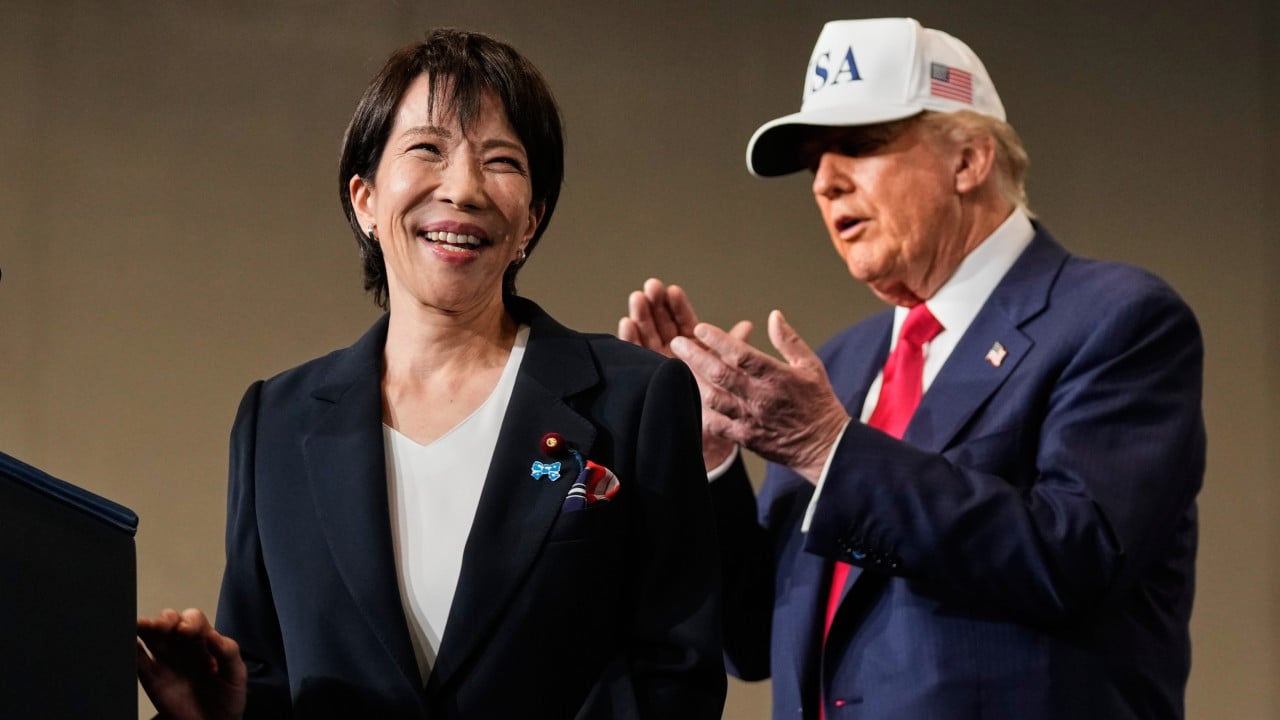
The consensus among the Tokyo elite and their beltway apologists is reaching a fever pitch of panic. They call Donald Trump’s demands for localized Japanese investment "protectionist extortion." They claim it will hollow out Japan’s domestic efficiency. They argue that Kishida or his successor should stand firm, clutching the outdated beads of neoliberal free-trade theory while the rest of the world moves on.
They are dangerously wrong.
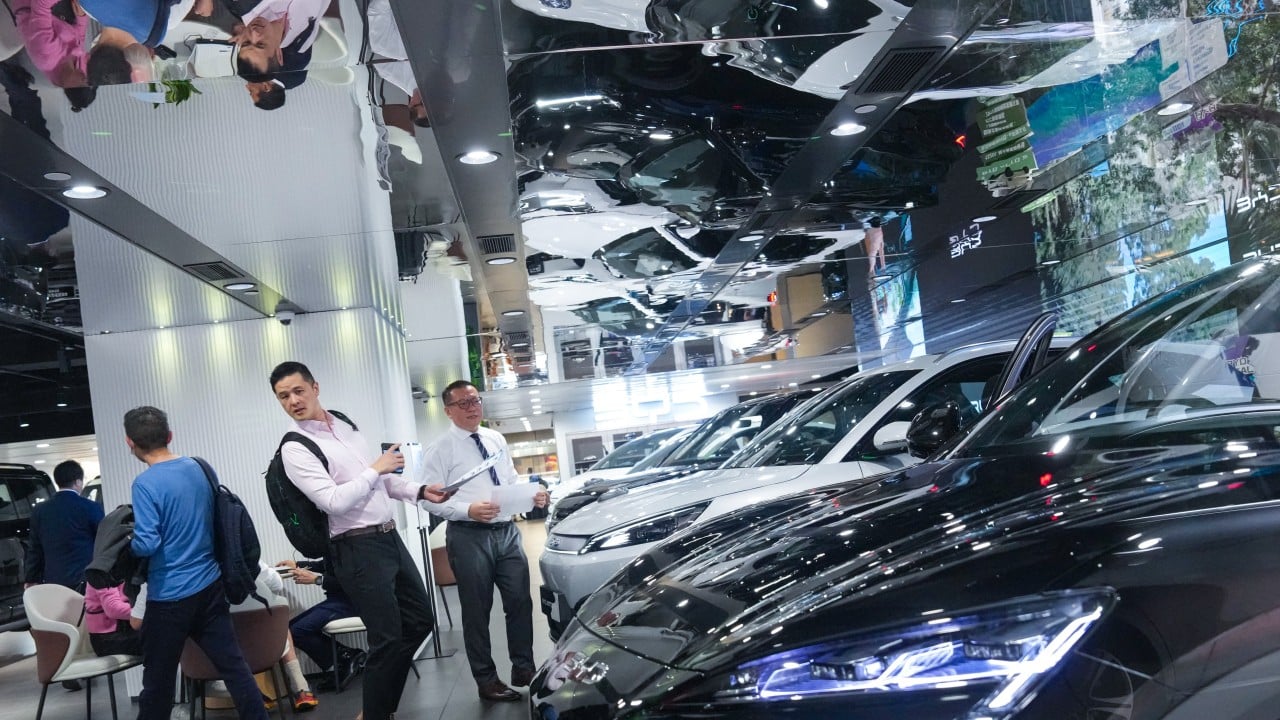
For three decades, Japan has played a game of "passive accumulation." It exported cars and semiconductors, took the dollars, and tucked them away in US Treasuries and safe-form investments. It was a strategy of survival for a graying nation. But the era of the passive rentier is over. Trump isn’t asking Japan to "waste" money in the US; he is offering a coercive invitation to co-author the next industrial century.
If Japan refuses to build the factories Trump demands, it won't be "saving" its economy. It will be consigning its most vital companies to a slow-motion irrelevance.
The Myth of Comparative Advantage in a Post-Global World
The "lazy consensus" argues that Japanese companies should produce where it is most efficient. David Ricardo’s ghost haunts every op-ed claiming that forcing Toyota or Nippon Steel to build on high-cost American soil is a net loss for the world.
Let’s dismantle that. Efficiency is a metric for peacetime. We are in a period of structural geoeconomic realignment.
In the current climate, "efficiency" is just another word for "fragility." When a supply chain stretches across a thousand miles of contested water, it doesn't matter how cheap the labor was. The moment a blockade or a tariff wall goes up, your "efficient" factory becomes a tomb.
By demanding Japanese CAPEX (capital expenditure) on US soil, Trump is essentially offering a "Security Premium." You aren't paying for cheaper labor; you are paying for the guarantee that your market access cannot be turned off by a stroke of a pen in the Oval Office.
Japan’s Domestic Stagnation is the Real Enemy
The critics say, "We shouldn't send our capital abroad when our own economy needs it." This ignores the brutal reality of Japanese demographics.
Japan’s domestic market is a shrinking ice cube. There is no "multiplier effect" to be found by forcing Japanese companies to reinvest in a population that is declining by 800,000 people per year. The capital has to go somewhere. Currently, it sits in low-yield bonds or gets eaten by the Yen’s volatility.
Investing in the US—the world’s largest, most resilient consumer market—isn't "yielding" to Trump. It is a desperate, necessary hedge against Japanese domestic contraction.
- Fact: Japanese FDI (Foreign Direct Investment) in the US reached record highs recently, and guess what? Those companies are more profitable than their domestic counterparts.
- The Nuance: The "cost" of building in Ohio or Texas is offset by the elimination of currency risk and the proximity to the world’s most aggressive tech ecosystem.
The Nippon Steel Litmus Test
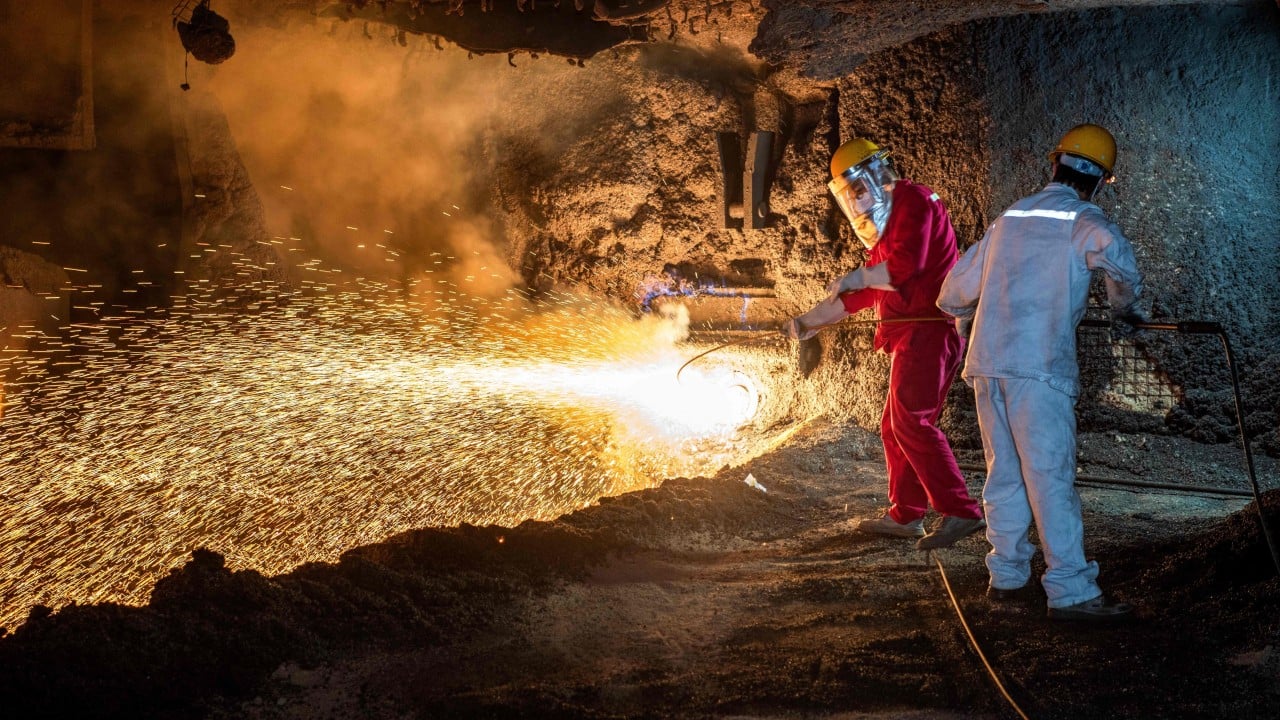
Look at the hysteria surrounding Nippon Steel’s bid for U.S. Steel. The "polite" take is that the US is being xenophobic. The "insider" take is that Nippon Steel is the only entity with the guts to admit that the future of heavy industry is American energy and American demand.
If Nippon Steel pulls back because of political friction, they lose. Not because they missed a deal, but because they proved they cannot navigate the new reality of "Industrial Statecraft." To survive, Japanese firms must become "insiders" in the US economy, not just "vendors" to it.
The Silicon Shield is Cracked
For years, Japan relied on its mastery of materials science and chip-making equipment to stay relevant. The "consensus" says that keeping this tech at home is Japan's "Silicon Shield."
I’ve seen dozens of Tier-1 Japanese suppliers lose their grip because they stayed too close to the "home base" in Nagoya or Kyushu. While they perfected the 2% efficiency gain at home, American competitors—and subsidized Chinese ones—rewrote the rules of the game.
By "leveraging" (to use a word I hate, let’s say exploiting) Trump’s demands, Japan can embed its engineers directly into the US AI and robotics boom. You don't learn how to build the future of autonomous logistics from an office in Minato. You learn it on the ground in the American Midwest where the infrastructure is being rebuilt from scratch.
Stop Asking "Is This Fair?"
One of the most common questions in the "People Also Ask" sections of the internet is: Is Trump’s trade policy legal under WTO rules?
This is the wrong question. It’s a loser’s question.
The WTO is a corpse. International trade law is a ghost. In a world of "Might Makes Right" economics, fairness is a fairy tale told to mid-level bureaucrats.
The right question is: How do we make our presence in the US so vital that no administration, Republican or Democrat, can afford to touch us?
The answer isn't "pushing back" on investment demands. It’s doubling down on them. Japan should be buying the land, building the grids, and training the workers before they are even asked.
The Hidden Risk: The "Nice" Trap
The greatest danger to Japan isn't Trump’s aggression; it’s the "niceness" of the status quo.
If Japan successfully "pushes back" and maintains the current trade balance, it remains an outsider. It remains a target for the next populist wave. It remains a "foreign" entity that can be used as a political punching bag.
But if Japanese companies employ five million Americans across the swing states? They become untouchable. They become part of the American political fabric.
The Strategy of Aggressive Submission
I call this the "Trojan Horse of CAPEX."
- Stop complaining about the cost of US labor. Start automating the hell out of US factories using Japanese robotics.
- Move the R&D, not just the assembly. If the brains of the operation are in California or Texas, you aren't a "Japanese company" in the eyes of a regulator; you are a local employer.
- Use the US energy advantage. Japan is energy-starved. The US has a surplus of natural gas and burgeoning nuclear prospects. It is cheaper to melt steel and pour concrete where the power is.
The Brutal Truth
The "experts" telling Japan to resist are the same ones who didn't see the 2016 shift coming. They are the same ones who think the world will return to the "rules-based order" of 1995. It won't.
Trump isn't the cause of this shift; he is the symptom of a world that has realized that physical capacity matters more than digital "synergy."
Japan has the capital. It has the engineering discipline. It has the long-term vision. But it is currently paralyzed by a polite refusal to accept that the old world is dead.
Don't push back. Move in. Buy the dirt. Build the stacks. Make yourselves indispensable.
The alternative isn't independence; it’s an elegant, quiet decay into a museum of 20th-century industrial excellence.
Build the factories or prepare for the funeral.