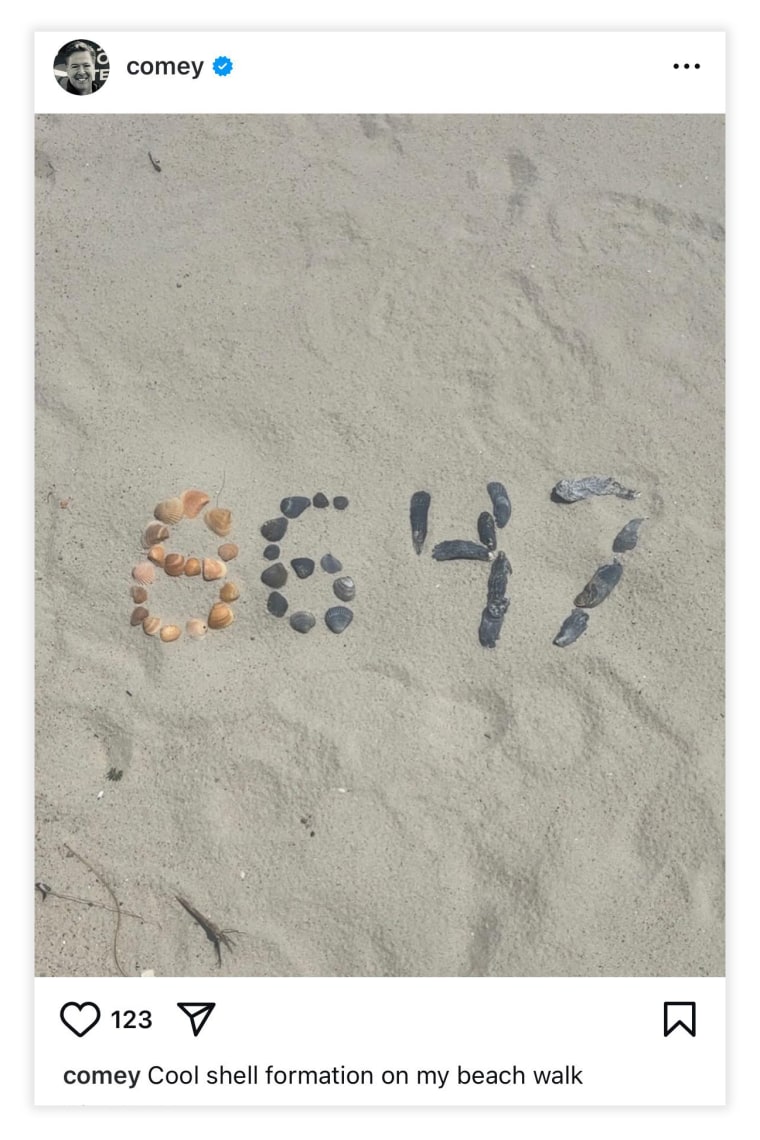
James Comey just walked into a federal courthouse in Alexandria, Virginia, and the charges against him are about as weird as it gets in American politics. The former FBI Director is facing two felony counts because of a photo of seashells. You read that right. The Department of Justice (DOJ) claims that an Instagram post of shells arranged to read "86 47" is a credible death threat against President Donald Trump.
The government’s theory is simple, if a bit a stretch. In restaurant slang, to "86" something means to get rid of it or cancel it. Trump is the 47th president. Put them together, and prosecutors argue Comey was calling for the assassination of the commander-in-chief. It’s a bold move. It’s also one that legal experts think is going to be incredibly hard to prove in front of a jury.
The numbers game in court
The indictment filed in the Eastern District of North Carolina focuses on two specific crimes: making a threat against the president and transmitting that threat across state lines. Comey says he found the shells on a beach walk and thought the numbers represented a political message about voting the president out. He didn’t see a call to violence. When he realized people were reading it that way, he deleted the post and apologized.
That apology is going to be central to his defense. To get a conviction, the DOJ has to show "true intent." They need to prove Comey didn’t just post a cryptic photo, but that he meant to communicate a serious expression of an intent to do harm.
Acting Attorney General Todd Blanche hasn't shown his hand yet. At a recent press conference, he wouldn't talk about specific evidence of intent. He just said they'd prove it with witnesses and documents. Honestly, that's what every prosecutor says when they’re still building a case.
Free speech or a felony
There’s a massive First Amendment wall standing in the way of this prosecution. The Supreme Court has been pretty clear about this lately. In a 2023 ruling, the court held that prosecutors must show a defendant had some "subjective understanding" that their statement would be seen as threatening.
Comey isn’t some random guy on the internet; he’s a former head of the FBI. Prosecutors are likely to argue that someone with his background knows exactly how coded language works. They’ll say he used his platform to incite others. But Comey’s team, led by Patrick Fitzgerald, is already leaning hard into the "political speech" defense.
If a picture of seashells can be a felony, what happens to the rest of the political commentary on social media? That’s the question that should make you a little nervous, regardless of how you feel about Comey or Trump.
A history of bad blood
This isn't the first time this DOJ has gone after Comey. A previous case involving false statements and obstruction was tossed out by a judge last year. That failure hangs over this new indictment like a dark cloud.
Critics are already calling this a "vindictive prosecution." They see it as a political hit job rather than a pursuit of justice. The fact that the Secret Service interviewed Comey a year ago and didn't charge him then makes the timing of this new case look suspicious.
It’s a high-stakes gamble for the Justice Department. If they lose this, it reinforces the narrative that they’re targeting political enemies. If they win, they’ve set a new precedent for how the government can interpret social media posts.
What to watch for next
Expect a flurry of motions to dismiss. Comey’s lawyers are going to attack the "sparse language" of the indictment. They'll argue it doesn't even allege a specific plan or action, just an interpretation of a slang term.
You should also keep an eye on whether the government produces any private messages or emails. If the DOJ has a "smoking gun" where Comey explains the photo in a violent context, the case changes instantly. Without that, they’re just arguing over the meaning of shells on a beach.
If you’re following this case, don’t just look at the headlines. Watch the rulings on the "subjective intent" standard. That’s where this fight will be won or lost. For now, James Comey is out on his own recognizance, waiting to see if a jury thinks a math problem on the sand is a crime.