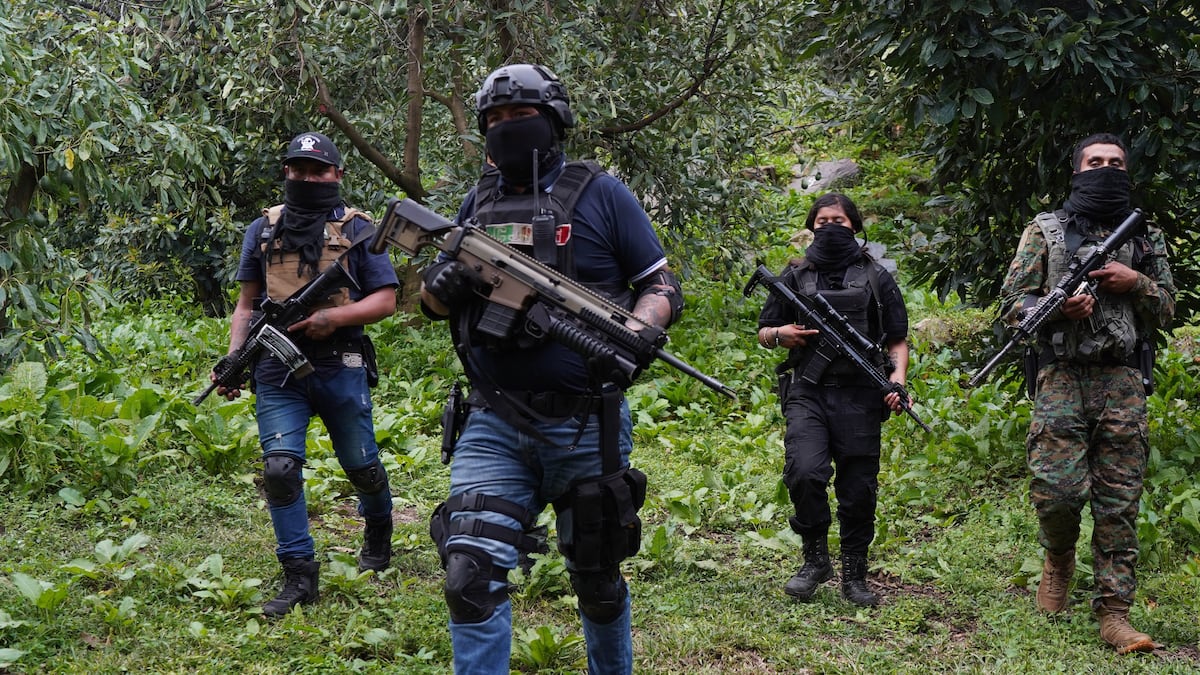
The tactical elimination of a high-ranking leader within the Jalisco New Generation Cartel (CJNG) has not brought the stability promised by federal authorities. Instead, it has triggered a frantic, bloody reorganization within the world’s most aggressive paramilitary criminal organization. While the Mexican government frames these military operations as victories for the rule of law, the reality on the ground in Jalisco, Michoacán, and Guanajuato suggests a different outcome. History shows that when the state decapitates a cartel without dismantling its financial and logistical infrastructure, it simply creates a vacancy that multiple subordinates are willing to kill to fill.
Mexico now faces a period of "re-accommodation." This is the industry term for the internal purges and external skirmishes that occur when a power vacuum opens. The death of a top commander doesn't just hurt the cartel; it destabilizes the delicate informal agreements between criminals, local businesses, and corrupted officials. When the "boss" is gone, the contracts—both legal and illegal—are effectively voided.
The Myth of the Kingpin Strategy
For two decades, Mexico and its partners in Washington have obsessed over the "Kingpin Strategy." The logic is simple. You take out the head of the snake, and the body dies. But the CJNG is not a simple snake. It functions more like a decentralized franchise or a multi-national corporation with high autonomy for its regional managers.
Killing a leader in this environment rarely leads to a collapse. Instead, it leads to fragmentation. We saw this with the Gulf Cartel, which splintered into dozens of warring cells, and with the Beltrán-Leyva Organization. Fragmentation is actually more dangerous for the civilian population. A monolithic cartel wants a quiet environment to move product. Small, splintered groups, desperate for cash to fund their new wars, turn to kidnapping, extortion, and fuel theft to survive.
The Rise of the Lieutenants
Inside the CJNG, the hierarchy is built on a mix of family ties and proven brutality. When a vacancy occurs at the top, the mid-level commanders—the "plaza bosses"—face a choice. They can stay loyal to the remaining central leadership, or they can strike out on their own.
The current tension is centered on who controls the "Port of Lázaro Cárdenas" and the chemical precursor routes coming from Asia. These are the crown jewels of the fentanyl trade. Anyone who controls these routes doesn't need the blessing of a central leader; they have the money to buy their own army. This is why we see a spike in violence immediately following a "successful" government raid. The violence isn't directed at the army; it’s directed at the guy in the next office over.
The Paramilitary Evolution
The CJNG changed the math of Mexican organized crime by adopting a purely military posture. They don't just hide in the mountains; they patrol in armored convoys (monstruos) and use weaponized drones.
When the Mexican Army engages these groups, they aren't fighting street gangs. They are fighting a force that has integrated tactical gear, encrypted communications, and high-caliber weaponry into its daily operations. The death of a leader provides a temporary shock to this system, but the recruitment pipelines remain wide open. In many parts of Jalisco, the cartel is the largest employer. They offer a "career path" to young men who see no future in the formal economy. Unless the government replaces that economic incentive, there will always be a fresh recruit ready to pick up a dropped rifle.
The Fentanyl Factor and Global Logistics
The shift from plant-based drugs like marijuana and heroin to synthetic opioids has fundamentally altered the cartel’s resilience. In the old days, if the army burned a field of poppies, the cartel lost a year’s worth of work. Today, the CJNG operates small, mobile laboratories that can be set up in a kitchen or a basement.
The profit margins on fentanyl are so vast that a single successful shipment can fund an entire month of war against the state. This financial "war chest" makes the death of a leader almost irrelevant to the organization's long-term health. The money keeps flowing, the precursors keep arriving, and the chemists keep cooking. The organization has become "personnel independent."
Why the Violence Stays Localized
While the international headlines focus on the "war on drugs," the actual casualties are felt most acutely at the municipal level. The real battle is for the "cobro de piso"—the extortion of local businesses.
When a cartel leader is killed, the local police force often finds itself in the crosshairs. These officers are frequently paid by the cartel to look the other way. If their contact in the cartel is killed, they no longer know who to report to or who is protecting them. This uncertainty leads to "cleansings," where the new cartel leadership executes any officials who were loyal to the previous boss. It is a cycle of blood that ensures no local institution can ever truly become independent or honest.
The Role of the National Guard
The current administration's reliance on the National Guard has been criticized for being reactive rather than proactive. Sending thousands of troops to a city after a massacre has occurred is like putting a bandage on a gunshot wound after the victim has already bled out. The troops usually arrive, patrol the main streets for a few weeks, and then leave. As soon as the trucks disappear over the horizon, the cartels return to settle their scores.
True security requires intelligence-led policing that targets the financial structures and the corrupt politicians who allow these leaders to thrive in the first place. Without cutting off the money, the army is just playing a high-stakes game of "whack-a-mole."
The Shadow of the Next Election
The timing of these high-profile military hits is rarely accidental. In Mexico, security theater often ramps up during election cycles. Politicians need to show "results" to a public that is exhausted by record-breaking homicide rates. By taking out a big name, the government can claim a win.
However, the families living in the shadow of the CJNG know that these wins are often pyrrhic. They know that a week of headlines in Mexico City usually translates to a month of gunfights in their backyards. They have learned to recognize the signs of a coming storm: the sudden absence of police from the streets, the rumors on WhatsApp, and the sight of unfamiliar trucks circling the town square.
The Resilience of Criminal Economies
The CJNG has diversified its portfolio far beyond narcotics. They now control segments of the avocado trade, the lime industry, and even real estate development. This "legalization" of their capital makes them much harder to uproot than a traditional gang. If you kill the CEO of a company, the company doesn't vanish—it hires a new one. The cartel is now a conglomerate.
The international community often views Mexico's violence through the lens of a failed state, but it is more accurate to describe it as a "parallel state." In many regions, the CJNG provides the security, the jobs, and even the dispute resolution that the official government fails to deliver. This social base is why they are so hard to defeat. A leader’s death doesn't change the fact that for many, the cartel is the only entity that provides a semblance of order, however brutal it may be.
Moving Beyond the Decapitation Model
If the goal is truly to reduce violence, the focus must shift from individuals to systems. This means aggressive, international cooperation to freeze the assets of the "invisible" financiers who live in luxury penthouses, far from the gunfches of Jalisco. It means addressing the flow of American-made firearms that move south as easily as drugs move north.
Until the cost of doing business outweighs the profit, the cycle of leadership turnover and subsequent violence will continue. The death of one commander is a tragedy for his family and a promotion for his rival, but for the people of Mexico, it is simply the start of another long and bloody chapter.
The military will continue its raids, the media will continue to flash the mugshots of the fallen, and the cartels will continue to adapt, evolve, and grow. The "war" is not being won; it is merely being managed, one body at most.
Demand a strategy that targets the bank accounts instead of just the bunkers.


