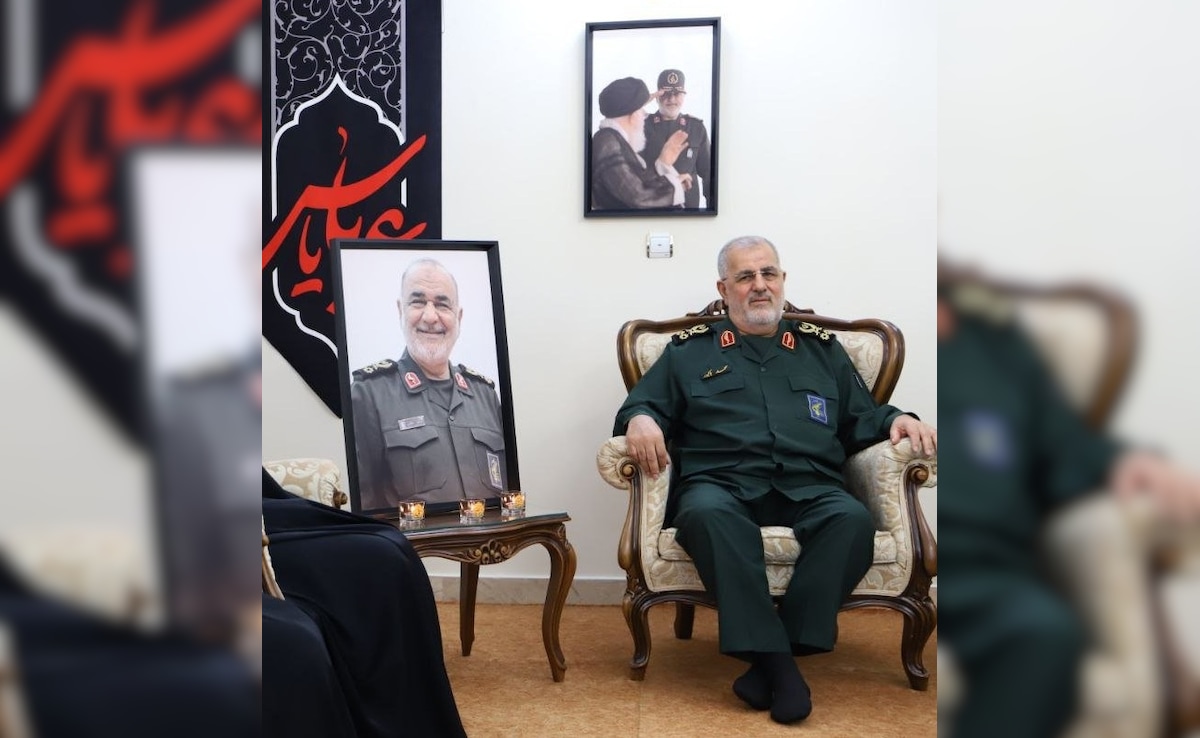
The headlines are screaming victory. Another high-value target (HVT) deleted from the board. General Mohammad Pakpour, the long-standing commander of the IRGC Ground Forces, is reportedly dead following Israeli strikes. The "decapitation strike" enthusiasts are popping champagne, claiming this breaks the back of Iran’s internal security and regional reach.
They are wrong.
In the world of asymmetric warfare and ideological bureaucracies, killing a 60-year-old general isn't a setback. It’s a software update. While the West obsessed over the "cult of personality" surrounding figures like Qasem Soleimani or now Pakpour, they consistently fail to understand the structural design of the Islamic Revolutionary Guard Corps. The IRGC is not a house of cards; it is a distributed ledger.
The Decapitation Myth
The military establishment loves the phrase "decapitation strike." It sounds surgical. It sounds final. But applying 20th-century kinetic logic to a 21st-century ideological hydra is a recipe for strategic surprise.
When you kill a commander like Pakpour, you aren't removing a bottleneck. You are clearing the path for the "Suleimani Generation"—younger, more tech-savvy, and arguably more radical officers who have spent a decade watching their mentors die. These successors aren't mourning; they are downloading the lessons of their predecessors' deaths to adjust their encryption, their transit patterns, and their kinetic response times.
I have watched intelligence agencies prioritize the "who" over the "how" for decades. They hunt names while the system evolves. By killing Pakpour, Israel hasn't neutralized the IRGC Ground Forces; it has forced a massive institutional promotion that replaces a known entity with a dozen unknown variables.
Institutional Inertia vs. Individual Genius
The "lazy consensus" suggests that Pakpour was the glue holding the Ground Forces together. This ignores the reality of the IRGC’s "Mosaic Defense" doctrine.
- Decentralized Command: The IRGC Ground Forces are designed to operate even if Tehran is leveled.
- Redundancy: Every commander has at least two "shadow" deputies who are fully integrated into the operational chain.
- Ideological Standardization: Unlike a Western corporate structure where a CEO departure causes a stock dip, the IRGC’s "corporate culture" is religious and revolutionary. The mission doesn't change because the manager does.
Pakpour was a relic of the Iran-Iraq War era. His tactical mindset was forged in the trenches of the 1980s. While he was competent, his presence actually acted as a ceiling for the integration of modern drone swarming and electronic warfare tactics into the ground-level insurgency. His removal allows the IRGC to pivot toward a more digitized, autonomous combat style that Pakpour’s generation was often slow to adopt.
The Martyrdom Subsidy
We need to talk about the "Martyrdom Subsidy." In a Western military, a dead general is a tragic loss of human capital and experience. In the IRGC, a dead general is a recruitment tool and a geopolitical blank check.
Pakpour’s death provides the Iranian state with:
- Internal Cohesion: A common enemy to distract from domestic economic woes.
- Justification for Escalation: A "legitimate" reason to test new ballistic missile hardware against regional targets.
- Operational Security (OPSEC) Refresh: A mandatory overhaul of all communication protocols because a high-level breach is now assumed.
If you think the IRGC is weaker today, you don't understand how systems harden under pressure. Stress-testing a bridge doesn't just show you where the cracks are; it forces you to rebuild the bridge with reinforced steel.
The Intelligence Trap
The most dangerous part of this "victory" is the false sense of security it provides the Israeli public and the international community. There is a "People Also Ask" trend that focuses on "Will Iran collapse after Pakpour?" The premise is flawed.
Iran’s regional influence isn't tied to the heartbeat of one man. It’s tied to the Iranian Way of War:
- Proxy Saturation: Using local groups to provide plausible deniability.
- Asymmetric Tech: Cheap drones versus million-dollar interceptors.
- Strategic Patience: Winning by not losing.
Killing Pakpour is a tactical win and a strategic distraction. It’s like clearing a single virus from a computer while ignoring the fact that the entire operating system is designed to replicate that virus.
The Cost of the Kinetic High
We have become addicted to the kinetic high of the "targeted killing." It creates a great visual for the news. It makes for a strong "Mission Accomplished" tweet. But it ignores the friction.
Every time a strike like this occurs, the target's successors learn. They learn how Israel’s SIGINT (Signals Intelligence) works. They learn which couriers are compromised. They learn which "safe" houses aren't safe. You are essentially paying for a temporary vacuum with a permanent increase in your enemy's sophistication.
I’ve seen this play out in corporate takeovers and battlefield insurgencies alike. You fire the old-school boss, and you think you’ve fixed the company. Then, six months later, you realize the subordinates have formed a leaner, meaner, and more aggressive competitor that you no longer have a playbook for.
Why the "Decline" Narrative is Dangerous
The media loves a "regime in decline" narrative. They point to Pakpour's death as evidence that the IRGC is "exposed" or "riddled with holes." This is a comforting lie.
Yes, Israeli intelligence is clearly deep inside the Iranian apparatus. That is a fact. But "exposed" does not mean "defeated." The IRGC has spent forty years being "exposed" and "sanctioned," yet its footprint in Lebanon, Syria, Iraq, and Yemen is larger now than it was twenty years ago.
The focus on HVTs is a shiny object designed to keep the public from asking why the underlying strategy—preventing Iranian regional hegemony—is failing despite the mounting body count of generals.
The Shift to Autonomous Warfare
If you want to know what happens next, stop looking at Pakpour’s bio and start looking at Iran’s investment in AI and autonomous systems.
The "New Guard" of the IRGC doesn't care about the prestige of a general's uniform. They care about the cost-to-kill ratio. They are shifting away from large, targetable ground formations (which Pakpour commanded) and toward hyper-localized, drone-integrated cells.
By removing the head of the old-school ground forces, Israel has inadvertently accelerated the transition to a more difficult-to-track, tech-heavy insurgency. The "General" is a 20th-century target. The "Algorithm" is the 21st-century threat.
Stop asking if the IRGC is weakened. Start asking why we are still playing a game of "Whack-A-Mole" when the mole has already learned to live without a head.
The tactical brilliance of the strike is undeniable, but the strategic outcome is a more resilient, more invisible, and more vengeful enemy.
You didn't kill the threat. You just forced it to evolve.