The tea in the bazaars of Tehran has always tasted of more than just cardamom and sugar. It tastes of whispered rumors. For decades, the air in Iran has been thick with a single, suffocating question that no one dared ask too loudly: what happens when the old man finally closes his eyes?
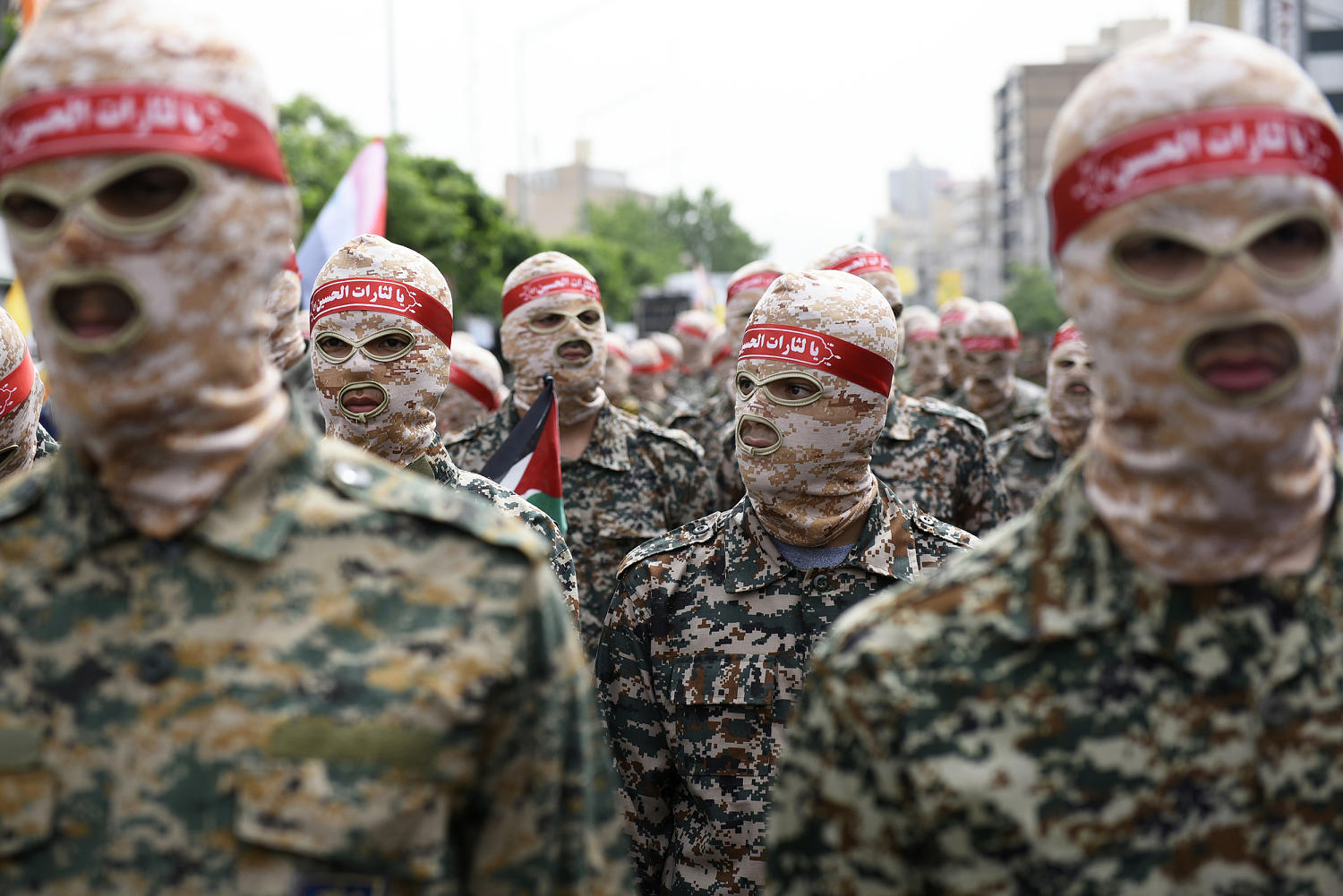
Ali Khamenei was more than a leader. He was the sun around which every satellite of Iranian power—the politicians, the clerics, the spies—was forced to orbit. Now, the sun has gone out. The temperature is dropping. And in the sudden, freezing dark, we are seeing the true face of the men who have been waiting in the wings. They aren't wearing the flowing robes of the clergy. They are wearing olive drab.
Consider a hypothetical shopkeeper in Isfahan, let’s call him Reza. For forty years, Reza has navigated the labyrinth of the Islamic Republic. He knows that while the clerics give the speeches, it is the Islamic Revolutionary Guard Corps (IRGC) that owns the cranes building the skyline and the ports moving the goods. To Reza, and to millions like him, the death of the Supreme Leader isn’t a theological crisis. It is a hostile takeover.
The Men Who Own the Future
The world often views Iran through the lens of religious fervor, but that is an outdated map for a new territory. The IRGC—the Sepah—has spent the last twenty years evolving from a defensive militia into a sprawling corporate and military empire. They are the ultimate "deep state," but they have stopped hiding in the depths.
When the news of Khamenei’s passing hit the wires, the clerical establishment in Qom likely felt a shiver of irrelevance. The Assembly of Experts, the body officially tasked with choosing a successor, technically holds the keys. But keys are useless when the locks have been replaced. The IRGC doesn't just hold the guns; they hold the bank accounts. They control telecommunications, construction, and the murky black markets that allow the country to breathe under the weight of international sanctions.
This transition isn't about finding a new spiritual guide. It is about the final consolidation of a military autocracy. The "Hard-Liners" we read about in headlines aren't just ideologically rigid; they are protecting a bottom line. For them, a more moderate Iran isn't just a sin—it’s a bad business move.
The Shadow of the Son
In the quiet corridors of power, one name has long been spoken with a mixture of dread and inevitability: Mojtaba Khamenei. The second son.
Mojtaba is a ghost. He holds no official elected office, yet he has been the gatekeeper to his father’s office for years. He is the bridge between the old religious guard and the new military elite. But here is the friction: a hereditary succession smells too much like the Monarchy the 1979 Revolution sought to bury forever. To many Iranians, replacing a Shah with a Sultan wearing a turban is a bitter irony they may not be willing to swallow.
The IRGC knows this. They are pragmatic. They don't need a charismatic leader; they need a placeholder. They need a face that looks like the old regime while they operate the levers behind the curtain. If Mojtaba ascends, it will be because the generals allowed it, and the debt he owes them will be paid in the sovereignty of the nation.
The Streets Are Listening
Walk through the districts of North Tehran, where the young people wear their headscarves loose and their frustrations tight. They aren't looking at the Assembly of Experts for hope. They remember the protests of 2022. They remember the "Woman, Life, Freedom" movement. They remember the sound of motorcycles—the IRGC’s preferred vehicle for crackdowns—roaring through the squares.
For the youth, the death of Khamenei is a moment of profound, terrifying uncertainty. There is a window of time, a crack in the monolith, where the regime is at its most vulnerable. History tells us that transitions are when empires bleed. The IRGC knows this better than anyone. Their strategy for the coming weeks won't be one of outreach or reform. It will be a display of overwhelming, preemptive force.
Imagine the tension in a small apartment where a student sits, watching the state-run television loop Quranic recitations. They aren't mourning. They are calculating. Is this the moment to go back to the streets? Or is the grip of the Guard now so tight that the air has been squeezed out of the room entirely?
The Geopolitical Ripple
Beyond the borders, the stakes shift from the personal to the global. A military-led Iran is an Iran that treats diplomacy as a tactical delay. The "Hard-Line" faction has little interest in the nuclear deals of the past unless they come with a total surrender of Western influence. They view the world through the sights of a rifle.
The militias in Lebanon, the drones in Ukraine, the tankers in the Red Sea—these are the IRGC’s calling cards. With the Supreme Leader gone, the "Axis of Resistance" loses its symbolic father, but it gains a much more aggressive board of directors. The Guard doesn't just want to survive; they want to dominate. They see a world in flux and believe they have the stamina to outlast the West.
The Finality of the Choice
We often talk about "succession" as if it’s a legal process. In Iran, it’s an alchemy. You take a vacuum of power, add a massive amount of military hardware, and see what crystalizes. The clergy is fading into a ceremonial role, becoming the "House of Lords" to the IRGC’s "War Cabinet."
The tragedy of the situation is that the Iranian people—a population of artists, engineers, and dreamers—are largely spectators in their own destiny. They are watching a struggle between a dying theocracy and a rising military junta. Neither side offers them the one thing they crave: a normal life.
Tonight, the lights in the IRGC headquarters in Tehran will stay on. Orders are being cut. Logistics are being finalized. The borders are being watched. They have spent forty years preparing for this specific sunset.
The throne is empty, but the floor around it is crowded with boots. The silence in the streets isn't peace. It’s the breath taken before a scream.
Would you like me to analyze the specific economic holdings of the IRGC to show how they maintain this grip?