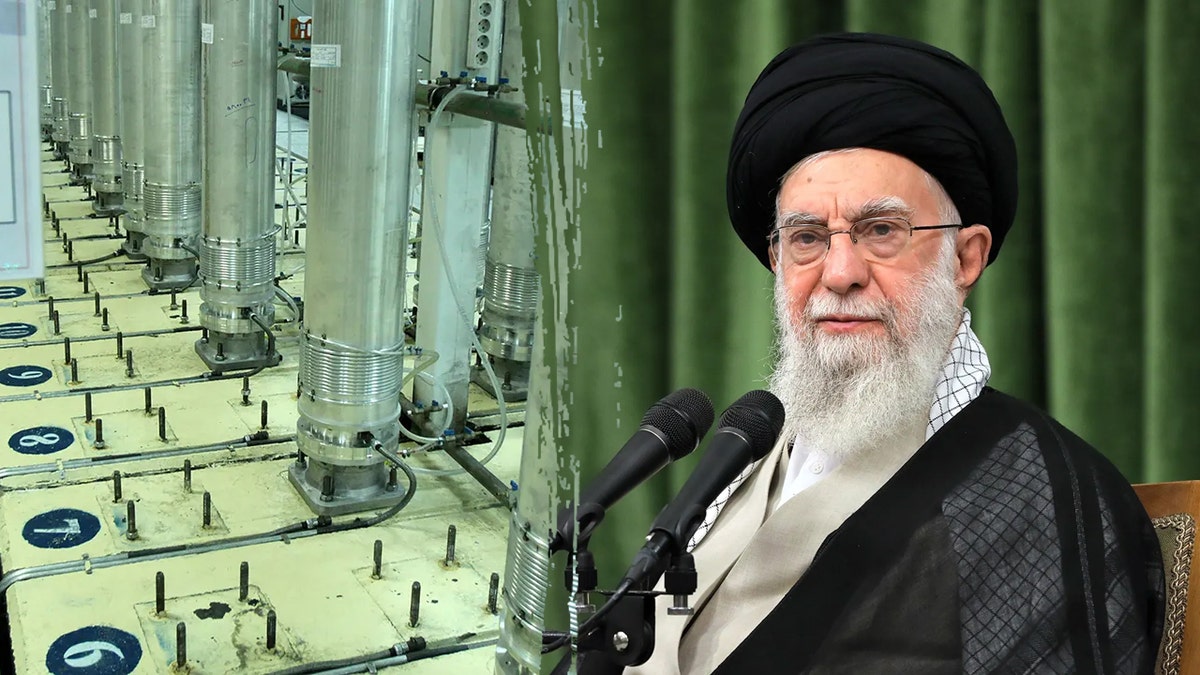
The rules of the game in the Persian Gulf just got rewritten in blood and oil. On March 3, 2026, Brigadier General Ebrahim Jabbari of the Islamic Revolutionary Guard Corps (IRGC) issued a statement that should make every global investor lose sleep. He didn't just rattle a saber; he threatened to set the entire neighborhood on fire. If the joint US-Israeli strikes on Iranian soil don't stop, Tehran says it'll flatten every major economic hub in the Middle East.
It’s not just talk anymore. We've already seen smoke over Jebel Ali in Dubai and missiles landing near Tel Aviv. Iran is backed into a corner after the massive February 28 strikes that targeted its leadership and nuclear sites. Now, they’re playing their final card: "If we go down, the world's economy goes down with us."
The $200 Oil Threat and the Hormuz Chokepoint
Jabbari’s most chilling claim is that the Strait of Hormuz is effectively closed. For those who don't track shipping lanes for a living, about 20% of the world's total oil and liquefied natural gas (LNG) flows through that narrow strip of water. When Iran says they'll "set ablaze" any ship trying to cross, they aren't just targeting tankers; they're targeting the energy security of China, India, and Japan.
Oil prices have already jumped past $85, but Jabbari is eyeing $200. Is it realistic? Maybe not quite that high, but the fear alone is a powerful weapon. Rystad Energy analysts suggest that a prolonged closure could yank 10 million barrels of crude off the market daily. You can't just flip a switch and get that oil from Texas or Norway. The infrastructure simply doesn't exist to bypass the Strait at that scale.
Why the Gulf Monarchies are the Real Targets
For years, places like the UAE and Qatar have tried to play both sides. They host US bases but keep trade lines open with Tehran. That era of neutrality is dead. Iran is now hitting civilian targets—airports, hotels, and shopping districts—to prove that no amount of glitz and "business hub" branding can protect the Gulf states if they don't rein in Washington.
It's a "fatal miscalculation," as some experts call it, because it's pushing the Gulf Cooperation Council (GCC) states right into the arms of the US and Israel. Saudi Arabia has already called these strikes "blatant aggression." Instead of backing off, Riyadh and Abu Dhabi are likely to open their airspace for more strikes, realizing that as long as the current regime in Tehran exists, their "Vision 2030" dreams are under constant threat of a drone strike.
Global Fallout and the Russian Lifeline
While the West scrambles to handle a potential energy crisis, there's one winner lurking in the shadows: Russia. With Iranian oil exports under fire and the Strait of Hormuz blocked, the world is suddenly looking at Russian crude with less "sanction-heavy" eyes. Kremlin-linked commentators are already gloating that if Trump hits Iranian oil fields, Russia becomes one of the few games left in town for energy-hungry nations.
This creates a messy diplomatic knot. Europe, which has been trying to wean itself off Russian gas, now faces a choice between freezing in the dark or funding Putin’s war machine because Middle Eastern supply is literally on fire. Ukraine's President Zelenskyy has already voiced concerns that US-made Patriot missiles, which his country desperately needs, will be diverted to protect Gulf oil fields and Israeli cities instead.
The Strategy of Scorched Earth
I’ve watched this region long enough to know that Iran’s current posture is a sign of extreme internal weakness. The February 28 strikes were devastating. Reports indicate dozens of senior IRGC leaders were eliminated. When a regime loses its "command and control," it stops being surgical and starts being chaotic.
The threat to hit "all economic centres" isn't a sign of strength; it’s a suicide vest. Iran knows it can't win a conventional war against the combined might of the US and Israel. Their only leverage is the global supply chain. They want you to feel the pinch at the gas pump so you’ll pressure your government to stop the strikes.
What This Means for Global Markets
- Shipping Rates: Expect them to triple overnight. If you're importing anything from Asia to Europe, the "Hormuz Surcharge" will be brutal.
- Inflation: Just when we thought we had it under control, a $100+ oil price will drive up the cost of everything from groceries to air travel.
- Tech Supply Chains: With 90% of some energy flows heading to Asia, manufacturing in China and South Korea will take a massive hit, delaying everything from smartphones to EV batteries.
Navigating the Volatility
If you're an investor or just someone trying to make sense of the chaos, don't look at the rhetoric—look at the hardware. Watch for the deployment of US carrier strike groups and the activation of integrated air defense systems across the GCC. The "shadow war" is over; this is a direct confrontation.
You should prepare for a period of extreme market volatility. Diversifying away from assets tied to Middle Eastern stability is the move for the short term. Keep a close eye on the "shadow fleet"—those tankers that move sanctioned oil through opaque channels. If the US starts sinking those to enforce the blockade, we’re in a whole new world of escalation.
The situation is evolving by the hour. Stay informed, stay skeptical of state-run media from all sides, and remember that in the Middle East, things usually get a lot worse before they get any better.

.png?format=1500w)