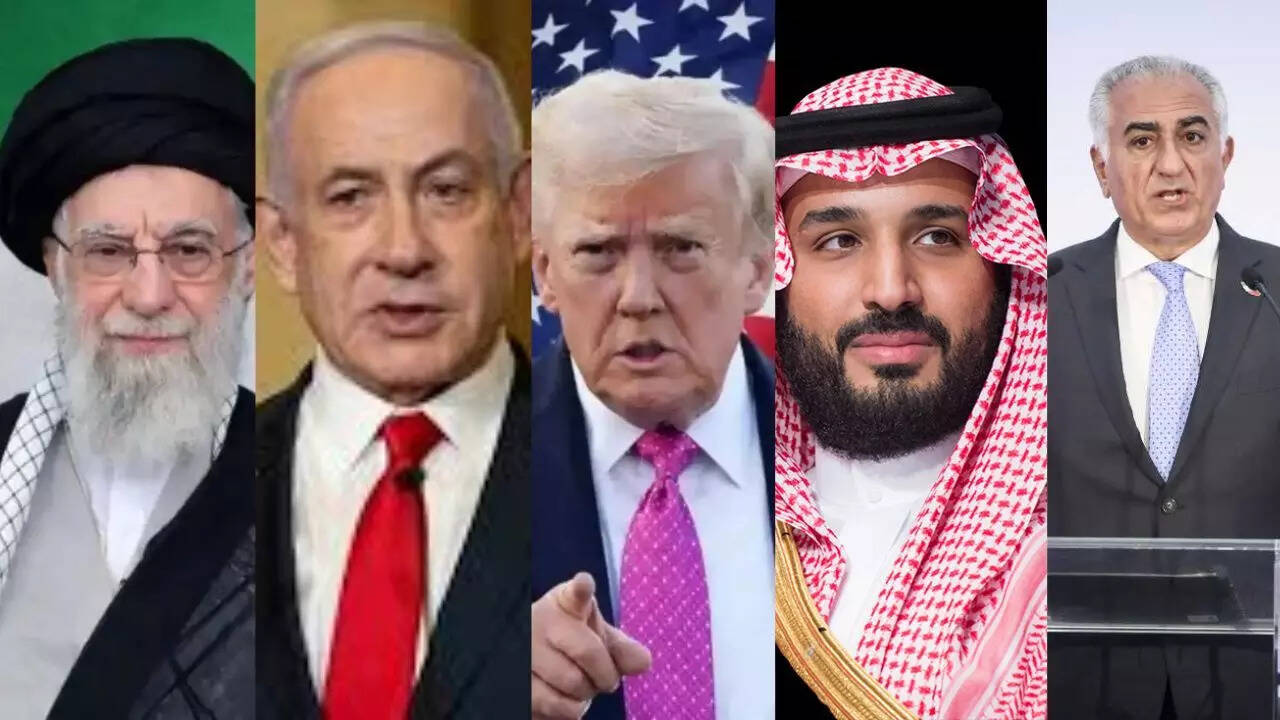
The assassination of Ayatollah Ali Khamenei on February 28, 2026, was not a sudden burst of tactical inspiration, but the calculated finale of a high-stakes gamble known as Operation Epic Fury. By the time the first B-2 stealth bombers breached Iranian airspace, the decision-making circles in both Washington and Tehran had narrowed to a handful of men who believed they could control the chaos of a regional war. While the world watches the smoke rise over Tehran's Pasteur Street, the reality is that this conflict was forged by a small group of hawks and hardliners who chose to abandon a year of fragile diplomacy in favor of a definitive military solution.
The current crisis centers on a dual-track strategy pursued by the Trump administration since returning to power in 2025. On one hand, Special Envoy Steve Witkoff and advisor Jared Kushner led indirect negotiations in Oman and Geneva, attempting to secure a permanent end to Iranian nuclear enrichment. On the other, Secretary of State Marco Rubio and the Pentagon prepared for "weeks-long sustained operations" to enforce regime change. This friction between the "deal-makers" and the "war-makers" ended when the administration set a 60-day deadline for a nuclear agreement—a deadline that passed without a signature, leading directly to the current bombardment.
The Architect of the New Front
In Washington, the strategy is no longer about containment or "maximum pressure" as it was in 2018. It is about a total dismantling of the Islamic Republic's military and political infrastructure.
Marco Rubio, the U.S. Secretary of State, has emerged as the ideological engine of this shift. Rubio has spent the early months of 2026 framing Iran’s internal unrest—driven by massive domestic protests—as a window of opportunity that the U.S. could not afford to miss. His public briefings have consistently characterized the Iranian regime as an imminent threat to the American homeland, citing intelligence reports about intercontinental ballistic missiles (ICBMs) capable of reaching the West. While some analysts argue these missiles are years away from being operational, Rubio successfully leveraged this fear to bypass a fractured Congress and authorize the strikes.
Supporting this hawkish stance is Brad Cooper, the commander of U.S. Central Command (CENTCOM). Cooper is the man responsible for the logistics of the current buildup, which now sees 50,000 American troops and the largest air force presence in the Middle East since 2003. Unlike the limited "Operation Midnight Hammer" in June 2025, which targeted only nuclear sites, Cooper’s current mandate is to "obliterate" the Iranian Navy and the Revolutionary Guard’s command and control.
The Power Vacuum in Tehran
In Tehran, the sudden death of Khamenei has triggered a constitutional and existential crisis. According to Article 111 of the Iranian constitution, a Provisional Leadership Council has taken over the duties of the Supreme Leader. This council is currently composed of three men who represent the competing factions of the Iranian state.
- Masoud Pezeshkian: The Iranian President, often labeled a reformist, now finds himself in the impossible position of leading a government under fire.
- Gholam-Hossein Mohseni-Ejei: The Chief Justice and a staunch Khamenei loyalist, who represents the hardline judiciary.
- Alireza Arafi: A member of the Guardian Council who has been named as the Interim Supreme Leader.
However, the real power may already be shifting toward Ali Larijani. A former IRGC officer and parliamentary speaker, Larijani was reportedly appointed as a successor by Khamenei just six days before the assassination. Larijani is a pragmatist who understands the language of both the military and the negotiators. He is currently the man attempting to signal to Washington that Iran is open to talks, even as the IRGC launches retaliatory strikes against U.S. assets in the region.
The Intelligence Gamble
The "how" of the February 28 strikes involves a massive failure—or a massive success—of intelligence. For months, the U.S. and Israel had been tracking Khamenei's movements through a combination of cyber-surveillance and human intelligence. The decision to strike his secure compound was based on the belief that killing the Supreme Leader would cause the IRGC to crumble.
This has not happened. Instead, the Islamic Revolutionary Guard Corps (IRGC), led by General Hossein Salami, has shifted into a decentralized "war of attrition" mode. Salami and the head of the IRGC missile program, Amir Ali Hajizadeh, have spent decades preparing for exactly this scenario. They operate a network of underground "missile cities" that are largely immune to conventional air strikes. Their strategy is not to win a dogfight with American F-35s, but to make the cost of the war so high—through attacks on global oil shipping and U.S. bases in Qatar and the UAE—that Washington is forced to retreat.
The Technology of Regime Change
The U.S. is not just using bombs; it is using technology to accelerate the collapse of the regime. The use of Starlink terminals, reportedly smuggled into Iran in early February 2026, has allowed protesters to maintain communication despite government-imposed internet blackouts. This digital front is managed by a quiet team of policy planners and tech advisors who believe that by providing the "brave Iranians" with the tools of coordination, the regime will fall from within before the military even finishes its mission.
This is a dangerous assumption. History shows that foreign intervention often rallies a population around even a despised government. The "Epic Fury" campaign risks turning a domestic pro-democracy movement into a nationalist defense of the homeland.
The Regional Explosion
The men steering this storm are not just in Washington and Tehran. The role of Israel and its security apparatus cannot be overstated. The joint nature of the February 28 strikes indicates a level of military integration between the U.S. and Israel that is unprecedented. By targeting not only nuclear sites but the political leadership itself, the coalition has signaled that the era of "shadow wars" is over.
As the IRGC-backed militias in Iraq, such as Kataib Hezbollah, threaten to open new fronts, the conflict is rapidly expanding. These groups have already warned that they will treat any regional government supporting the strikes as a legitimate target. This puts countries like Jordan and the Gulf states in the direct line of fire.
The path forward is no longer dictated by the diplomats in Geneva. It is in the hands of the generals and the interim council in Tehran. If Ali Larijani can consolidate power and offer a "nuclear peace" that satisfies Trump’s demand for a "historic deal," there may be a way out. But with the IRGC calling for "crushing" retaliation and the U.S. military continuing its bombardment "unabated," the window for a negotiated settlement is closing faster than it opened. The men in charge have started a process that may now be beyond their control.
Would you like me to analyze the specific military assets being deployed by CENTCOM in the current phase of Operation Epic Fury?


