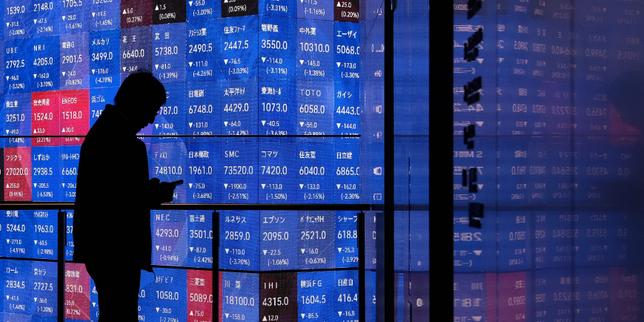
The missile exchange between Israel and Hezbollah is not just another chapter in a decades-long border friction. It is the definitive collapse of the "containment" theory that global energy markets have banked on since late 2023. While general news outlets focus on the immediate kinetic exchange, the real story lies in the fundamental recalibration of risk within the Mediterranean gas corridor and the Strait of Hormuz. When Israeli jets strike deep into Lebanese territory to dismantle precision-guided missile sites, they aren't just hitting military assets; they are signaling to global capital that the era of localized conflict is over.
For the past year, traders held a collective delusion that the fighting could be boxed into Gaza. That illusion died the moment the first long-range munitions crossed the Blue Line toward Haifa. Now, we face a scenario where the physical infrastructure of the global energy trade sits directly in the crosshairs of an escalating regional war.
The Mediterranean Gas Trap
Israel’s emergence as a natural gas powerhouse was supposed to be its ultimate security blanket. The Leviathan and Tamar fields, situated in the Eastern Mediterranean, were touted as the keys to regional integration and European energy independence from Russia. That narrative is currently being shredded.
Hezbollah’s arsenal includes Iranian-made Noor and Yakhont anti-ship missiles. These are not unguided rockets fired blindly into the dark. They are sophisticated, sea-skimming threats specifically designed to target offshore platforms. If a single offshore rig is clipped, the insurance premiums for every vessel in the Mediterranean will skyrocket overnight. This is the "hidden tax" of the conflict. You won't see it on a map of the battlefield, but you will see it in the quarterly reports of every shipping conglomerate from Maersk to Hapag-Lloyd.
The logic of the markets has been dangerously reactive. Investors traditionally wait for a supply disruption before pricing in a "war premium." This is a mistake in the current climate. The disruption is already here; it just hasn't hit the valves yet. We are seeing a shift from "just-in-time" logistics to "just-in-case" hoarding, which creates a floor for oil prices that no amount of increased OPEC+ production can easily lower.
The Iranian Shadow and the Strait of Hormuz
Every escalation in Southern Lebanon is an indirect conversation between Jerusalem and Tehran. Hezbollah acts as the forward-deployed division of the Islamic Revolutionary Guard Corps (IRGC). When Israel moves to degrade Hezbollah’s capabilities, it is effectively pre-empting an Iranian counter-strike.
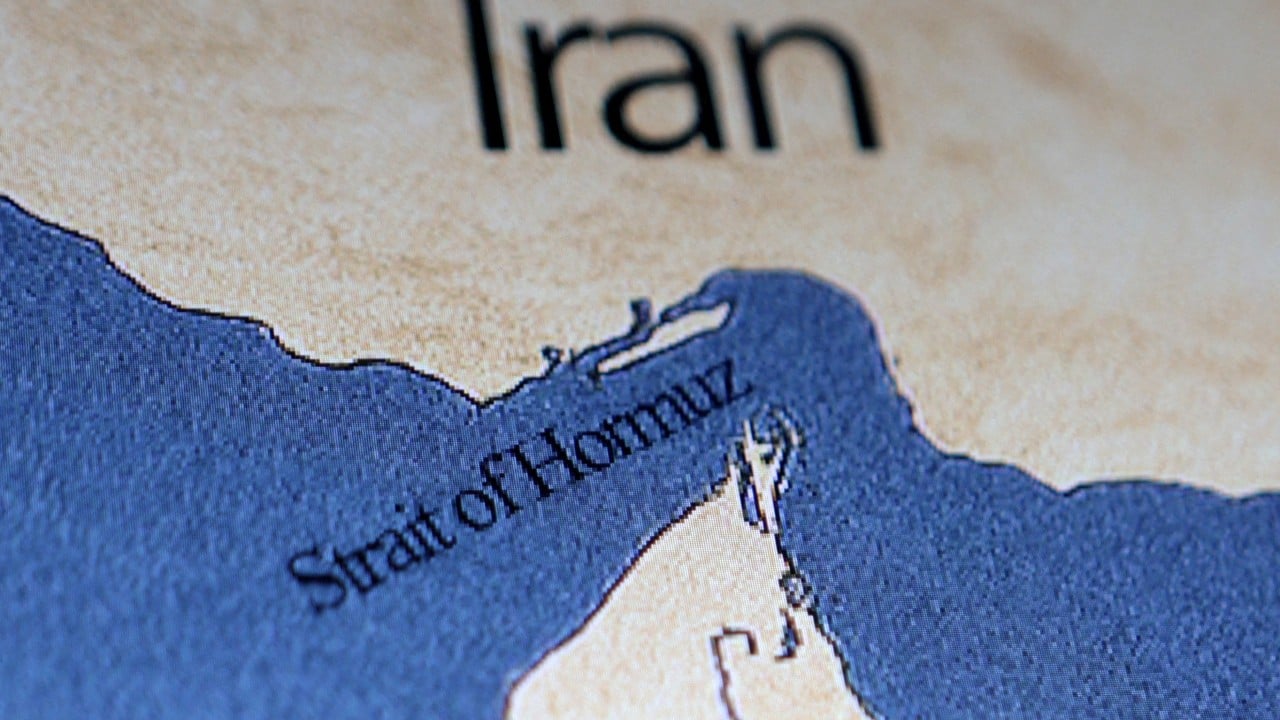
The nightmare scenario for the global economy remains the closure of the Strait of Hormuz. Roughly 20% of the world's liquid petroleum passes through this narrow waterway. While Iran has historically hesitated to pull this lever—knowing it would invite a total global response—the math changes if they perceive an existential threat to their primary proxy in Lebanon.
The Myth of Spare Capacity
Market analysts often point to the spare production capacity in Saudi Arabia and the UAE as a safety net. This is a fundamental misunderstanding of the geography of conflict. Spare capacity is useless if the tankers cannot physically leave the Persian Gulf. If the northern front in Lebanon expands into a direct confrontation with Iran, the "bottleneck" effect becomes the primary driver of global inflation.
- Insurance Costs: Marine hull and machinery insurance rates in the region have already begun to creep upward, reflecting a "high-risk" designation that hasn't been seen since the Tanker War of the 1980s.
- Logistical Rerouting: Avoiding the Suez Canal in favor of the Cape of Good Hope adds roughly 10 to 14 days to a journey, effectively removing shipping supply from the market and driving up freight rates.
Why Conventional Market Analysis is Failing
The problem with current financial reporting is its reliance on historical volatility charts. This conflict doesn't fit the 2006 or 2012 models. We are operating in a post-globalization framework where trade is increasingly weaponized.
The United States is no longer the undisputed "policeman" of these waters. The emergence of a multipolar world means that China, the largest buyer of Iranian crude, has a different set of incentives than the West. Beijing might benefit from a prolonged, controlled tension that bogs down American military resources in the Middle East while keeping energy prices high enough to squeeze Western consumers but low enough to keep their own manufacturing base competitive via discounted "shadow fleet" oil.
The Technological Leap in Proxy Warfare
We are seeing the first high-intensity war where AI-driven targeting and drone swarms are standard operating procedure. Hezbollah is not the rag-tag militia of the 1990s. They possess an estimated 150,000 rockets, including thousands of precision munitions that can reach any point in Israel, including the Kiryat Gat industrial zones and the Haifa refineries.
This level of saturation makes traditional missile defense systems, like the Iron Dome and David’s Sling, statistically vulnerable. They are world-class, but they are not infinite. In a sustained conflict, the "cost per intercept" becomes a fiscal weapon. Spending $50,000 on a Tamir interceptor to down a $5,000 drone is a losing game of attrition.
The Fiscal Burden on the Israeli "Start-up Nation"
Israel’s economy is built on high-tech exports and venture capital. This requires stability and a mobile, young workforce. The mobilization of hundreds of thousands of reservists pulls the literal "brains" out of the tech sector and puts them into uniform. If the war widens, the "brain drain" becomes a permanent capital flight. Investors hate uncertainty more than they hate losses. A "forever war" on the northern border turns Israel from a tech hub into a garrison state, fundamentally altering its credit rating and long-term growth prospects.
The Displacement Crisis as a Tool of War
War is usually measured in territory gained or lost. In the Lebanon-Israel corridor, the metric is people moved. Over 60,000 Israelis have been displaced from the north, and tens of thousands of Lebanese have fled the south. This creates a political "no-man's land" that neither government can afford to maintain indefinitely.
The pressure on the Israeli government to "do something" to return its citizens to their homes is the primary driver of the current escalation. This isn't about ideology; it's about the basic contract between a state and its taxpayers. If the state cannot secure its borders, it loses its mandate. This domestic pressure makes a full-scale ground invasion of Southern Lebanon not just possible, but likely.
The Failure of Diplomacy and the 1701 Mirage
For years, UN Resolution 1701 was the supposed guardrail that kept Hezbollah away from the border. It failed. The UN Interim Force in Lebanon (UNIFIL) has proven to be a spectator at best and a shield for militia activity at worst. Relying on international bodies to de-escalate is a strategy rooted in 1990s optimism. In the 2020s, hard power is the only currency that trades at par.
The diplomatic "off-ramp" that the U.S. and France are frantically trying to build is missing a foundation. Hezbollah cannot retreat without losing its raison d'être, and Israel cannot stop without ensuring its northern towns aren't the next target for a cross-border raid. This is a classic "security dilemma" where every move one side takes to feel safe makes the other side feel mortally threatened.
The Strategic Reality for Investors
The smart money isn't looking at the price of oil today; it’s looking at the volatility index (VIX) and the gold-to-oil ratio. When traditional safe havens and energy prices spike simultaneously, it indicates a systemic fear that transcends simple supply-and-demand mechanics.
The widening war is a stress test for the entire global financial architecture. It exposes the fragility of the Mediterranean gas play, the impotence of international maritime law in the face of non-state actors, and the limits of air defense technology.
Do not look for a "peace deal" in the coming weeks. Look for the hardening of positions. Look for the reinforcement of supply chains that bypass the region entirely. The map of the Middle East is being redrawn, not by diplomats with pens, but by commanders with coordinates. The instability hitting the markets isn't a temporary glitch; it's the new operating system.
Monitor the spread on sovereign debt for regional players. When the cost of borrowing for "stable" nations starts to move in tandem with the sound of artillery, the risk has officially migrated from the battlefield to the boardroom. There is no going back to the status quo. The pipeline has been triggered, and the pressure is only going up.
Direct your attention to the upcoming earnings calls of global defense contractors and energy logistics firms; their hedging strategies will tell you more about the duration of this conflict than any government spokesperson ever will.